Best Pickleball Shoes of 2026: Researched & Ranked
Paddles get all the attention, but ask anyone who has rolled an ankle at the kitchen line and they will tell you the shoe matters just as much. Pickleball's start-stop, side-to-side movement pattern is closer to tennis or volleyball than it is to running, which is exactly why the shoes that show up in tour players' bags are court shoes built for lateral stability, not running shoes repurposed for a new sport.
I researched the court shoes with real pickleball-specific builds (reinforced toe drag guards, lateral support chassis, non-marking rubber) plus the crossover tennis and volleyball shoes serious players still reach for, then ranked the ones that make sense for regular players: league regulars, weekend doubles partners, and beginners buying their first real court shoe instead of playing in running shoes.
Top Picks at a Glance
- Best Overall K-Swiss Express Light Pickleball ~$80 Check Price →
- Best for Wide Feet Skechers Viper Court Pro ~$85 Check Price →
- Best Grip ASICS Gel-Rocket 11 ~$90 Check Price →
- Best Premium New Balance FuelCell 996v5 ~$140 Check Price →
- Best Budget Fila Volley Zone ~$45 Check Price →
- Best for Stability HEAD Revolt Pro 4.0 ~$70 Check Price →
- Best Lightweight K-Swiss Ultrashot Light ~$85 Check Price →
- Most Durable Selkirk Legacy Pro ~$158 Check Price →
- Best for All-Day Comfort Wilson Pickle Pro ~$85 Check Price →
- Best for Indoor Courts ASICS Gel-RENMA ~$75 Check Price →
- Best for Outdoor Courts Skechers Viper Court Smash ~$55 Check Price →
- Best for Plantar Fasciitis FitVille Wide Pickleball Shoes ~$56 Check Price →
- Best Court Feel Wilson Rush Pro Ace Pickler ~$99 Check Price →
- Best for Overpronation New Balance 806 ~$90 Check Price →
- Best Ankle Support Diadem Court Burst ~$150 Check Price →
- Best for Narrow Feet Reebok Nano Court ~$120 Check Price →
Side-by-Side Comparison
| Shoe | Price | Built For | Upper | Best For | Rating |
|---|---|---|---|---|---|
| K-Swiss Express Light | ~$80 | Pickleball | Lightweight mesh | All-court, most players | 4.7 / 5 |
| Skechers Viper Court Pro | ~$85 | Pickleball | Mesh, Arch Fit insole | Wide feet, all-day comfort | 4.5 / 5 |
| ASICS Gel-Rocket 11 | ~$90 | Indoor court (volleyball) | Synthetic/mesh | Quick lateral cuts | 4.5 / 5 |
| New Balance FuelCell 996v5 | ~$140 | Hard court tennis | Engineered mesh | Frequent players, 3+ days/week | 4.6 / 5 |
| Fila Volley Zone | ~$45 | Indoor court (volleyball) | Mesh/synthetic | Casual players, first pair | 4.2 / 5 |
| HEAD Revolt Pro 4.0 | ~$70 | Pickleball | Synthetic overlay | Stability, wide base of support | 4.4 / 5 |
| K-Swiss Ultrashot Light | ~$85 | Pickleball | Mesh with PP film | Lightest feel, frequent direction changes | 4.4 / 5 |
| Selkirk Legacy Pro | ~$158 | Pickleball | Translucent mesh | Frequent players who wear out outsoles fast | 4.6 / 5 |
| Wilson Pickle Pro | ~$85 | Pickleball | Mesh/synthetic, wide toe box | All-day comfort, wide feet | 4.5 / 5 |
| ASICS Gel-RENMA | ~$75 | Pickleball | Synthetic leather overlay | Indoor courts, gum-rubber grip | 4.4 / 5 |
| Skechers Viper Court Smash | ~$55 | Pickleball | Synthetic leather | Outdoor courts, budget buyers | 4.2 / 5 |
| FitVille Wide Pickleball Shoes | ~$56 | Pickleball / tennis | Mesh, microfiber | Plantar fasciitis, wide and extra-wide feet | 4.3 / 5 |
| Wilson Rush Pro Ace Pickler | ~$99 | Pickleball | Sensifeel mesh, wide 2E fit | Balanced cushioning and ground feel | 4.4 / 5 |
| New Balance 806 | ~$90 | Tennis / pickleball | Full-grain leather | Overpronation, motion control | 4.1 / 5 |
| Diadem Court Burst | ~$150 | Pickleball / tennis | 360-degree knit mesh | Ankle stability, lateral support | 4.3 / 5 |
| Reebok Nano Court | ~$120 | Pickleball / tennis / padel | Flexweave knit mesh | Narrow feet, locked-in fit | 4.1 / 5 |
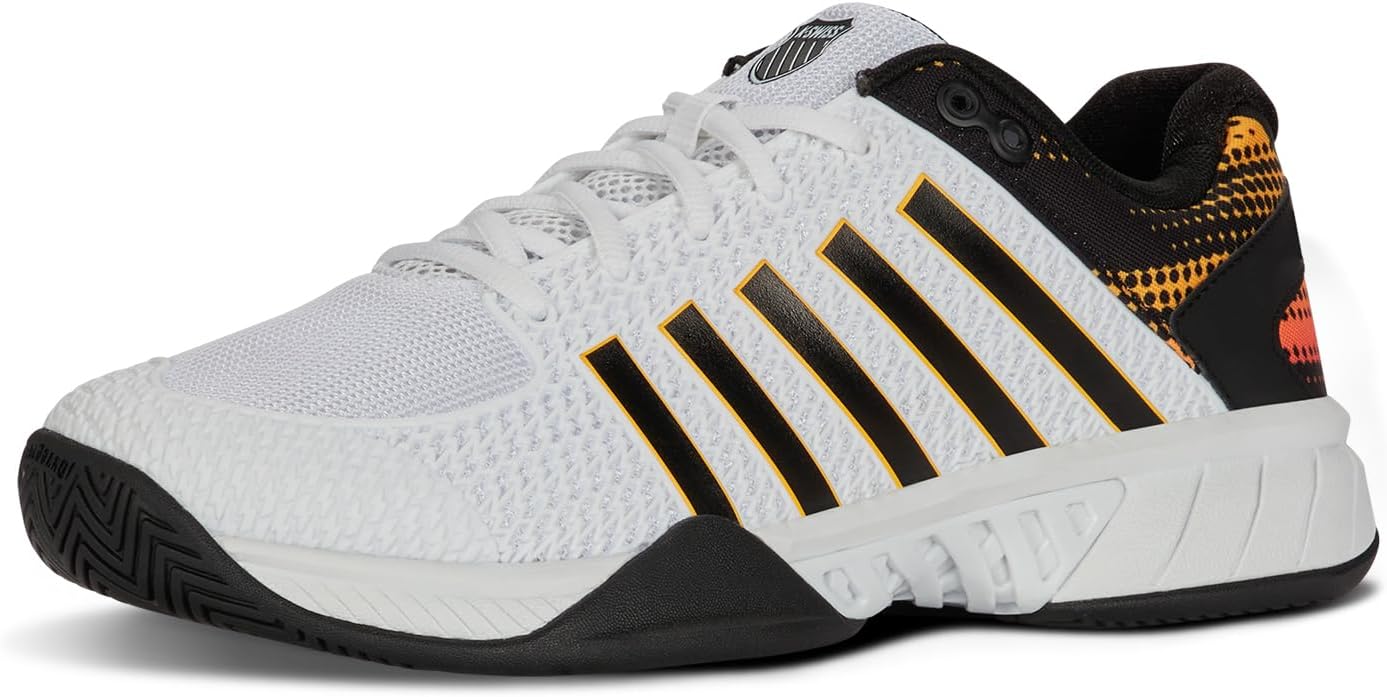
K-Swiss built the Express Light from the ground up as a pickleball shoe, not a tennis shoe with a new label, and it shows. A 180-degree Plantar Support Chassis wraps the midfoot for lateral stability on hard cuts, DragGuard reinforces the toe against the scuffing pickleball's short shuffle steps cause, and the whole shoe comes in noticeably lighter than most court shoes in its price range. It is the pick I would hand a 3.5-plus player who wants one shoe that covers everything from drop-in leagues to tournament play.
Pros
- Purpose-built for pickleball, not a repurposed tennis shoe
- 180-degree support chassis resists ankle roll on hard cuts
- DragGuard toe reinforcement holds up to kitchen-line shuffling
- Noticeably lighter than most court shoes at this price
Cons
- Narrow-leaning fit runs tight for wide feet
- Cushioning is firmer than max-comfort options like the Viper Court Pro
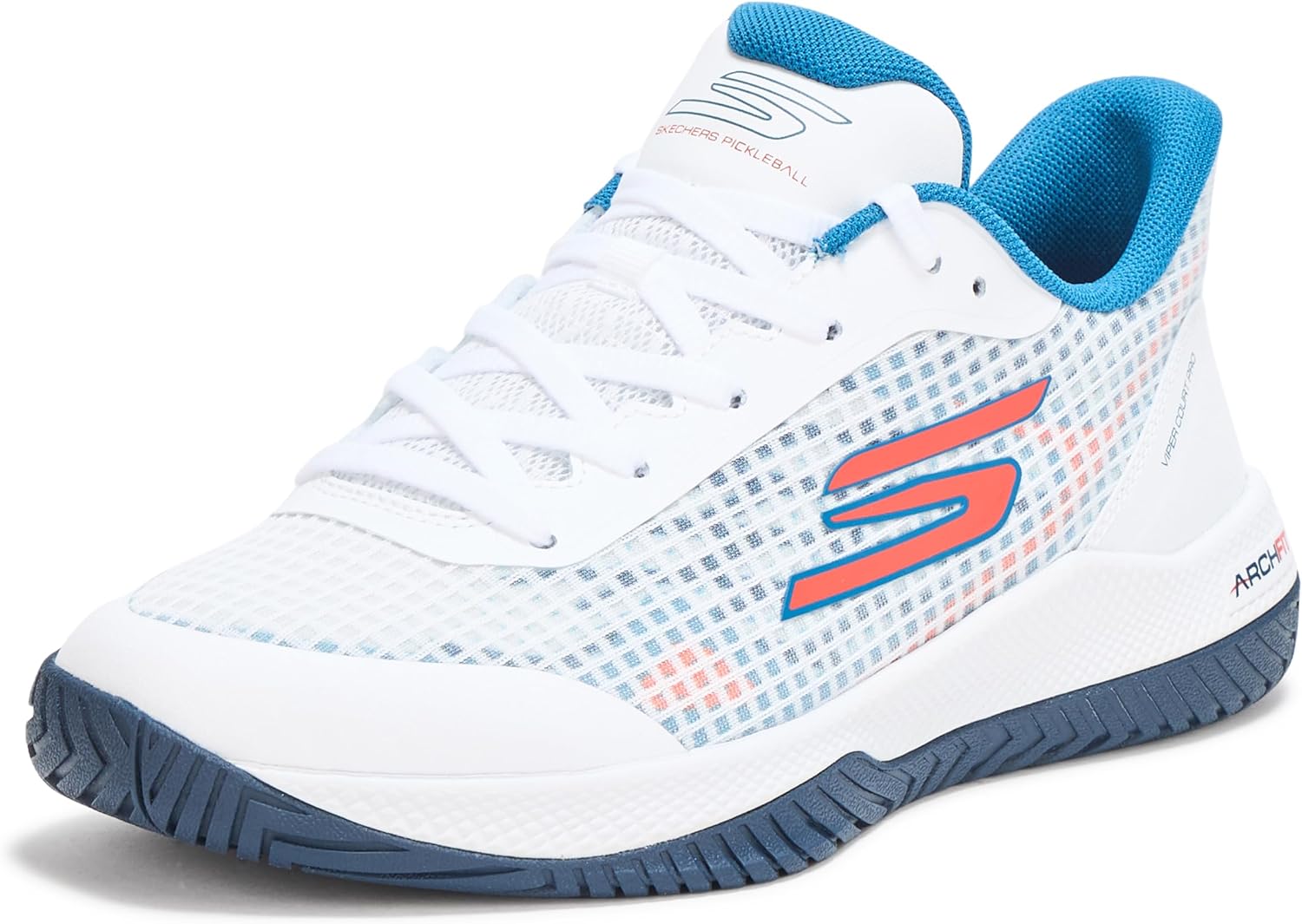
Skechers built its Pickleball line around comfort first, and the Viper Court Pro is the clearest example: an Arch Fit contoured insole and ULTRA GO cushioning that genuinely holds up over a three-hour tournament day, in a shoe that Skechers offers in an X-Wide width most competitors skip entirely. If narrow toe boxes have kept you in running shoes on court, this is the pickleball-specific shoe built to actually fit.
Pros
- True X-Wide width option, rare in pickleball-specific shoes
- Arch Fit insole and ULTRA GO cushioning excel on long play days
- Purpose-built pickleball outsole pattern
- Roomy toe box without feeling sloppy on lateral movement
Cons
- Softer platform gives up a step of court feel to firmer shoes
- Runs slightly heavier than the K-Swiss and HEAD options here
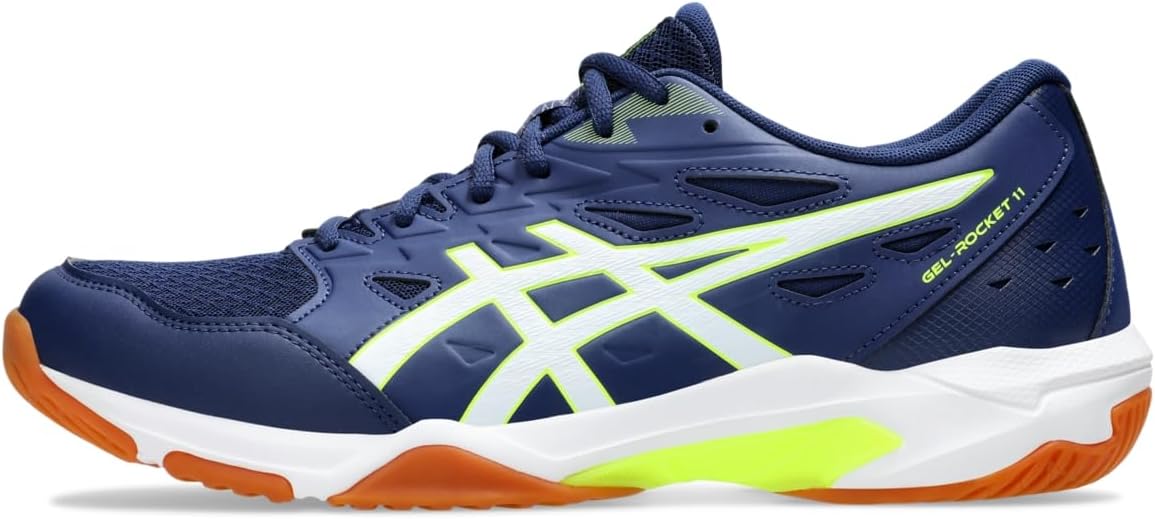
ASICS designed the Gel-Rocket line for volleyball, but the demands are nearly identical to pickleball: hard indoor courts, constant direction changes, and a premium on outsole grip. The gum rubber compound on the Gel-Rocket 11 bites into hard court surfaces noticeably better than most tennis-crossover shoes, and ASICS' GEL cushioning in the rearfoot takes the edge off repeated stopping without going soft underfoot. If your local courts are indoor or covered, this is the grippiest shoe on this list.
Pros
- Exceptional outsole grip on indoor and hard court surfaces
- ASICS GEL cushioning in the heel for repeated stopping
- Proven design from a sport with nearly identical movement demands
- Wide availability across sizes and widths
Cons
- Gum rubber outsole wears faster on rough outdoor courts
- Not marketed as pickleball-specific, so sizing runs true to volleyball, not pickleball shoes
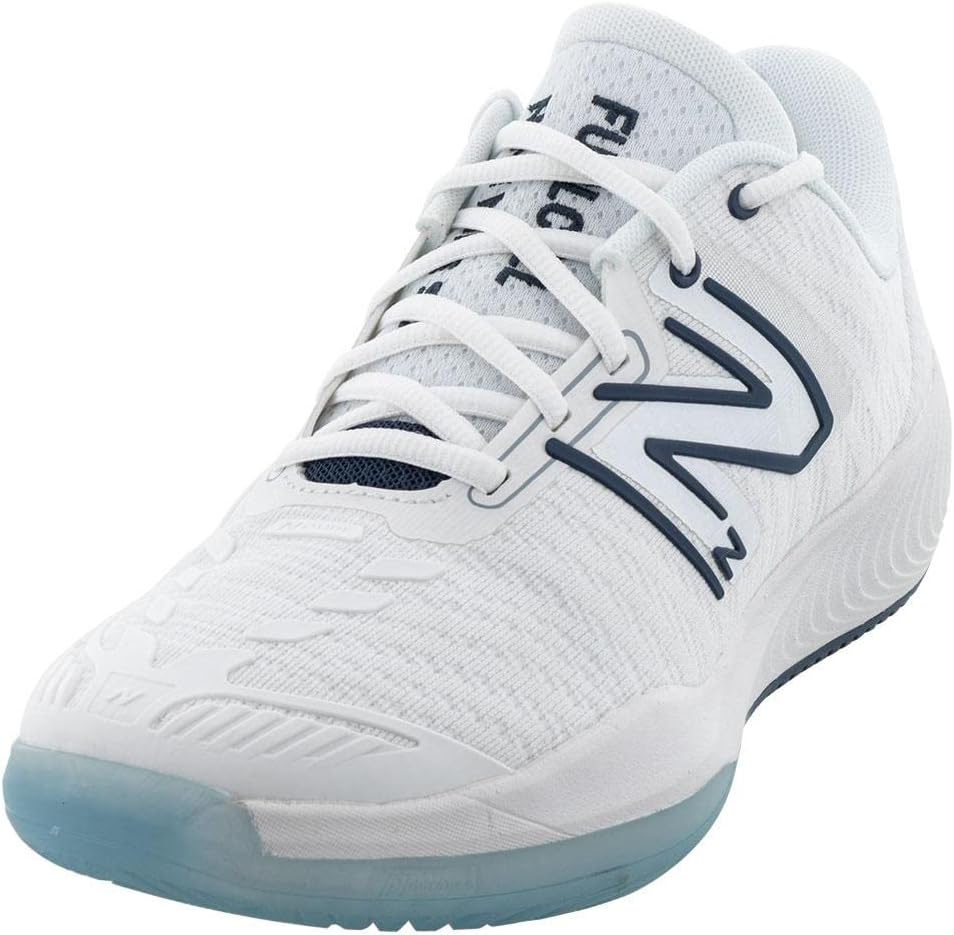
New Balance's FuelCell 996v5 is a hard court tennis shoe first, and the extra engineering shows in a way that matters if you play several times a week. A thicker FuelCell midsole adds real energy return without sacrificing the low-to-the-ground feel serious players want, and the NDurance rubber outsole is built for the exact high-wear zones pickleball's shuffle steps create. It costs more than everything else on this list, and the players who play often enough to feel the difference will notice it.
Pros
- Premium FuelCell midsole cushioning with genuine energy return
- NDurance outsole rubber holds up to heavy, frequent use
- Low-to-the-ground platform for court feel and stability
- Proven hard court tennis pedigree
Cons
- Most expensive shoe on this list
- Overkill for once-a-week casual players
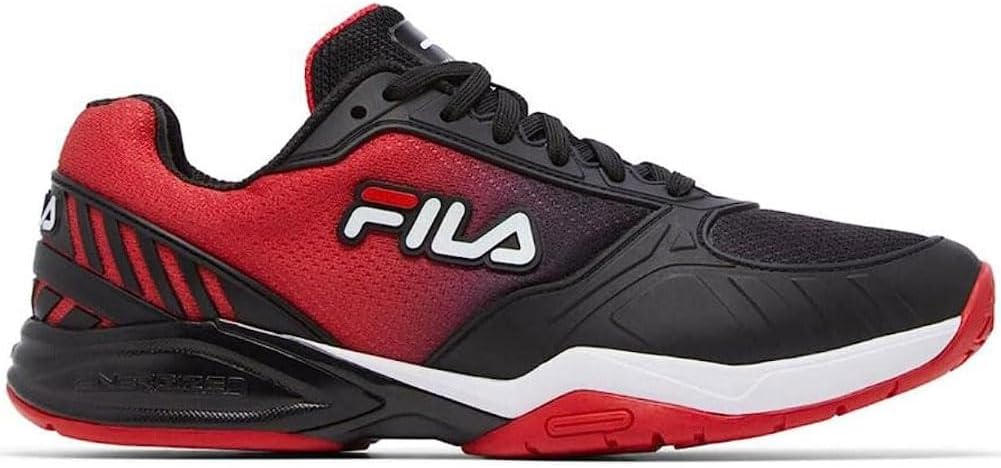
The Volley Zone is a volleyball shoe by design, but it hits the exact price point and feature set a first-time court shoe buyer actually needs: a supportive herringbone outsole for traction, a padded collar that does not bite the ankle, and a true-to-size fit without a premium price tag. It will not last as long as the pickleball-specific shoes above it on this list, but as the shoe you buy before you know whether pickleball is a habit or a phase, nothing else on this list beats the value.
Pros
- Lowest price of any shoe on this list
- Herringbone outsole provides real traction for the price
- Comfortable out of the box with minimal break-in
Cons
- Not built pickleball-specific, so durability lags purpose-built shoes
- Less lateral support for aggressive, frequent players
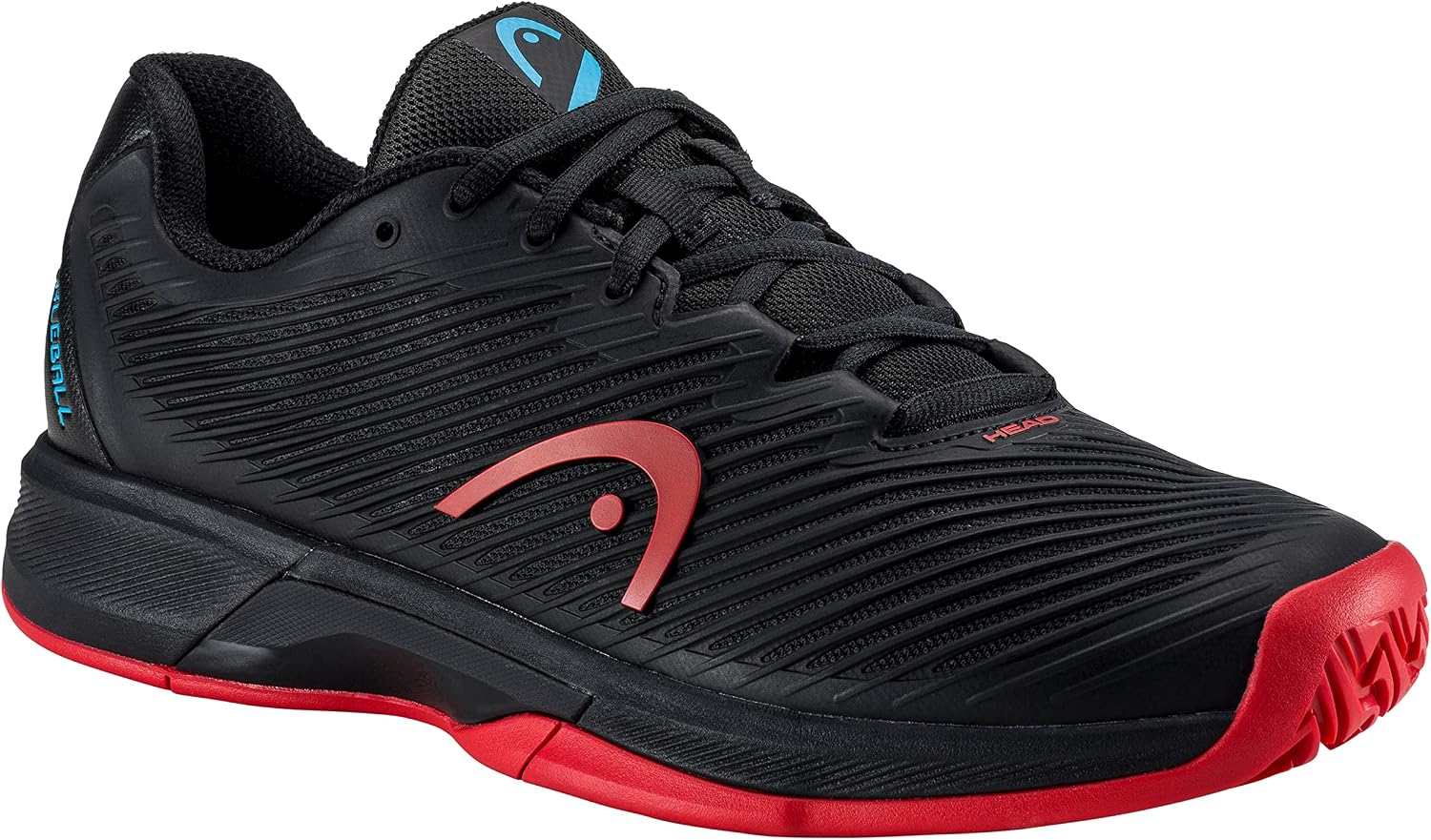
HEAD markets the Revolt Pro 4.0 directly as a pickleball shoe, and its T-KORE 360 degree support system is built around one job: keeping your foot planted through hard, unpredictable direction changes. A wide base of support and reinforced lateral overlays make it the most stable shoe on this list, which matters most for players who move aggressively at the kitchen line or have dealt with ankle issues on court before.
Pros
- T-KORE 360 support system built specifically for lateral stability
- Wide base of support reduces ankle roll risk
- Reinforced overlays hold up to aggressive footwork
- Marketed and built specifically for pickleball
Cons
- Stiffer ride than the K-Swiss or Skechers options
- Runs narrow through the midfoot
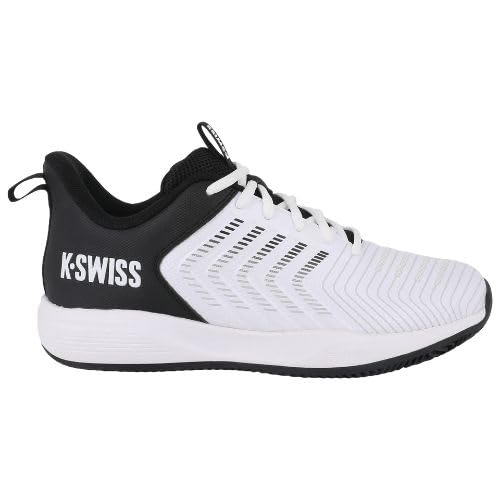
K-Swiss built the Ultrashot Light around a single idea: strip the weight out of a court shoe without giving up the lateral stability that makes a court shoe a court shoe in the first place. The Surgelite midsole cuts roughly 20% of the weight of a conventional tennis midsole, a midfoot TPU plate resists twisting on hard cuts, and a honeycomb-reinforced forefoot holds up to the pivots and quick stops pickleball demands. It is the shoe for players who feel every extra ounce by the third game of a session and want the fastest-feeling court shoe on this list.
Pros
- Surgelite midsole cuts real weight versus conventional court shoes
- Midfoot TPU plate resists twisting on hard lateral cuts
- Honeycomb-reinforced forefoot holds up to repeated pivots
- Noticeably less foot fatigue over long sessions
Cons
- Lighter build gives up some cushioning to plusher options like the Viper Court Pro
- Newer release, so long-term durability data is still limited
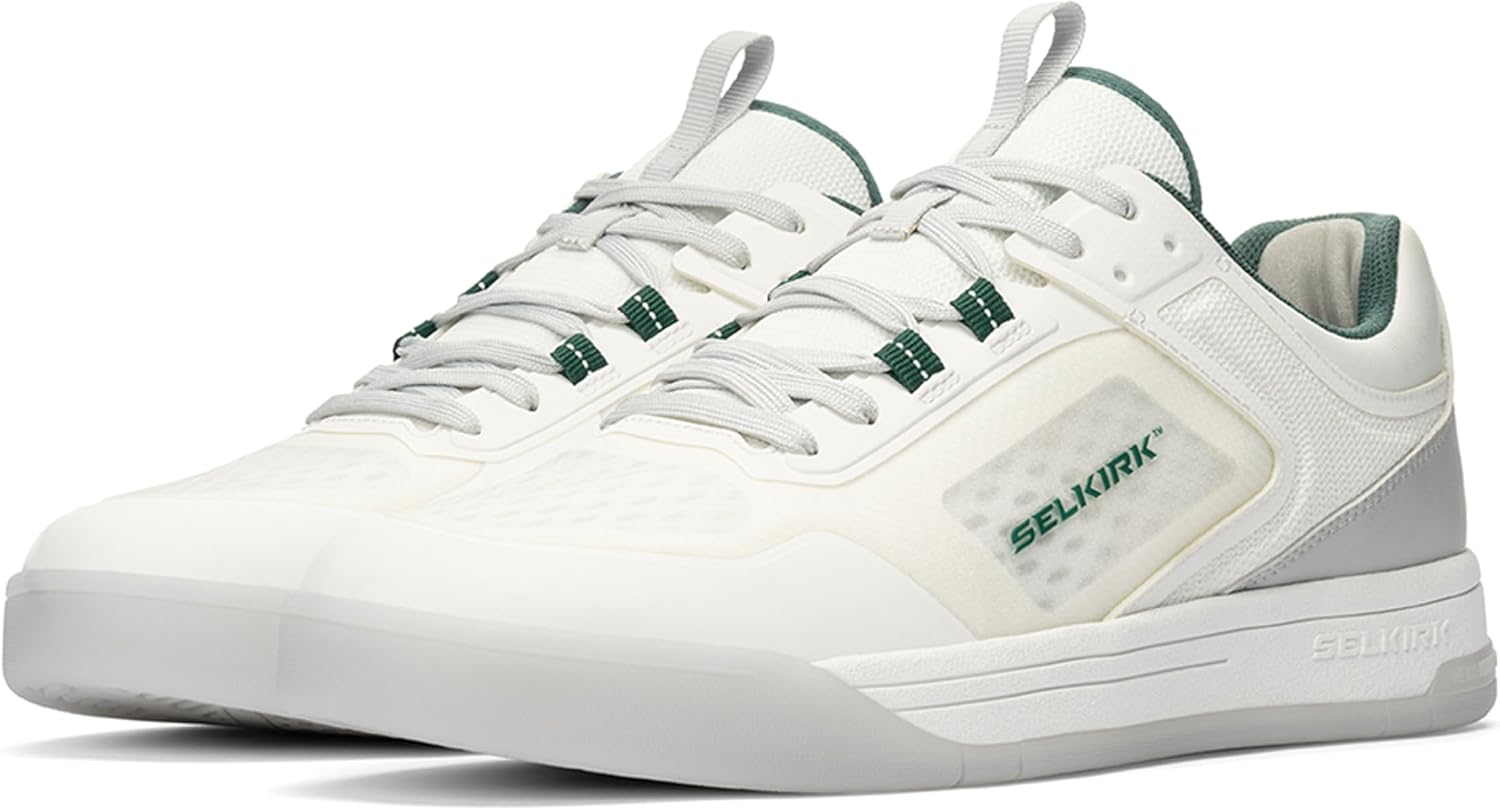
Selkirk is the biggest name in pickleball-specific gear, and the Legacy Pro is its first real swing at a court shoe built to match. The headline feature is InfiniGrip, a polyurethane outsole that Selkirk backs with a 6-month sole warranty and rates up to 40% more abrasion-resistant than the traditional rubber compounds every other shoe on this list uses. A translucent, high-abrasion mesh upper with a gusseted tongue locks the foot down through hard lateral cuts, and a multilayer cushioning system between the insole and EVA PureFoam midsole keeps the ride from feeling stiff despite the tougher sole underneath. It is the pick for players who chew through outsoles fast on abrasive outdoor courts and are tired of replacing shoes every season.
Pros
- InfiniGrip polyurethane outsole rated 40% more abrasion-resistant than rubber
- 6-month sole warranty, rare in this price range
- Gusseted mesh upper locks the foot down on lateral cuts
- Low-to-the-ground platform feels stable rather than propped up
Cons
- Most expensive shoe on this list
- Runs true to size but narrow through the toe box for some owners
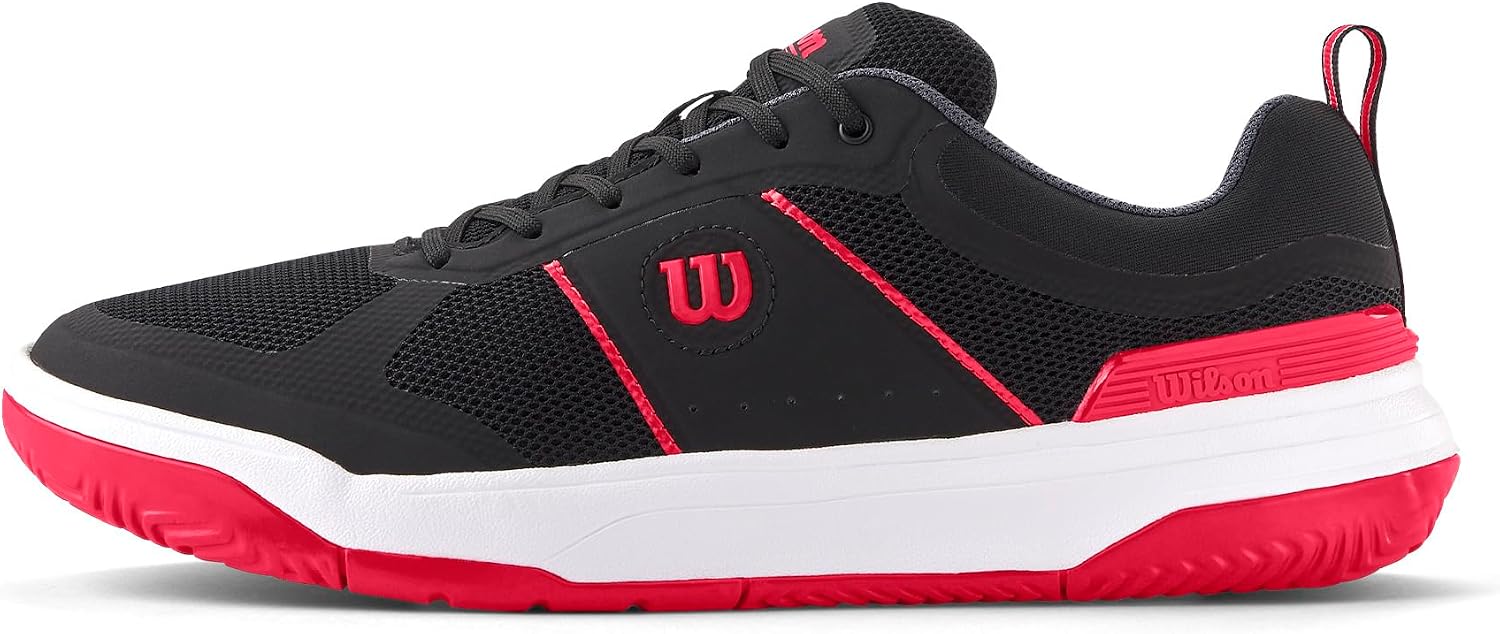
Wilson built the Pickle Pro around a wider toe box and a plush, secured collar, and the difference shows up immediately: most owners report zero break-in period and no blisters straight out of the box. A supportive midfoot chassis stabilizes lateral movement without feeling stiff, an OrthoLite EVA sockliner cushions long sessions, and the retro-inspired upper looks as at home off the court as on it. It is the shoe for players who care more about how their feet feel after three hours of open play than about shaving grams off a performance spec sheet.
Pros
- Wide toe box lets toes spread naturally on hard plants
- OrthoLite EVA sockliner delivers comfort with no break-in period
- Supportive midfoot chassis stabilizes lateral cuts
- Retro styling that does not scream "performance shoe"
Cons
- Outsole wears faster than purpose-built options for aggressive, frequent players
- Softer platform gives up some court feel to firmer shoes like the K-Swiss Express Light
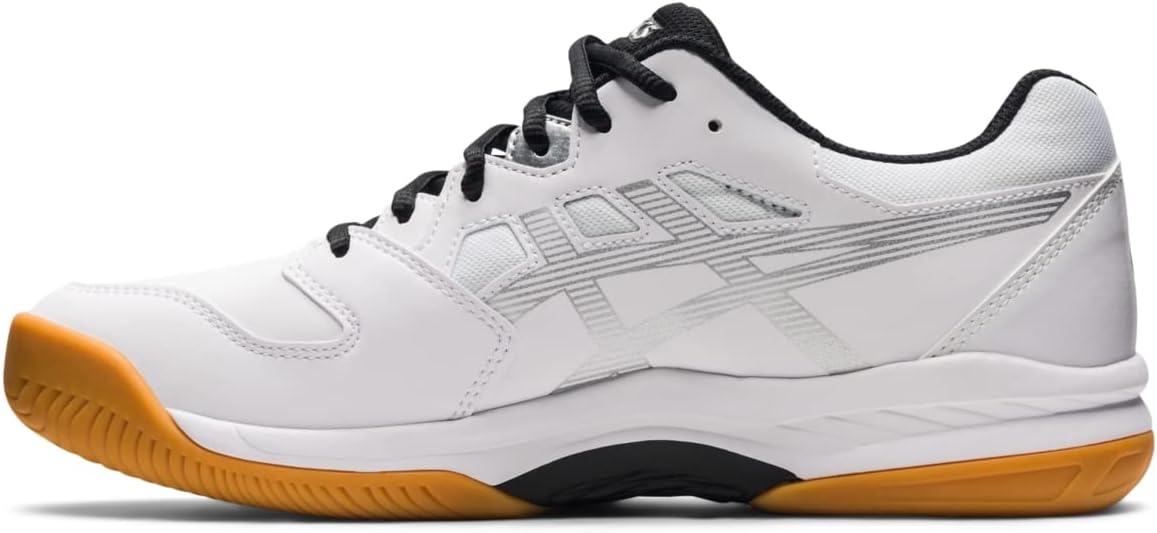
Unlike the volleyball-crossover Gel-Rocket 11 elsewhere on this list, ASICS built the Gel-RENMA specifically as a pickleball shoe, and the gum rubber outsole is the standout: it bites into indoor gym floors the way a dedicated indoor court shoe should, without going soft or slick on painted surfaces. TRUSSTIC technology in the midsole resists excessive twisting through hard lateral cuts, and forefoot GEL cushioning takes the edge off repeated stopping. If your regular games are indoors, this is the shoe built around that exact surface.
Pros
- Gum rubber outsole built specifically for indoor court grip
- TRUSSTIC midsole technology resists twisting on lateral cuts
- Forefoot GEL cushioning softens repeated stopping
- Purpose-built pickleball shoe, not a repurposed volleyball model
Cons
- Narrow-leaning fit, same caveat as the K-Swiss Express Light
- Outsole wears faster than average for players on court several times a week
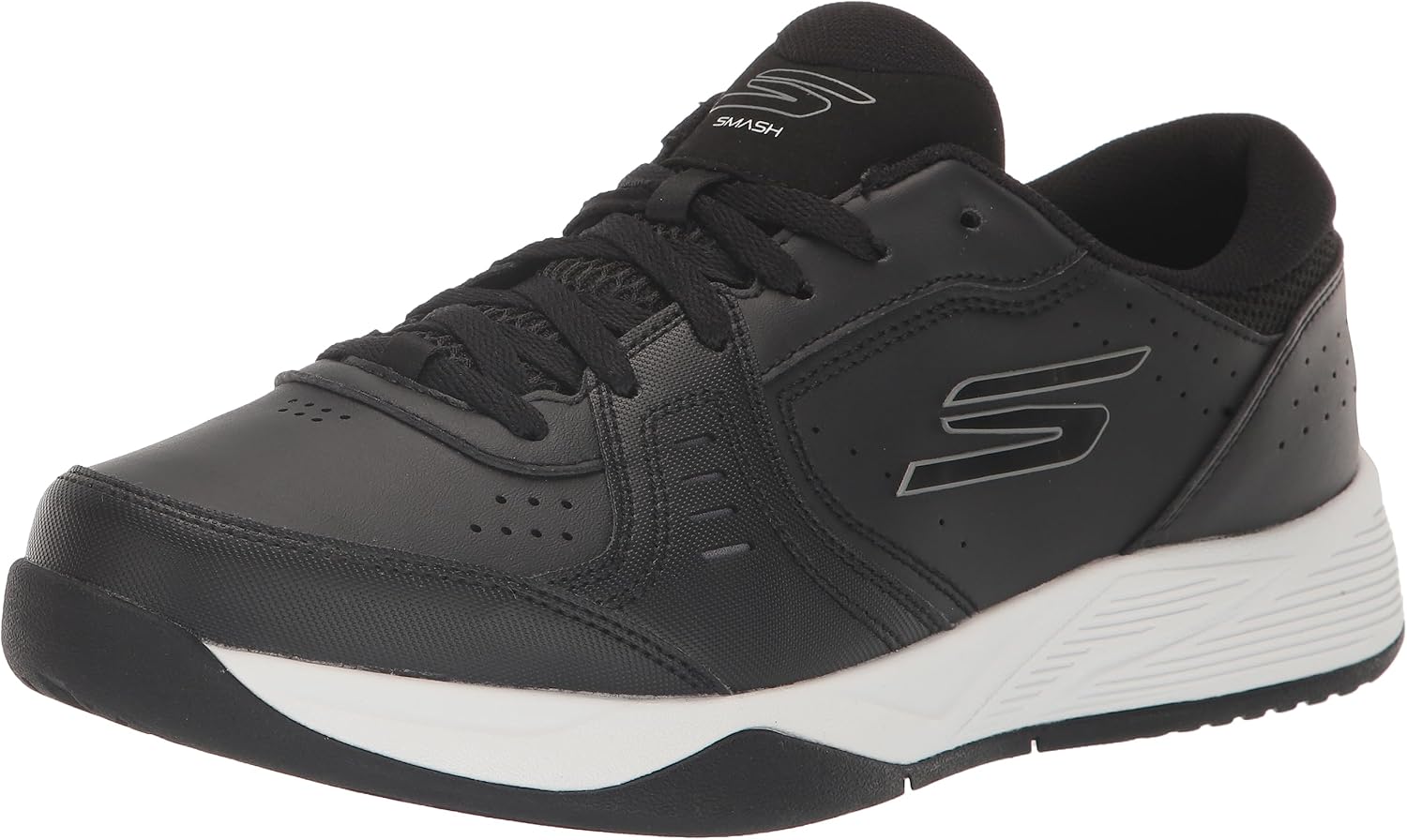
The Viper Court Smash is Skechers' budget-tier pickleball shoe, built around a full-length non-marking rubber outsole tuned for both indoor and outdoor traction. Ultra Flight cushioning and a molded EVA insole keep the ride light at just 12.3 ounces, while a relaxed fit through the toe and forefoot gives outdoor players extra room to swell into over a long session in the heat. It is the shoe for a player who wants a real pickleball-specific build without paying premium-tier prices for it.
Pros
- Purpose-built pickleball shoe at a genuinely budget price point
- Non-marking rubber outsole grips well on both indoor and outdoor courts
- Ultra Flight cushioning keeps the shoe light at 12.3 ounces
- Relaxed toe and forefoot fit suits players who want extra room
Cons
- Less lateral chassis support than the site's premium outdoor picks
- Relaxed fit runs roomy for players who prefer a snug, locked-in feel
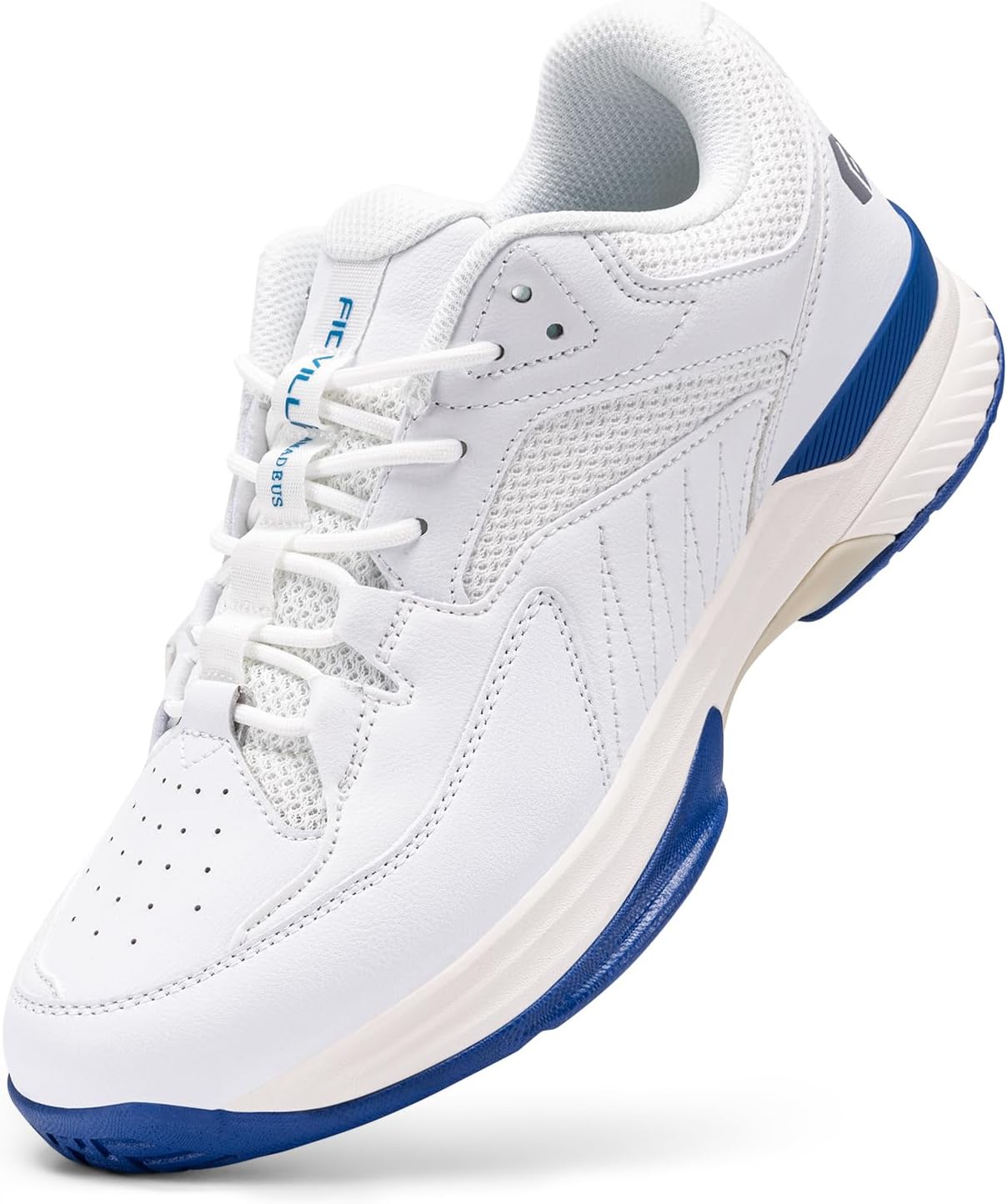
The Skechers Viper Court Pro above covers most players who need a wide shoe, but FitVille built this one around a narrower problem: foot pain. Every size comes in Wide or X-Wide only, a honeycomb Ortholite insole adds targeted arch support, and the toe box is genuinely roomy enough to matter for anyone playing through plantar fasciitis, bunions, or general arch fatigue. It will not out-perform a purpose-built performance shoe on quickness, but for players whose feet are the limiting factor on court, not their conditioning, it solves a problem none of the other shoes on this list are built to solve.
Pros
- Every size runs Wide or X-Wide, rare in a court shoe
- Honeycomb Ortholite insole adds real arch support
- Roomy toe box relieves pressure for bunions and wide forefoot
- Priced well below most of the purpose-built pickleball shoes here
Cons
- Runs slightly short in length despite the extra width
- Outsole durability trails the purpose-built pickleball shoes above
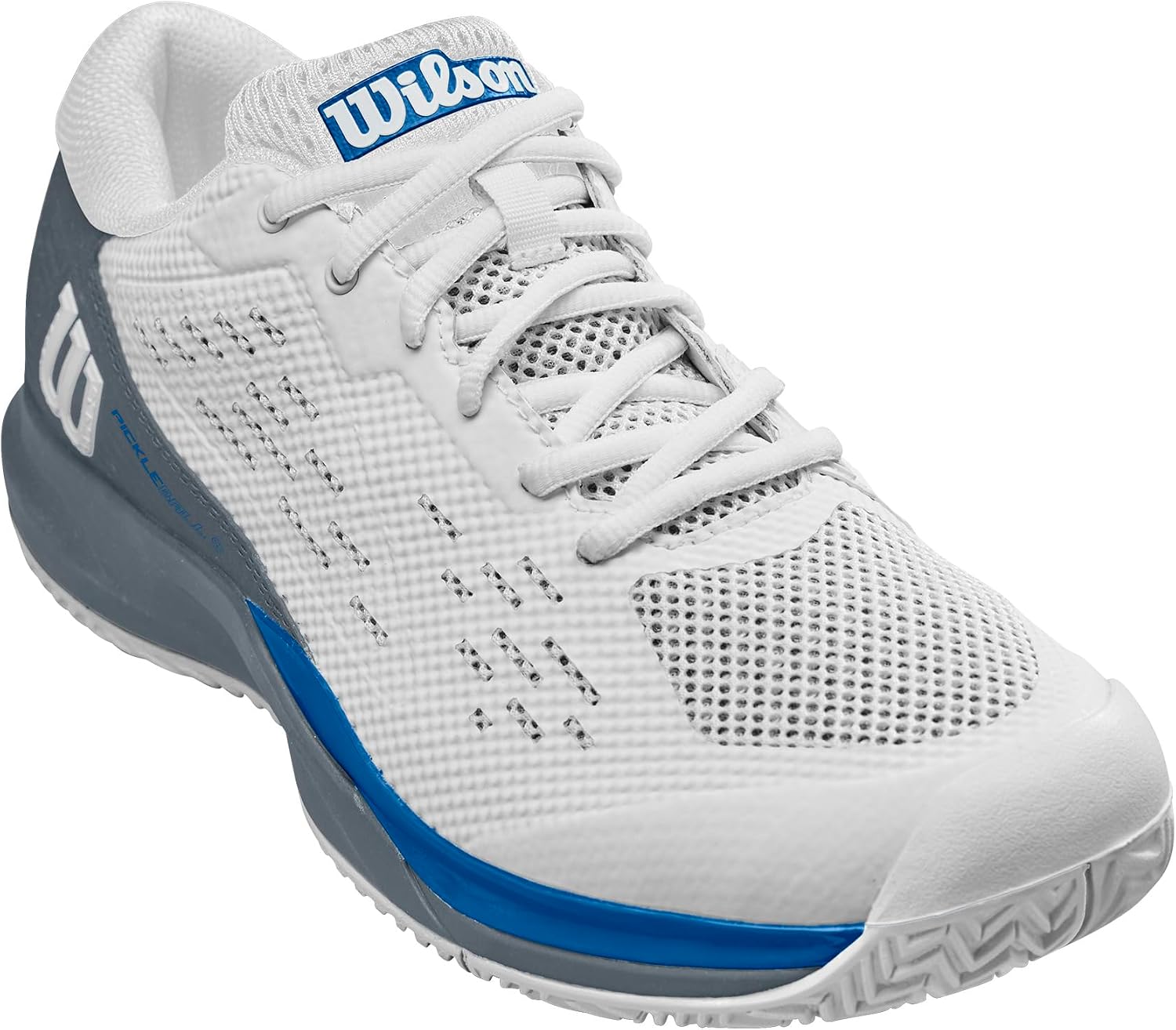
Wilson built the Rush Pro Ace Pickler specifically for the court, and its R-DST+ midsole is tuned to split the difference between a plush ride and the direct court feel serious players want for setting up powerful strokes. A 4D Support Chassis limits supination and torsion through hard pivots, a rubber medial drag pad protects against the scuffing kitchen-line footwork causes, and the wide 2E fit gives it more room than most performance-oriented court shoes on this list. It is the pick for players who found the K-Swiss Express Light too firm and the Wilson Pickle Pro too soft.
Pros
- R-DST+ midsole balances cushioning with real court feel
- 4D Support Chassis controls pivot movements on hard cuts
- Rubber medial drag pad protects against kitchen-line scuffing
- Wide 2E fit, roomier than most performance court shoes
Cons
- Duralast outsole runs slightly heavier than the lightest shoes here
- Narrower players may find the 2E fit looser than they prefer
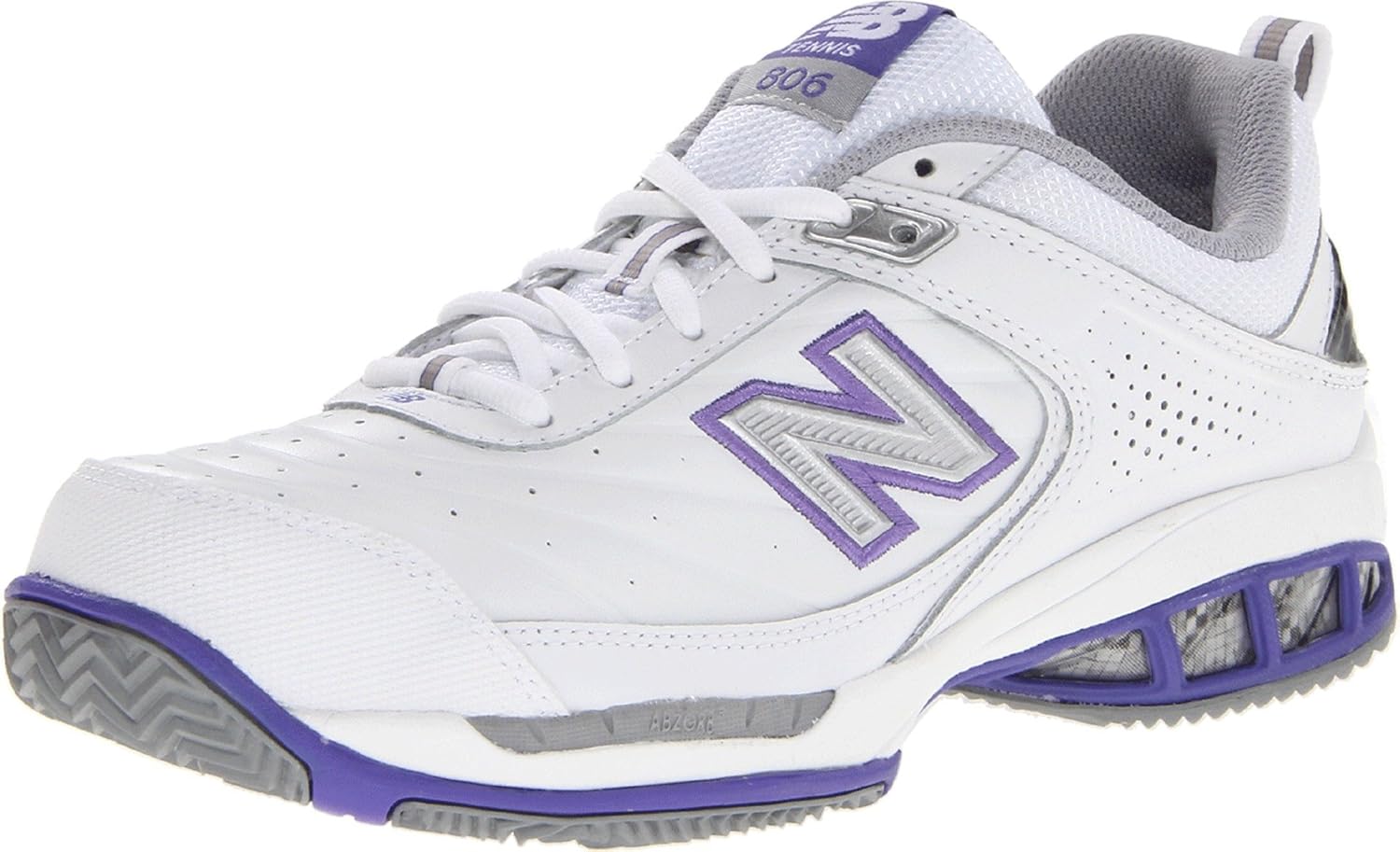
None of the other shoes on this list are built around one specific problem: feet that roll inward on hard plants. New Balance's ROLLBAR technology pairs with a C-CAP midsole and ABZORB heel cushioning to resist that inward roll directly, wrapped in a full-grain leather upper built for the abuse of repeated lateral cuts. It ships in Narrow, Wide, and X-Wide, more width options than anything else on this list, so overpronators do not have to compromise fit to get the motion control they need.
Pros
- ROLLBAR technology specifically targets overpronation, not just general stability
- C-CAP midsole and ABZORB heel cushioning control motion without going soft
- Widest range of width options on this list: Narrow, Wide, and X-Wide
- Durable full-grain leather upper built for repeated lateral cuts
Cons
- Leather upper needs a short break-in period and runs less breathable than mesh shoes
- Heavier underfoot than the lightweight picks on this list
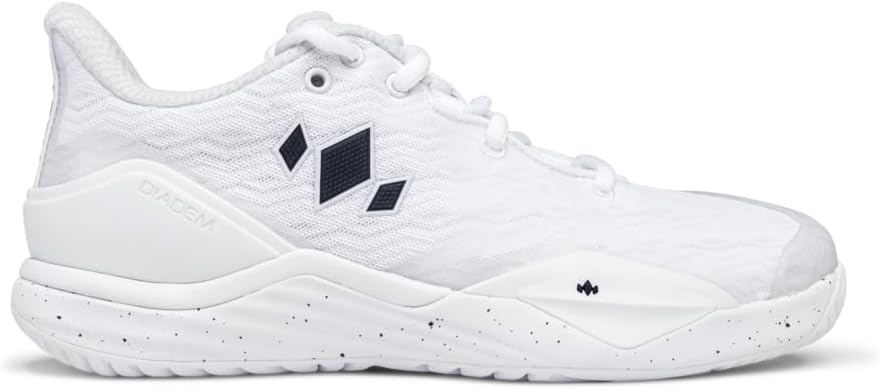
Diadem is a newer name in pickleball footwear, and the Court Burst's calling card is lateral containment. A Pro Stance X support system built into the midsole pairs with a reinforced heel cup to keep the foot locked in through hard direction changes, exactly the kind of quick cut that rolls an ankle in a shoe without it. Unified men's and women's sizing on one chart makes it simple to shop, and the Max Shield toe cap holds up to the toe-drag abuse of frequent kitchen-line play.
Pros
- Pro Stance X lateral support system and reinforced heel cup cut down on ankle roll on hard cuts
- Unified men's/women's sizing removes the guesswork of cross-gender size charts
- Max Shield toe cap and non-marking herringbone outsole hold up to repeated toe-drag
- True-to-size fit with little break-in time reported by most owners
Cons
- Toe box runs snug for wide feet, per several reviews
- Newer brand in pickleball footwear, so the long-term durability track record is still thin
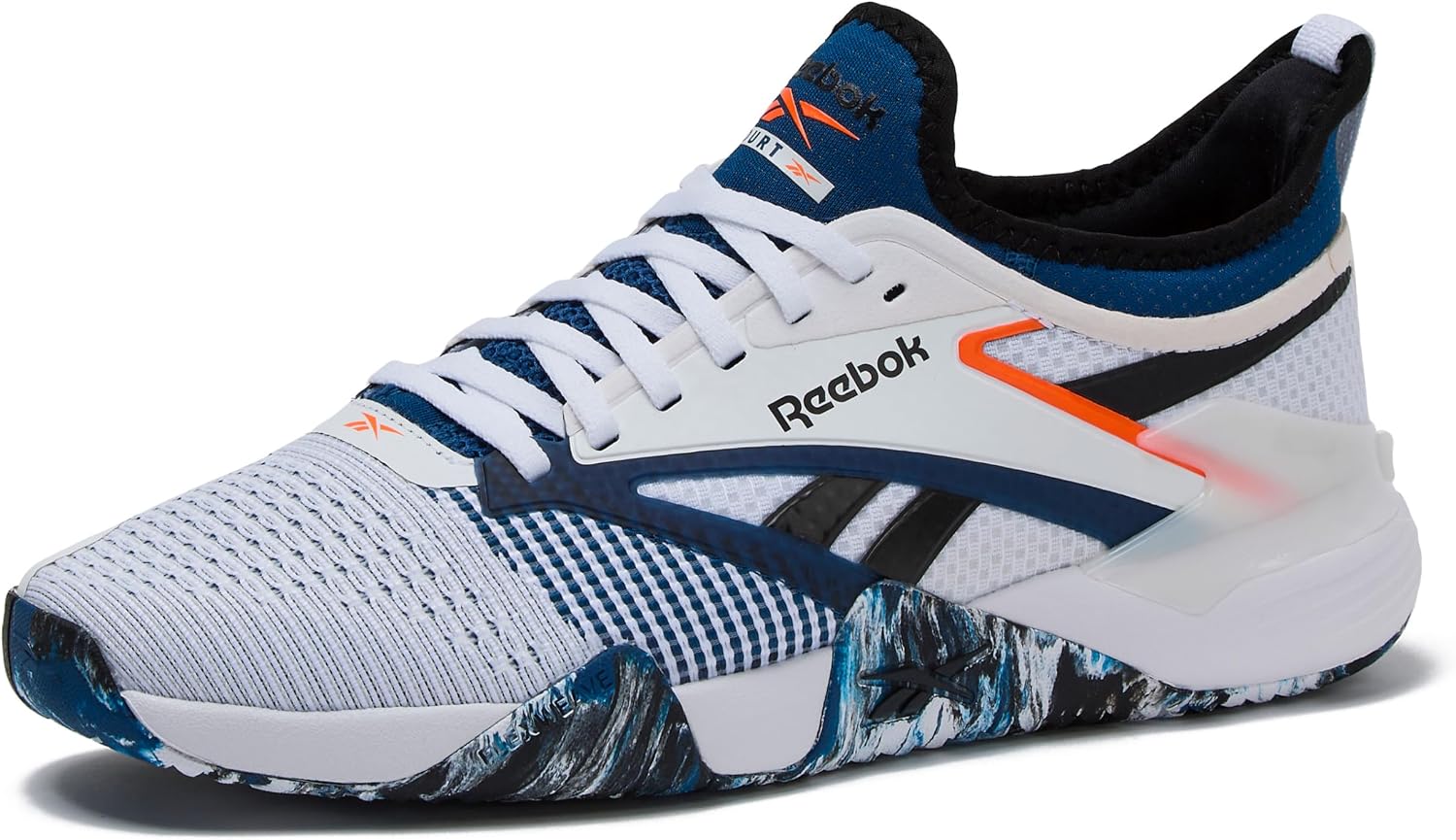
Every other shoe on this list chases a wider fit; the Nano Court runs the other direction. Reebok built this crossover court shoe for tennis, pickleball, and padel with a snug Flexweave upper and bootie-style construction that wraps the midfoot tight, which reads as restrictive on an average foot but reads as finally locked in on a narrow one. A herringbone Griptonite outsole wraps up the sides for multidirectional traction, and Floatride Energy Foam cushions the ride without softening the platform.
Pros
- Snug Flexweave bootie construction locks in a narrow foot other court shoes leave loose
- Herringbone Griptonite outsole wraps up the sides for real multidirectional traction, not just forward grip
- ToeTection reinforcement and a TPU heel clip hold up to repeated toe-drag and hard lateral stops
- Floatride Energy Foam stays supportive through long sessions without feeling mushy
Cons
- The narrow midfoot fit that suits this shoe's target buyer will feel restrictive on average-to-wide feet
- Some owners report the upper showing wear faster than the outsole under regular outdoor toe-drag
How to Choose a Pickleball Shoe
Running shoes are built for one direction: forward. Pickleball is built almost entirely around lateral movement, short sprints, and sudden stops, and that mismatch is why running shoes wear out fast and put your ankles at risk on court. Three things separate a real court shoe from a running shoe wearing a different label.
Lateral Support Over Cushioning
Running shoes cushion for repeated forward impact. Court shoes prioritize a wider, flatter base and reinforced side panels that resist rolling when you plant hard to change direction. If a shoe feels soft and plush standing still but wobbly when you cut sideways, it is a running shoe, not a court shoe.
Outsole Pattern: Indoor vs. Outdoor
Outdoor pickleball courts are abrasive and need a durable, non-marking rubber compound with a herringbone or modified herringbone tread. Indoor courts favor a softer gum rubber compound (like the ASICS Gel-Rocket 11's) for maximum grip on smooth surfaces. Using an indoor-only shoe outdoors wears the outsole down fast; check which surface a shoe is designed for before buying.
Toe Drag Protection
Pickleball's short shuffle steps and quick stops drag the front of the shoe against the court more than tennis or running does, which is why purpose-built pickleball shoes add reinforced toe guards (K-Swiss's DragGuard is a good example). A shoe without this reinforcement will show wear at the toe within a season of regular outdoor play.
What the Pros Actually Wear
Pickleball has not developed the signature-shoe culture that paddles have, but tour players are consistent about wearing purpose-built court shoes from brands like K-Swiss, HEAD, and Skechers Pickleball rather than repurposed running shoes. That is the split this list follows: purpose-built pickleball shoes for players who want the real thing, proven volleyball and tennis crossovers for players who already know they move well in that style of shoe.
Frequently Asked Questions
Can I just play pickleball in running shoes?
You can, but it is the single easiest way to roll an ankle on court. Running shoes are built for forward motion and have little lateral support, which becomes a real problem the moment you plant hard to chase a dink or change direction at the kitchen line.
Do I need different shoes for indoor and outdoor pickleball?
Ideally yes. Indoor courts favor a softer gum rubber outsole (like the ASICS Gel-Rocket 11) for grip on smooth surfaces, while outdoor courts need a durable, non-marking compound that can handle rougher, more abrasive surfaces without wearing down in a few sessions.
How long do pickleball shoes last?
For regular players, 6 to 12 months of consistent play, less for budget shoes without reinforced toe protection played outdoors. Watch the outsole tread and the toe area for wear; once the herringbone pattern smooths out, grip and stability both drop off.
Are pickleball-specific shoes worth it over tennis or volleyball shoes?
For frequent players, yes: pickleball-specific shoes like the K-Swiss Express Light and HEAD Revolt Pro 4.0 add reinforced toe protection tuned to pickleball's shuffle-step wear pattern. Casual players will do fine in a proven tennis or volleyball crossover like the ASICS Gel-Rocket 11.