Best Pickleball Paddles of 2026: Researched & Ranked
Watch a PPA Tour broadcast and you'll notice something: the pros are remarkably picky about paddles, and remarkably consistent about what they pick. Thermoformed carbon fiber faces, 14 to 16mm cores, grippy raw surfaces built for spin. The good news is that the same paddle technology the pros play is available to everyone, and the best of it costs less than a single golf club.
I researched the paddles that keep showing up in pro bags and on podiums, then ranked the ones that make sense for regular players: league regulars, weekend doubles partners, and beginners buying their first real paddle. Every pick below is USA Pickleball approved, and every rating is my own editorial call, not a customer score.
Top Picks at a Glance
- Best Overall JOOLA Ben Johns Hyperion CFS ~$92 Check Price →
- Best Control Six Zero Double Black Diamond Control ~$180 Check Price →
- Best Power Paddletek Bantam TKO-C ~$250 Check Price →
- Best Premium CRBN TruFoam Barrage ~$280 Check Price →
- Best Budget Franklin Signature Series Pro ~$45 Check Price →
- Best for Beginners Onix Graphite Z5 ~$75 Check Price →
- Best Value Vatic Pro Prism 16mm ~$100 Check Price →
- Most Customizable Gamma Rainmaker ~$90 Check Price →
- Best for Spin Selkirk SLK Dauntless ~$150 Check Price →
- Best Elongated Paddle CPX MAX ~$100 Check Price →
- Best Lightweight Franklin C45 Aurelius ~$230 Check Price →
- Best Foam Core Value Vatic Pro V-Sol Pro 16mm ~$110 Check Price →
- Best for Arm Comfort HEAD Radical Tour Raw ~$120 Check Price →
- Best All-Court Paddle JOOLA Pro V Agassi ~$300 Check Price →
- Best for the Kitchen Line Selkirk LUXX Control Air 20mm ~$184 Check Price →
- Best Widebody Paddle Selkirk SLK Valkyrie ~$80 Check Price →
Side-by-Side Comparison
| Paddle | Price | Core | Face | Best For | Rating |
|---|---|---|---|---|---|
| JOOLA Hyperion CFS | ~$92 | 16mm honeycomb | Carbon Friction Surface | All-court, 3.5+ | 4.7 / 5 |
| Six Zero DBD Control | ~$180 | 16mm polymer | Raw carbon fiber | Control, value | 4.7 / 5 |
| Paddletek Bantam TKO-C | ~$250 | 14.3mm polymer | PT-700 raw carbon | Power, attackers | 4.6 / 5 |
| CRBN TruFoam Barrage | ~$280 | 100% foam | T700 raw carbon | Advanced, power hitters | 4.8 / 5 |
| Franklin Signature Pro | ~$45 | 16mm polymer | MaxGrit fiberglass | Budget upgrade | 4.3 / 5 |
| Onix Graphite Z5 | ~$75 | Nomex honeycomb | Graphite | First paddle | 4.2 / 5 |
| Vatic Pro Prism 16mm | ~$100 | 16mm foam-injected | Raw carbon fiber | Value, all-court | 4.5 / 5 |
| Gamma Rainmaker | ~$90 | 16mm honeycomb polymer | Microbead carbon fiber | Customization, all-court | 4.4 / 5 |
| Selkirk SLK Dauntless | ~$150 | 16mm PureFoam | T700 raw carbon fiber | Spin, advanced | 4.5 / 5 |
| CPX MAX | ~$100 | 14mm honeycomb | T700 raw carbon fiber | Reach, elongated shape | 4.5 / 5 |
| Franklin C45 Aurelius | ~$230 | 12.7mm PowerFlex polymer | 45° T700 raw carbon | Lightweight, fast hands | 4.4 / 5 |
| Vatic Pro V-Sol Pro 16mm | ~$110 | 16mm EPP foam | Raw carbon fiber | Foam core on a budget | 4.6 / 5 |
| HEAD Radical Tour Raw | ~$120 | 15mm polypropylene | Raw carbon fiber | Arm comfort, all-court | 4.4 / 5 |
| JOOLA Pro V Agassi | ~$300 | 16mm Propulsion Core | Raw carbon fiber, textured | All-court, advanced | 4.5 / 5 |
| Selkirk LUXX Control Air 20mm | ~$184 | 20mm X7 honeycomb | ProSpin+ textured carbon | Kitchen line, deep control | 4.4 / 5 |
| Selkirk SLK Valkyrie | ~$80 | 16mm polypropylene honeycomb | Fiberflex fiberglass | Widebody, forgiveness | 4.3 / 5 |
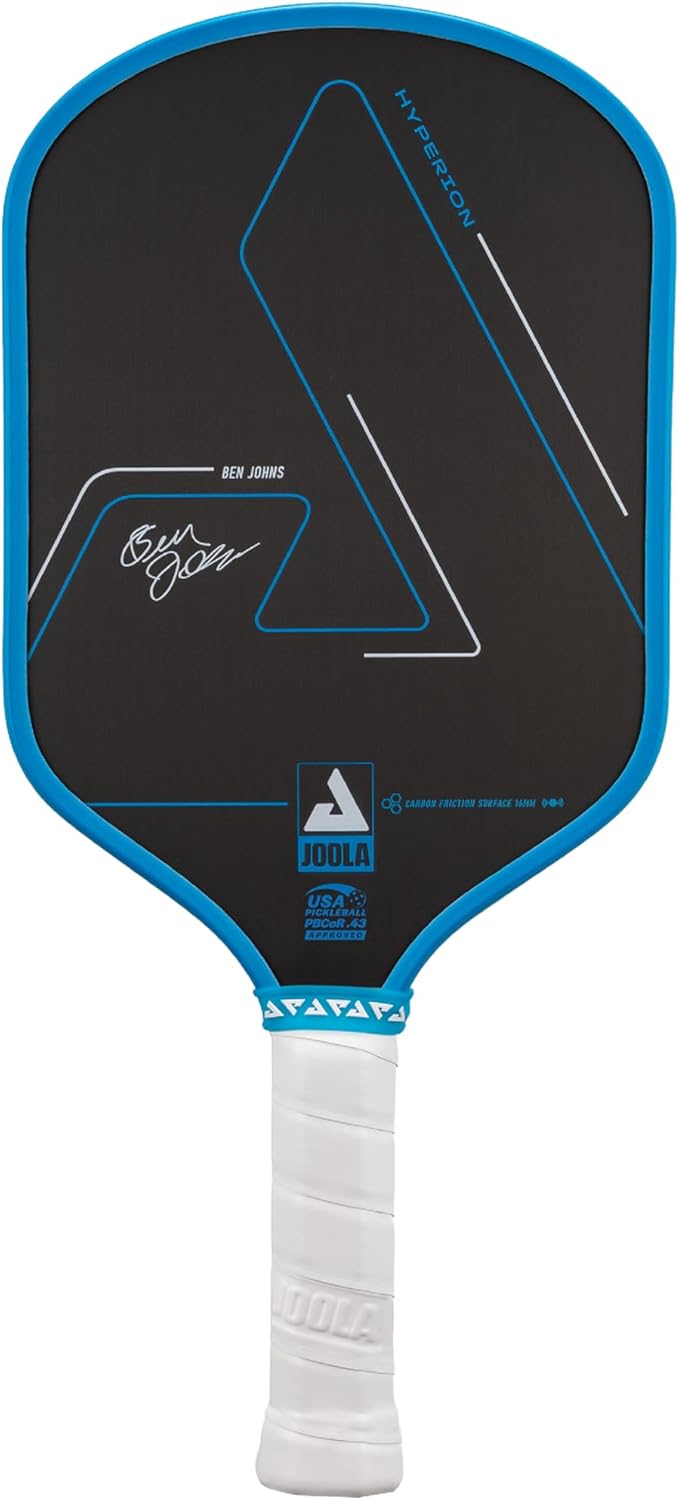
This is Ben Johns' current retail signature paddle, the one JOOLA sells alongside the world number one's tour equipment. The Hyperion CFS trades the older Perseus line's elongated shape for a more forgiving all-court build, and pairs it with JOOLA's Carbon Friction Surface texture for serious spin off a raw carbon face. A reactive polypropylene honeycomb core and a Hyperfoam edge wall keep the sweet spot wide and mishits from twisting the paddle. If you want the paddle carrying Ben Johns' name at a price well under most tour-level gear, this is the pick.
Pros
- Ben Johns' current in-production signature paddle
- Carbon Friction Surface generates heavy topspin
- Hyperfoam edge wall widens the sweet spot
- UPA-A and USA Pickleball approved
- Far cheaper than most tour-tier paddles
Cons
- Honeycomb core gives up some touch to foam-core paddles
- 5.5 inch grip runs long for smaller hands
- More paddle than a true beginner needs
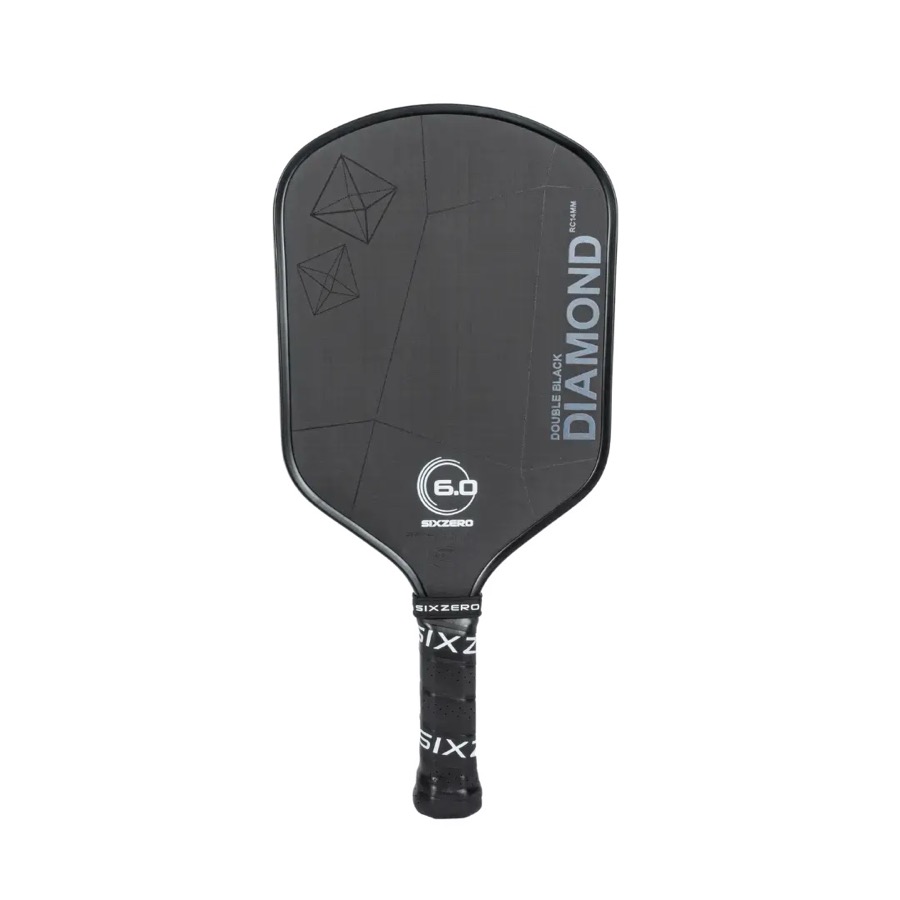
Six Zero went from unknown Australian startup to community favorite almost entirely on the strength of this paddle, and it remains the value pick among thermoformed carbon paddles. The Double Black Diamond Control gives you the same raw carbon face and unibody thermoformed construction as paddles costing $80 more, tuned toward the soft game: a big stable sweet spot, predictable blocks, and dinks that land where you aimed. Doubles players who win with patience rather than firepower will feel at home immediately.
Pros
- Thermoformed raw carbon quality at a midrange price
- Large, stable sweet spot for a 16mm paddle
- Excellent touch on dinks, blocks, and resets
- Light 7.7 to 7.9 oz build is easy on the arm
Cons
- Not the fastest paddle for putaways
- Smaller brand means fewer retail options if you want to demo first
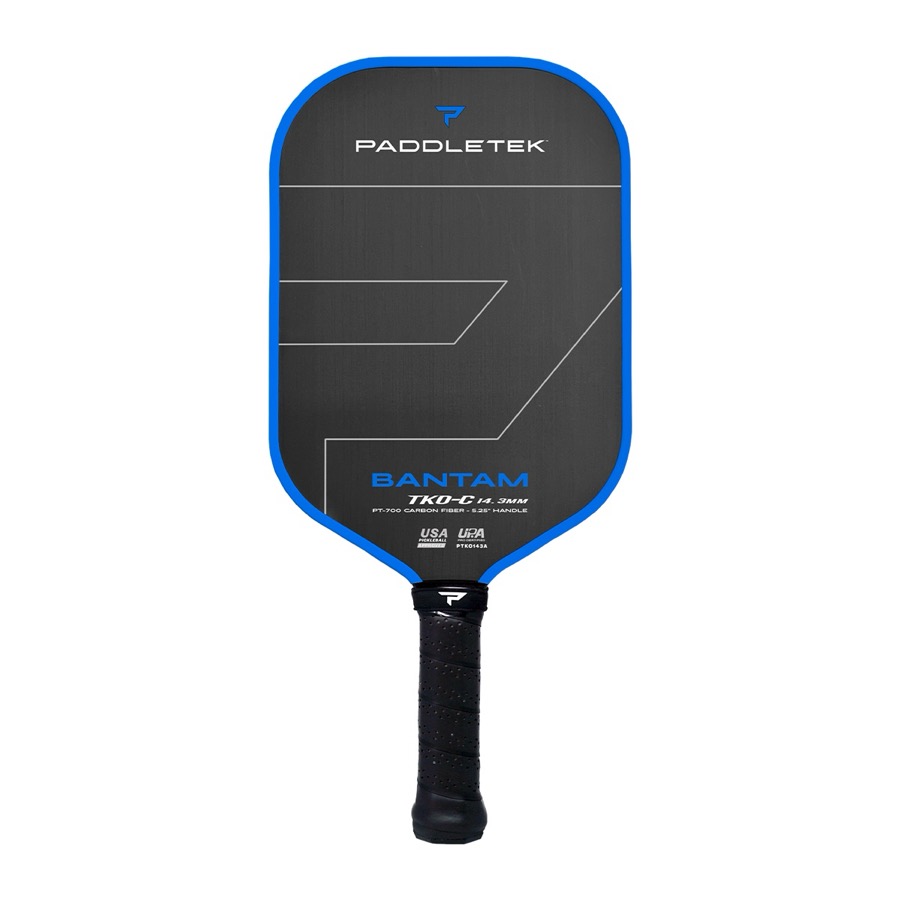
Designed with tour pro Christian Alshon, the Bantam TKO-C is what happens when a paddle is built for first-strike pickleball on purpose. The 14.3mm core and PT-700 raw carbon face reward aggressive drives, speedups, and counters, and Paddletek's torsional weighting keeps mishits from twisting the face the way most thin power paddles do. If your game plan is to end points at the kitchen line rather than outlast people, this is the paddle for that plan.
Pros
- Outstanding power and hand speed for aggressive play
- Torsional weighting stabilizes off-center hits
- Tour-proven design played on the pro circuit
- 5.25 inch handle suits two-handed backhands
Cons
- Thin core demands soft hands on resets and dinks
- Beginners will find it unforgiving
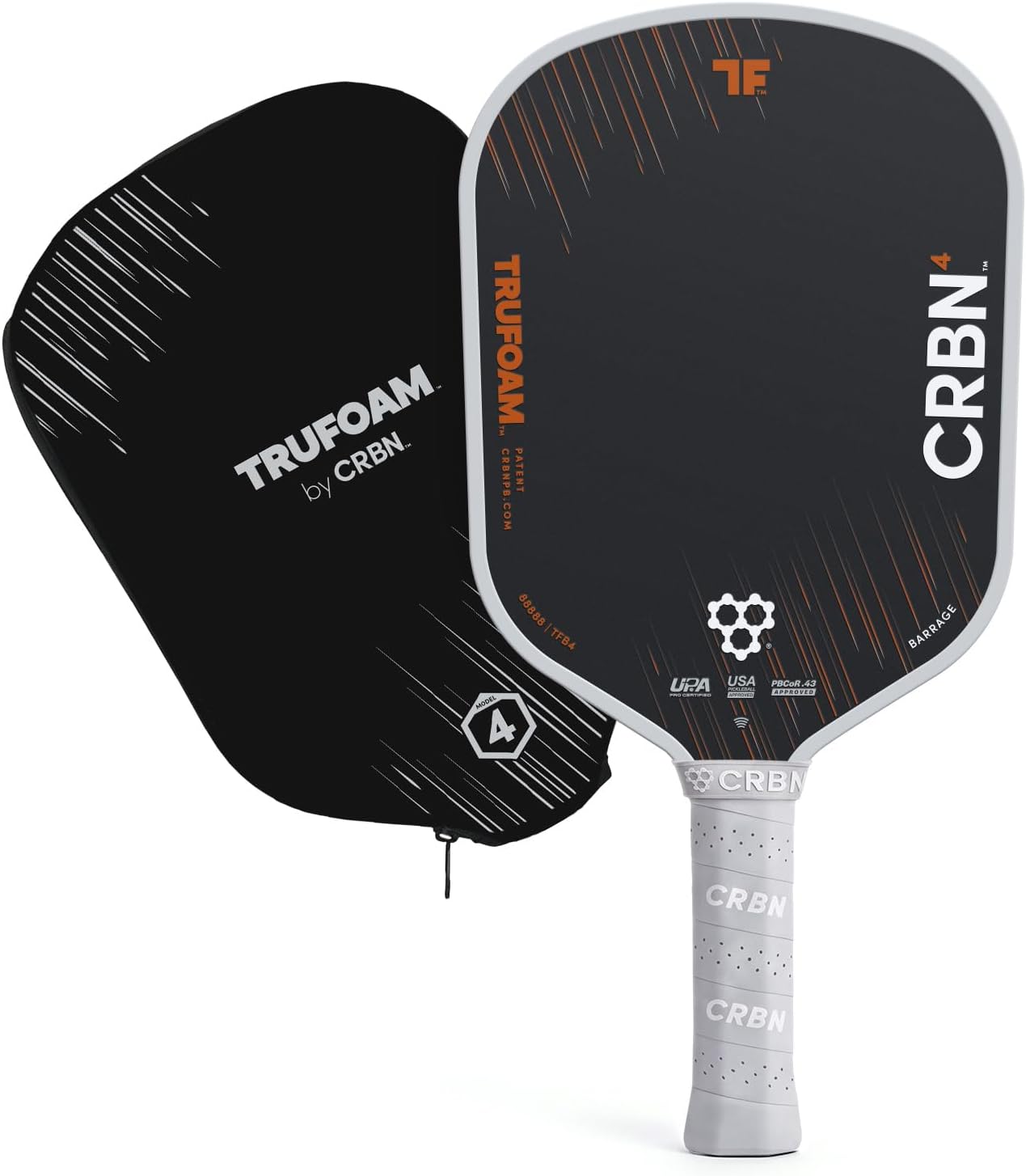
Foam cores are the biggest technology shift in paddles since thermoforming, and CRBN is still the brand pushing it hardest. The TruFoam Barrage uses a 100 percent floating foam core tuned for power, paired with a raw T700 carbon fiber face for aggressive spin and shot shaping. The result is a paddle that keeps its pop and sweet spot consistent over time instead of developing dead spots as honeycomb cores break down, built specifically for advanced players who attack rather than reset. Serious players who upgrade yearly should try foam now, because within a couple of seasons most premium paddles will look like this.
Pros
- 100 percent floating foam core built for power
- Performance does not degrade like honeycomb cores
- Raw T700 carbon face maximizes spin
- USA Pickleball, UPA-A, and PBCoR approved
Cons
- Premium price for still-new technology
- Tuned for advanced players; less forgiving on mishits than control paddles
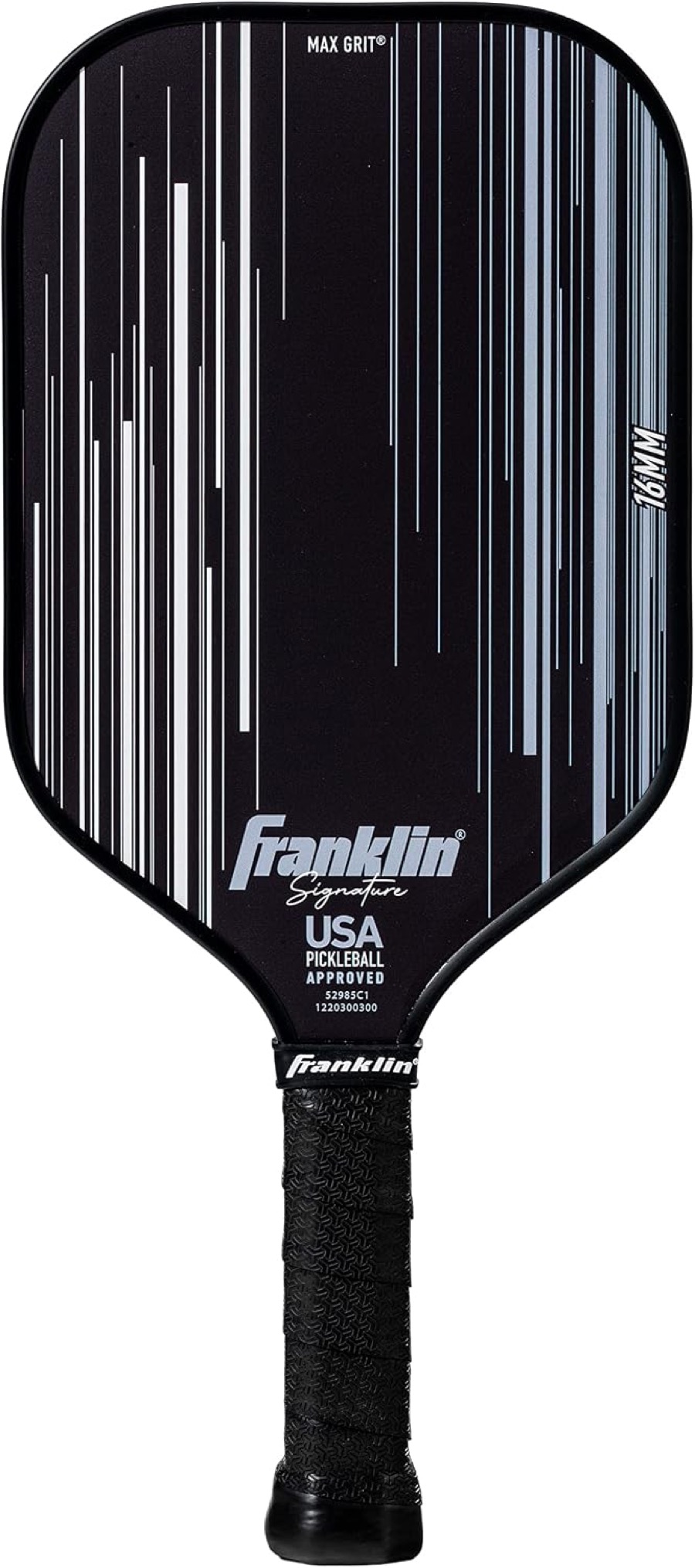
Franklin's Signature line is the budget answer with real pedigree: it grew out of the paddle family Ben Johns played before his JOOLA era, and the MaxGrit textured face still produces legitimate spin for the price. The 16mm polypropylene core is soft and forgiving with an oversized sweet spot, which makes this the ideal second paddle: the one you buy when the freebie that came in a starter set starts holding you back, but you are not ready to spend $200.
Pros
- Real spin and control for under $50
- Forgiving 16mm core with a big sweet spot
- USA Pickleball approved for tournament play
- Widely available in multiple colors
Cons
- Fiberglass face gives up spin and pop to carbon paddles
- Grit surface wears smooth faster than raw carbon
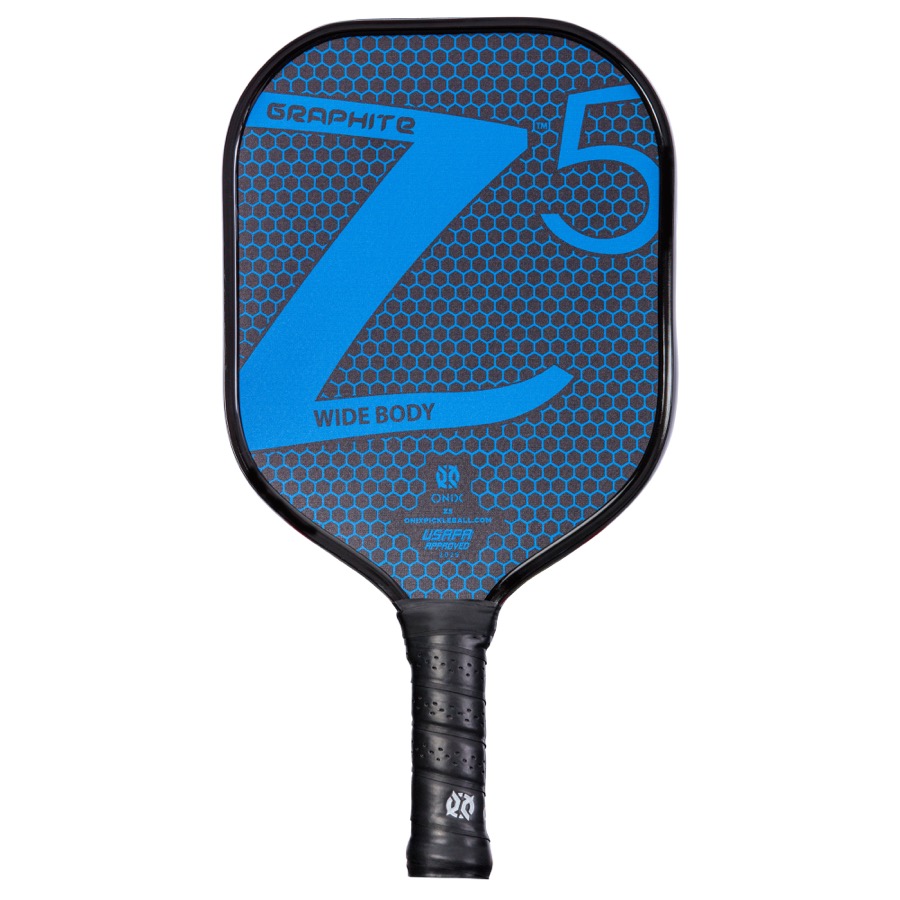
The Z5 is the most recommended first paddle in pickleball for a reason. The widebody shape and Nomex honeycomb core produce a crisp, poppy feel that makes clean contact easy to find, and the classic tennis-style grip length suits players coming over from other racquet sports. It will not spin the ball like the carbon paddles above it on this list, but as a first paddle that teaches you what you actually want in your second one, nothing else matches its track record.
Pros
- Proven beginner favorite with a huge sweet spot
- Crisp, lively feel makes learning contact easy
- Comfortable for tennis converts
- Affordable entry into a name brand
Cons
- Smooth graphite face limits spin
- Louder pop than polymer core paddles
- Advanced players will outgrow it
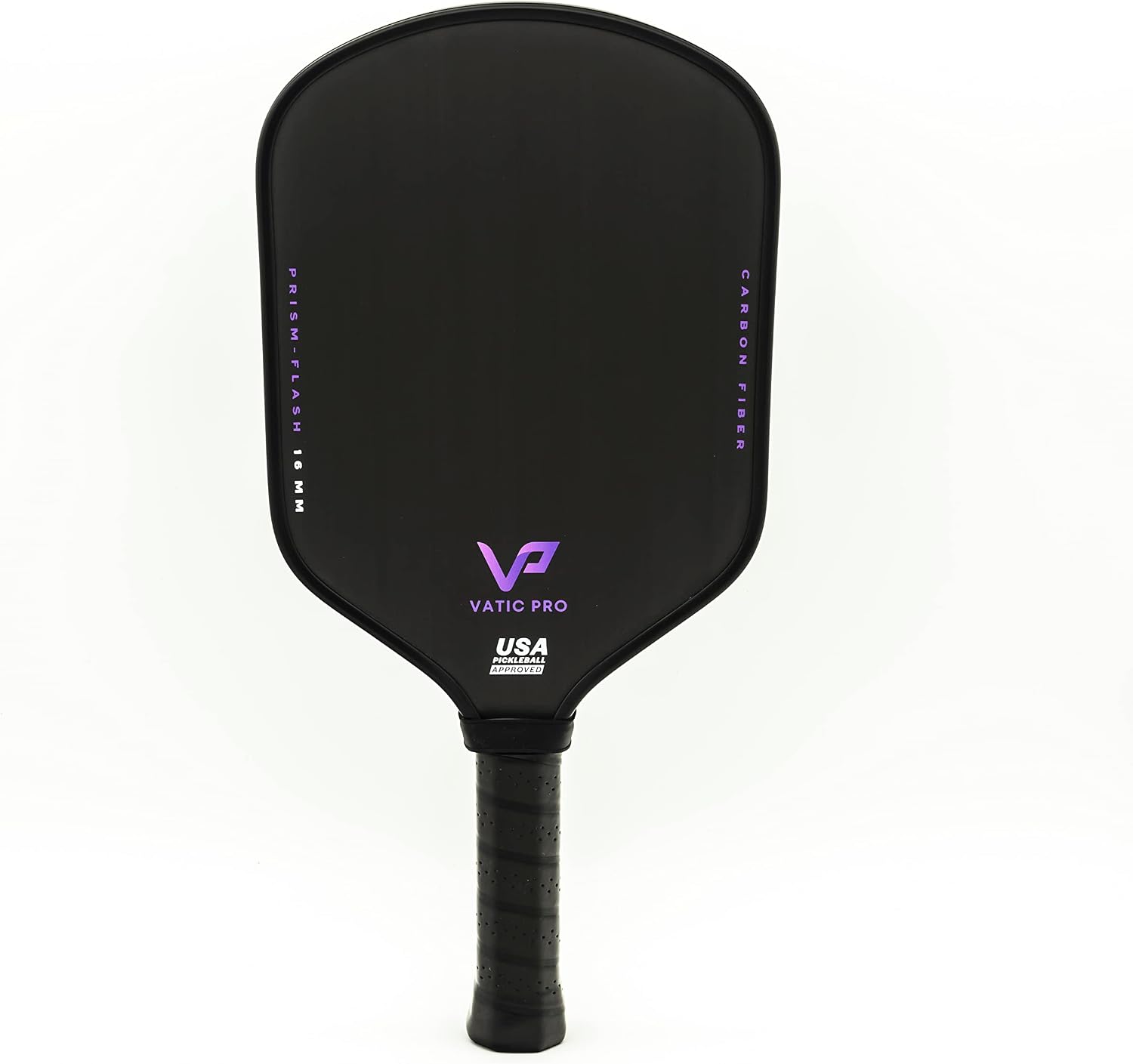
Vatic Pro built its following almost entirely on word of mouth, and the Prism is the paddle that did it. It pairs a raw T700 carbon fiber face with foam-injected edge walls, a construction usually reserved for paddles well north of $150, and the company's PPA and MLP pro affiliations back up the on-court claims. The gap between this and the graphite beginner paddles above it on this list is obvious the first time you swing it: real spin, a stable sweet spot, and control that holds up on resets, all at a price that undercuts most of its thermoformed competition.
Pros
- Raw T700 carbon face delivers real spin at a mid-tier price
- Foam-injected walls give a large, stable sweet spot
- Light 8oz build with a comfortable 5.3 inch grip
- USA Pickleball approved and used by PPA and MLP pros
Cons
- Control-tuned layup means less raw power than the TKO-C or Hyperion CFS
- Newer brand with less retail availability to demo before buying
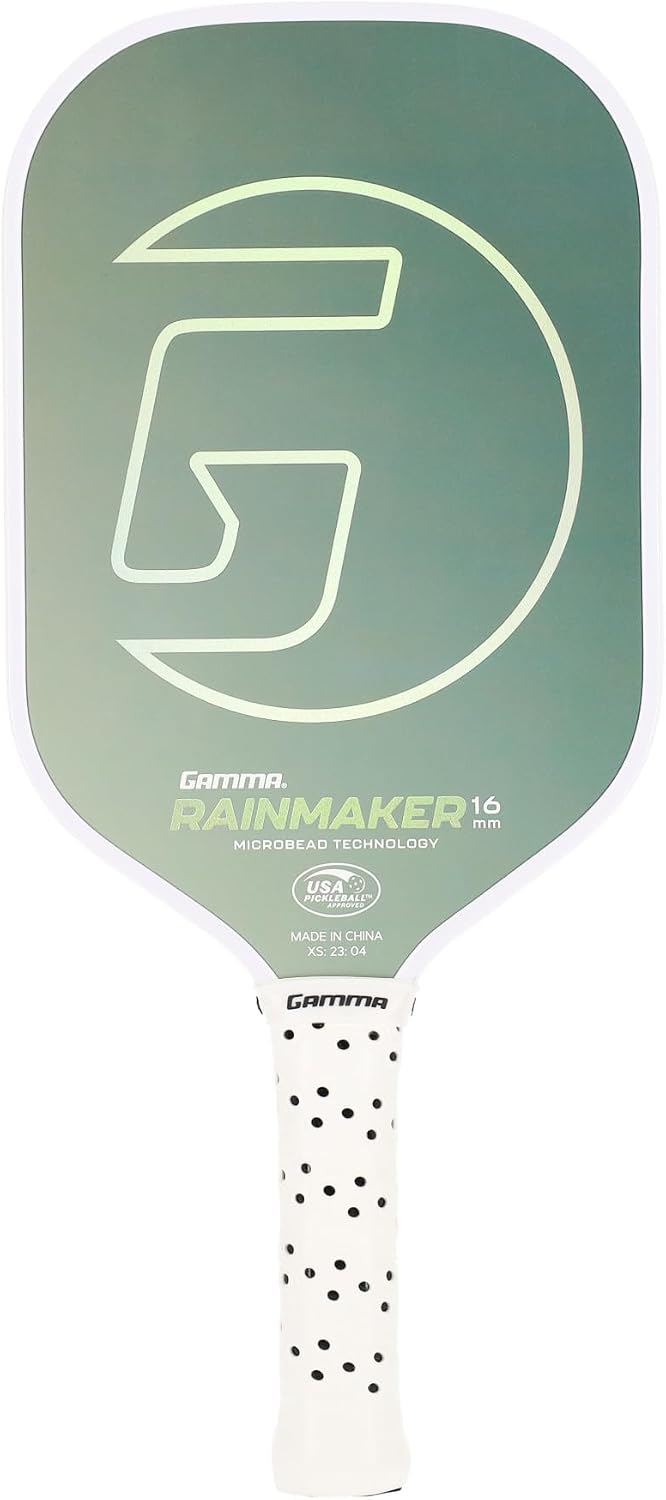
Gamma spent decades building tennis and racquetball gear before bringing that engineering into pickleball, and the Rainmaker is the paddle that shows it. A microbead carbon fiber face grips the ball for real spin on serves, dinks, and crosscourt shots, while a 16mm thermoformed honeycomb polymer core keeps the sweet spot wide and forgiving. The standout feature is the interchangeable end cap weight, which lets you shift the balance point toward a faster, handsier swing or a heavier, more drive-focused feel without buying a second paddle.
Pros
- Interchangeable end cap weight for a tunable swing feel
- Microbead carbon fiber face grips the ball for real spin
- Large, forgiving sweet spot from the 16mm honeycomb core
- USA Pickleball approved and backed by an established racquet-sports brand
Cons
- Mid-pack weight; not a standout for players chasing an ultralight build
- End cap weights are sold separately and not included
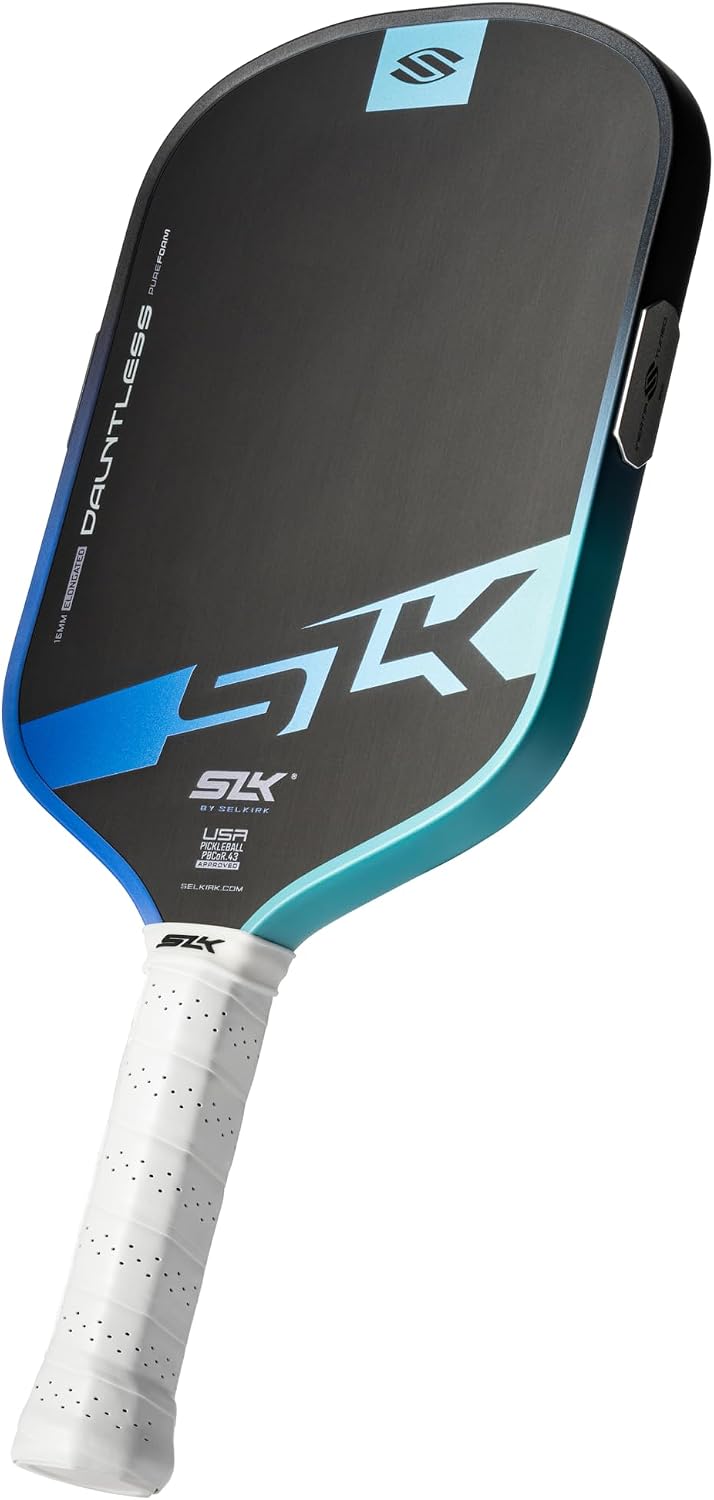
Selkirk is the biggest name in pickleball for a reason, and the SLK Dauntless is the paddle from that lineup built specifically to grab the ball. A T700 raw carbon fiber face pairs with a PureFoam SoloCore to extend dwell time on contact, so the ball sits on the face just a fraction longer, which is exactly what translates into extra RPMs on serves, resets, and dinks. Selkirk's MOI Tuning System shifts weight to the perimeter for a forgiving sweet spot, so you get tournament-level spin without the paddle feeling like a scalpel in your hand.
Pros
- T700 raw carbon face generates elite spin off serves and resets
- PureFoam SoloCore extends dwell time for extra bite on the ball
- MOI Tuning System keeps the sweet spot forgiving despite the spin focus
- Backed by Selkirk, pickleball's most established paddle brand
Cons
- Premium price puts it closer to the CRBN Barrage than the budget picks
- Control lean means less raw power than the Bantam TKO-C
- Raw carbon grit wears down faster than smoother fiberglass faces
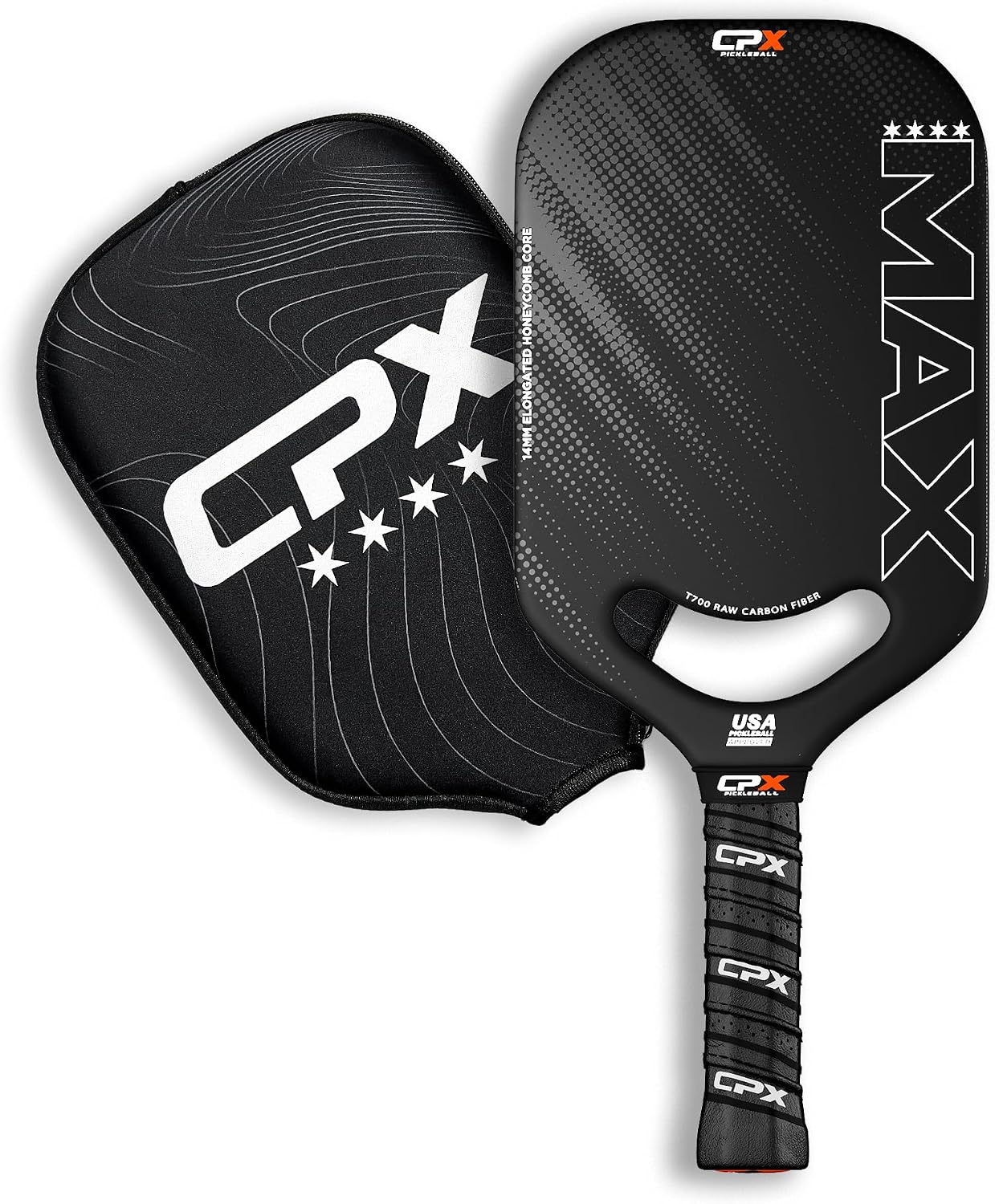
Every other paddle on this list is built around a standard or widebody shape. The CPX MAX is the pick for players who want the extra reach and leverage an elongated 16.52 inch face provides, the same tradeoff pros make when they want more paddle length for putaways and serves. A 14mm honeycomb core keeps it forgiving for an elongated shape, and the raw T700 carbon face grips the ball for real spin. At 8.2 ounces it swings light enough that the extra length does not turn into arm fatigue over a long session.
Pros
- Elongated 16.52 inch face adds real reach and leverage
- Raw T700 carbon fiber face grips the ball for spin
- Light 8.2 oz swing weight for an elongated paddle
- USA Pickleball approved
- Ships with a padded travel cover included
Cons
- Elongated shape trades away some sweet spot versus widebody paddles
- 4.21 inch grip runs long for smaller hands
- Small independent brand, fewer places to demo in person
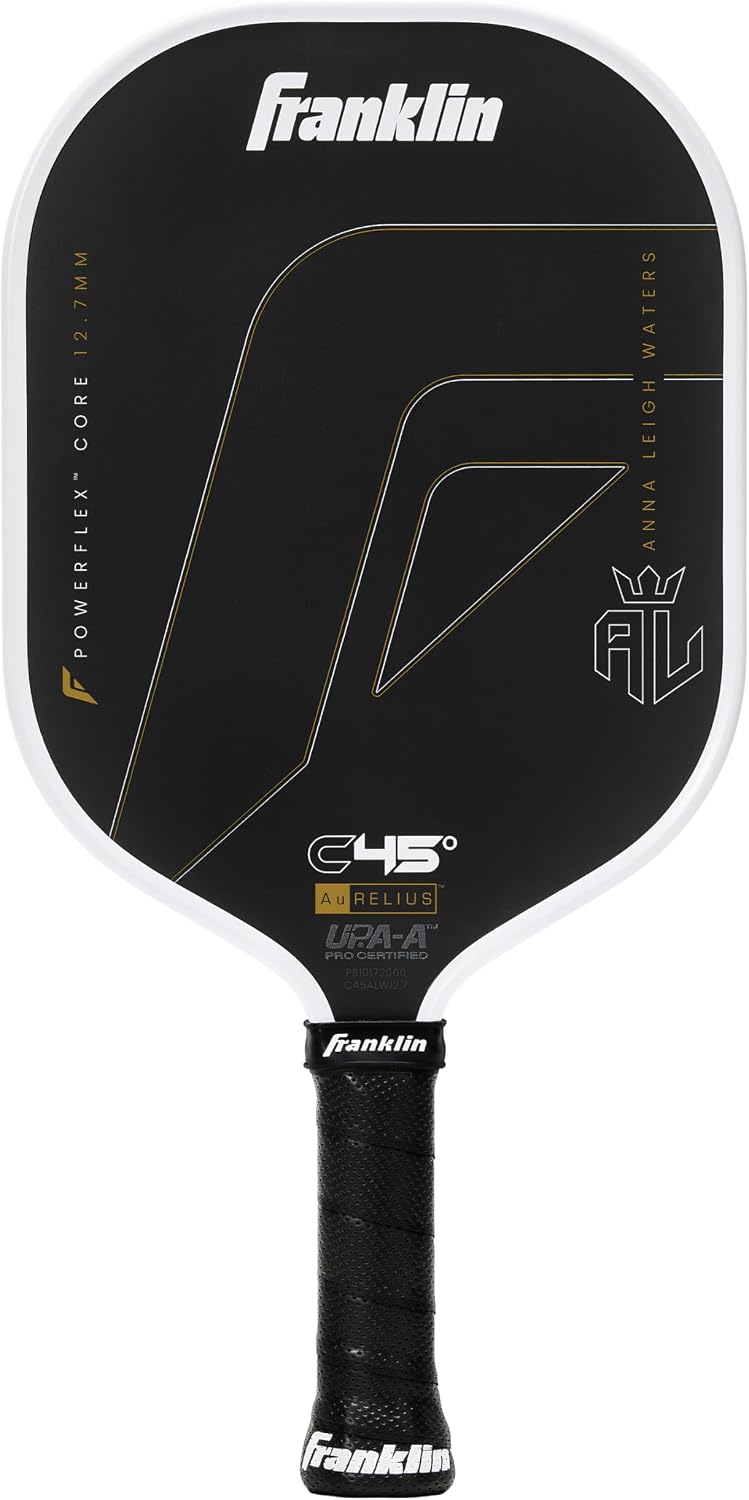
The C45 Aurelius carries the official shape of Anna Leigh Waters, women's pickleball world number one, and it is built around the thinnest core on this list. A 12.7mm PowerFlex polymer core with an inner foam layer keeps the paddle in the 7.2 to 7.7oz range, light enough to speed up your hands without giving up structural pop, while a double thermoformed unibody construction cuts down on vibration most thin-core paddles suffer from. The 45 degree T700 raw carbon texture is applied evenly across the whole face, so grip and spin stay consistent no matter where contact happens. If your arm is telling you to go lighter without losing the carbon feel, this is the paddle built for that swap.
Pros
- Official paddle shape of women's world No. 1 Anna Leigh Waters
- Lightest paddle on this list at 7.2 to 7.7oz for faster hands
- 45 degree T700 raw carbon texture maximizes spin and grit
- Double thermoformed unibody construction reduces vibration
- USAP/UPA approved for tournament play
Cons
- Thin 12.7mm core gives up some raw power to the 16mm paddles above
- Dark face shows dirt and needs regular wiping down
- Priced at the premium end of this list
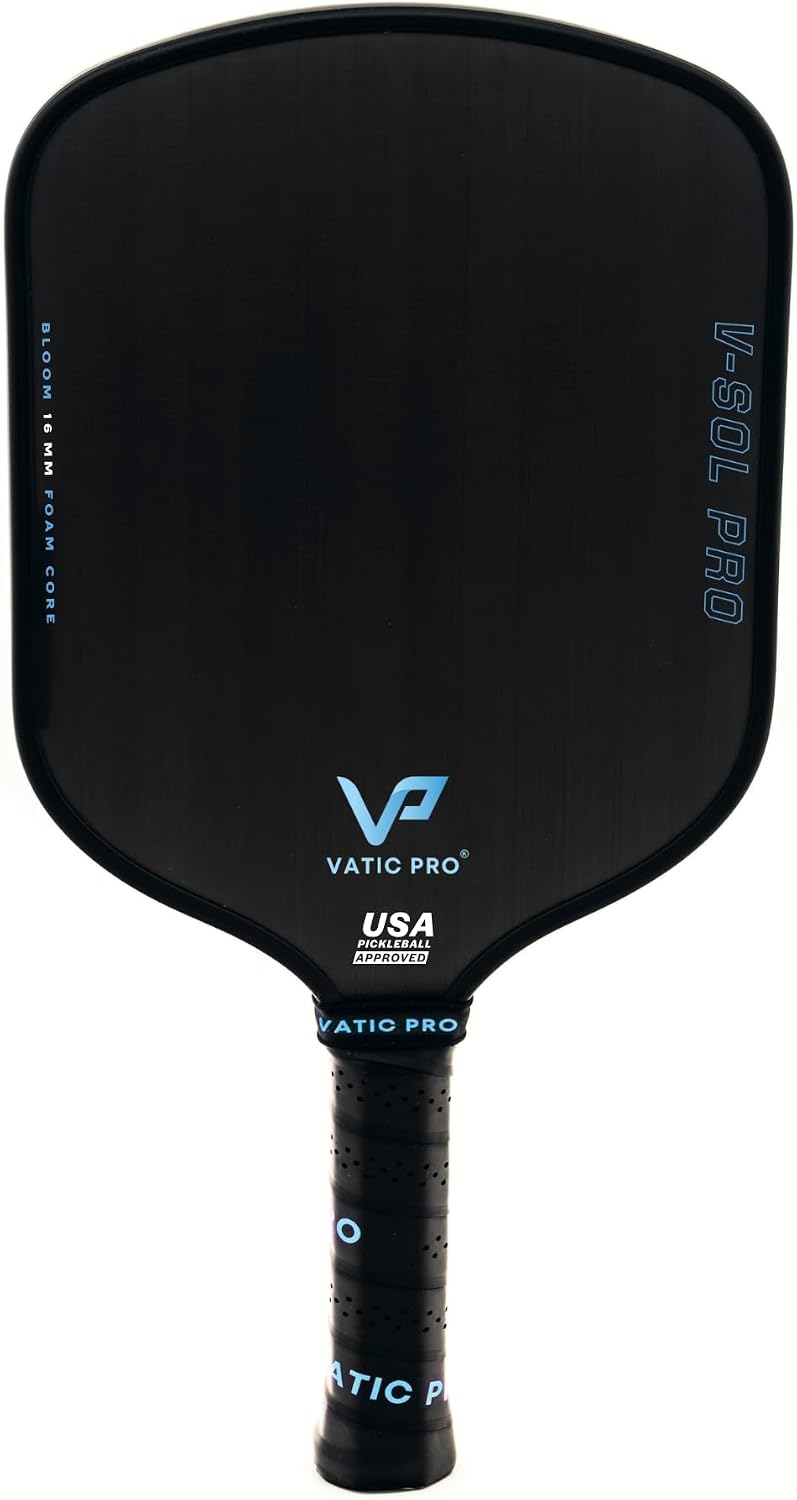
Foam cores used to mean a $250-plus price tag, the territory the CRBN TruFoam Barrage occupies above. The V-Sol Pro is Vatic Pro's answer to that gap: a full EPP foam core with an EVA outer ring, wrapped in a raw carbon fiber face, at less than half the Barrage's price. The foam construction gives it the same dead-consistent feel foam paddles are known for, no honeycomb dead spots developing over a season, paired with the large, forgiving sweet spot the outer ring adds. It is the paddle to try if you want to know what foam core play feels like before committing to a premium price.
Pros
- Full EPP foam core at a fraction of premium foam paddle prices
- EVA outer ring widens the sweet spot for off-center forgiveness
- Raw carbon face grips the ball well for spin
- USA Pickleball approved
Cons
- Less pop on drives than thermoformed power paddles like the TKO-C
- Smaller brand means fewer places to demo it in person
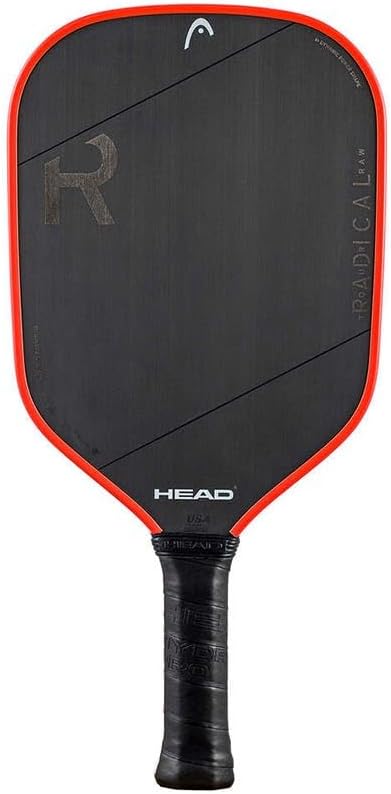
HEAD spent decades building shock-dampening technology into tennis racquets before bringing it to pickleball, and the Radical Tour Raw is where that experience shows up most. A raw carbon fiber face keeps spin respectable, but the real selling point is HEAD's Handle Stabilizer Technology and Comfort Grip System, a softer PU-inlaid grip built specifically to cut vibration at the point of contact. For players nursing tennis elbow or general arm soreness who still want a real carbon paddle rather than a soft beginner model, this is the pick that takes the sting out of every off-center hit without giving up control.
Pros
- HST handle dampening and Comfort Grip System cut vibration at contact
- Raw carbon fiber face still delivers real spin
- Tennis-racquet-style grip feels natural for racquet-sport crossovers
- Backed by HEAD's decades of shock-dampening engineering
Cons
- Spin trails the top carbon paddles on this list
- Shorter traditional handle limits two-handed backhands
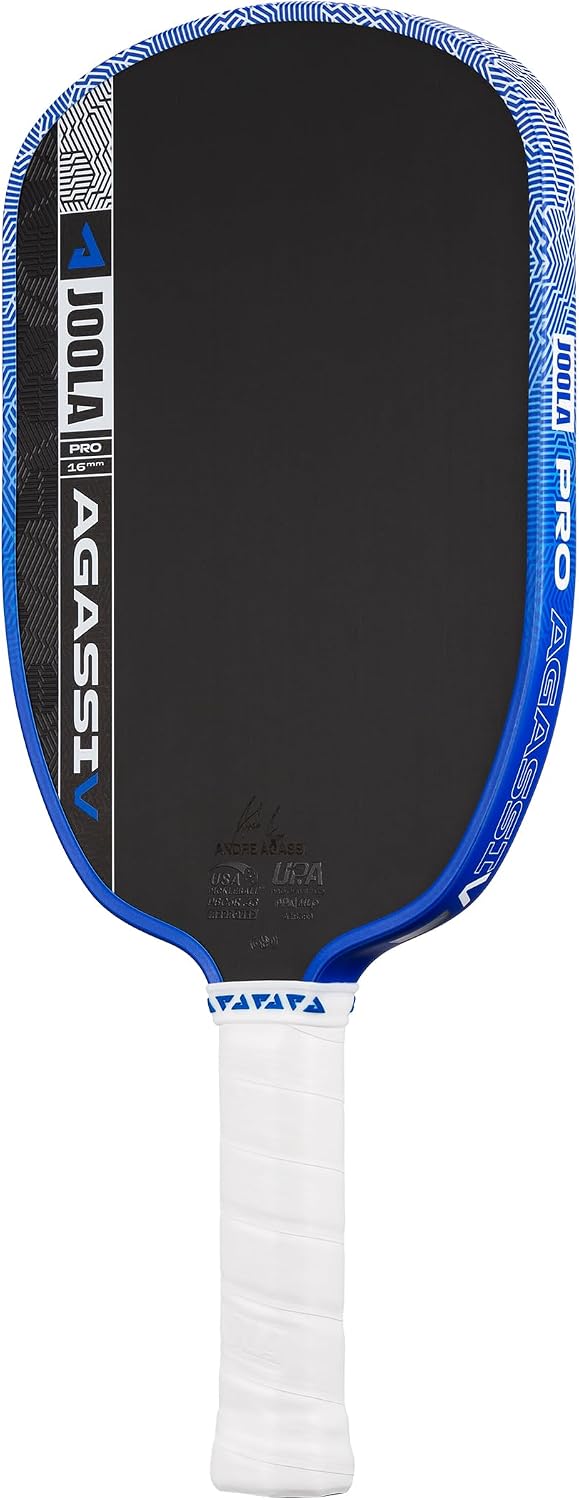
JOOLA's Pro V line replaces the Pro 4 generation, and the Agassi shape is the all-around build in the lineup, named for the extended sweet spot inspired by the tennis rackets that made Andre Agassi's career. KineticFrame construction flexes on contact the way a hockey stick loads and releases energy, adding power on drives while staying forgiving on blocks and resets. The textured raw carbon face grips the ball hard for spin, and the frame carries an embedded NFC chip that pairs with the JOOLA Connect app for registration and a 12 month warranty. It is not a specialist paddle built for one shot; it is built to be good at all of them.
Pros
- KineticFrame construction flexes for power without losing control
- Extended Agassi shape widens the sweet spot into the upper edges
- Textured raw carbon face grips the ball for real spin
- NFC chip unlocks the JOOLA Connect app and a 12 month warranty
- USA Pickleball and UPA-A dual certified
Cons
- $300 price sits above every other paddle on this list
- 8.1oz weight and 4.25 inch grip run larger than the control-focused picks
- Newer release with a smaller review track record than JOOLA's Pro 4 line
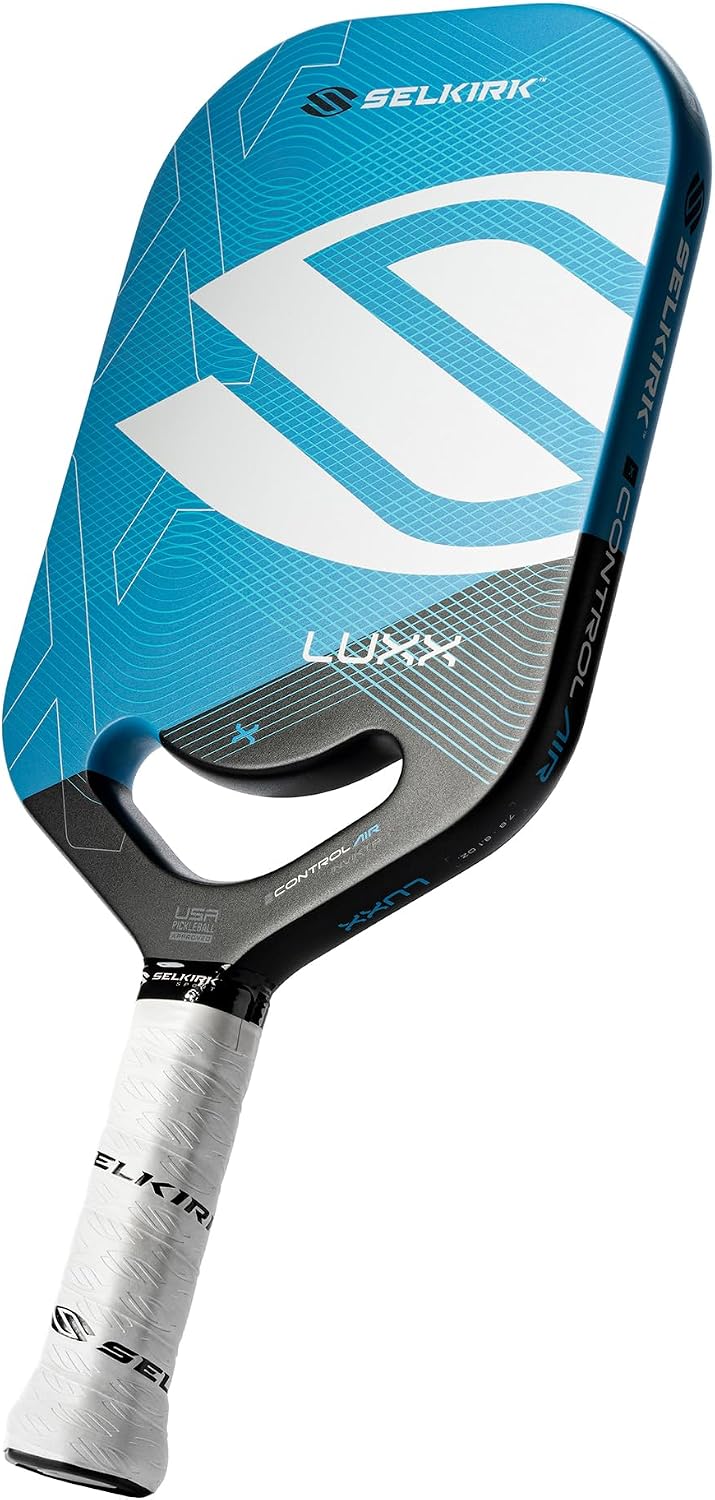
Every other paddle on this list tops out at 16mm. The LUXX Control Air runs a 20mm X7 Thikset Honeycomb core, Selkirk's deepest, built specifically for players who win points at the net rather than off the baseline. That extra core depth soaks up pace on blocks and resets, while the open-throat ThroatFlex design adds dwell time so the ball sits on the face a fraction longer during dink exchanges. A Florek carbon face with Selkirk's ProSpin+ NextGen micro-texture keeps spin consistent shot after shot, and 360° Proto Molding construction gives the whole paddle a stable, dead-feel-free hit. If your doubles game is won at the kitchen line, not the baseline, this is the specialist pick.
Pros
- Deepest core in this lineup (20mm) built specifically for touch and control
- ThroatFlex open-throat design adds dwell time for shot-shaping at the net
- ProSpin+ NextGen micro-texture keeps spin consistent as the face wears
- 360° Proto Molding construction feels stable with no dead spots
- USA Pickleball approved
Cons
- Some owners report edge paint chipping and peeling over time
- The deep core trades away pace; not the pick for baseline power hitters
- Premium price for a paddle built around one specific skill
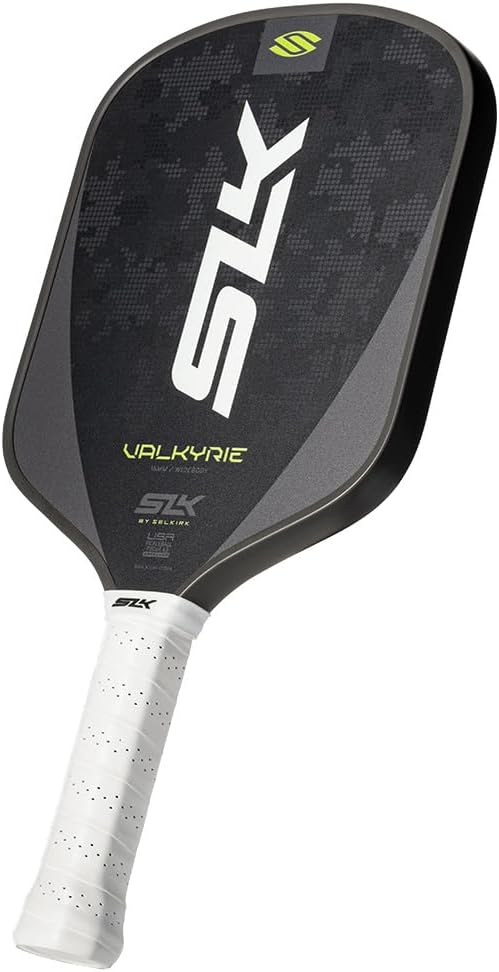
Every paddle above this one uses a standard or elongated blade. The SLK Valkyrie goes the other direction, a true widebody shape that trades reach for the largest face on this list. Selkirk pairs it with Fiberflex Fiberglass over a 16mm polypropylene honeycomb core, a softer, more forgiving combination than the raw carbon paddles higher up, so mishits toward the edges still find enough paddle to stay in play. If you or a doubles partner are still grooving a consistent contact point, the extra margin for error here matters more than another 5% of spin would.
Pros
- Widebody shape gives the largest sweet spot in this lineup
- Fiberflex Fiberglass face is forgiving without feeling dead
- 16mm polypropylene honeycomb core softens contact on off-center hits
- USA Pickleball approved
- Priced well under Selkirk's carbon-face lineup
Cons
- Fiberglass face spins less than the carbon paddles above it
- Widebody shape sacrifices some reach on wide balls
- Advanced players will want more power ceiling
How to Choose a Pickleball Paddle
Ignore the marketing for a second: three decisions determine how a paddle plays. Core thickness, face material, and shape. Get those three right for your game and you will be happy with any well-made paddle on this list.
Core Thickness: Power vs. Control
Thicker cores (16mm) absorb more energy, which softens drives but makes dinks, blocks, and resets far more predictable. Thinner cores (13 to 14mm) return more energy for extra power and hand speed at the cost of touch. If you mostly play doubles and rallies are won at the kitchen line, start at 16mm. If you play singles or live for putaways, go thinner.
Face Material: Carbon, Fiberglass, or Graphite
Raw carbon fiber grips the ball longest and produces the most spin, which is why it dominates the pro tours. Fiberglass gives more raw pop but less spin and a smaller sweet spot. Graphite is light and crisp, fine for beginners, but limited for spin. As a rule: buy raw carbon if you can, textured fiberglass if you are on a budget.
Shape and Grip Length
Elongated paddles (like the Hyperion CFS) trade sweet spot size for reach and leverage. Widebody shapes (like the Z5) do the opposite. Longer 5.25 inch and up handles matter if you hit two-handed backhands. And check the certification list before tournament play: everything in this guide is USA Pickleball approved.
What the Pros Actually Play
Nearly every paddle in pro pickleball today is a thermoformed raw carbon design at 14 to 16mm, and foam cores like CRBN's TruFoam are the next wave already showing up on tour. That is exactly the range this list covers. The pro game is a good filter: technology that survives tour play tends to be technology that lasts in your bag too.
Frequently Asked Questions
How much should I spend on a pickleball paddle?
Beginners: $50 to $100 gets a paddle you will not outgrow in a month. Improving league players: the $150 to $200 midrange (like the Six Zero DBD) is the value sweet spot. Only spend $250+ if you play several times a week and know what feel you want; at that level the differences are real but subtle.
What paddle does Ben Johns actually use?
Ben Johns' retail signature paddle is currently the JOOLA Hyperion CFS, built around the same Carbon Friction Surface technology and Ben Johns collaboration as his tour equipment. It's a rare case of a pro's retail paddle closely tracking what they actually play, which is part of why it tops this list.
How long does a pickleball paddle last?
For regular players, 12 to 24 months. Honeycomb cores gradually break down and develop dead spots, and grit faces wear smooth. If your paddle suddenly sounds different or balls start dropping short, the core is likely going. Foam core paddles like the CRBN TruFoam Barrage are designed to age much more slowly.
Are expensive paddles worth it for casual players?
Mostly no. A $45 Franklin will serve a twice-a-month player fine. The upgrade starts paying off when you play weekly and start losing points to spin you cannot match or resets you cannot control; that is when a raw carbon paddle makes a visible difference.