JOOLA Ben Johns Perseus Pro IV Review: The Default Tour Paddle
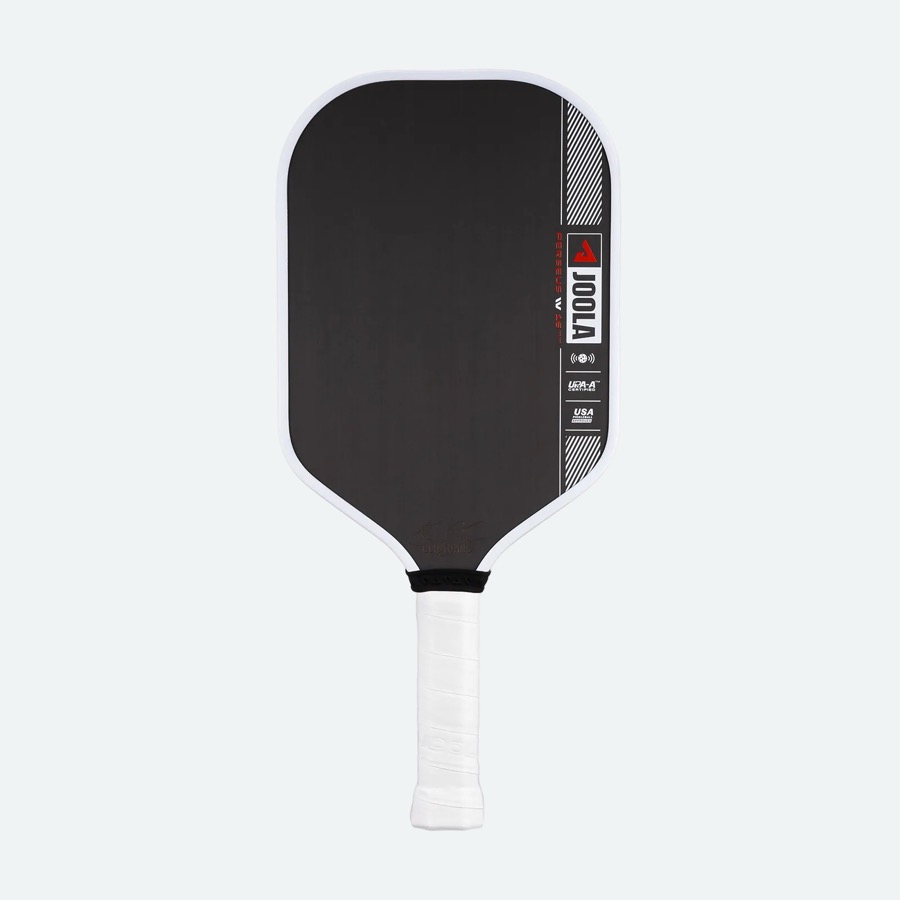
Ask ten pickleball players what paddle they'd buy if they could only pick one, and a surprising number land on the same answer: whatever Ben Johns is currently playing. The Perseus Pro IV is that paddle. It is his signature model on the PPA Tour, and the Pro IV generation refines an already dominant shape with JOOLA's TechFlex Power layup and a reworked Propulsion Core, rather than chasing a gimmick upgrade.
This review covers who the Perseus Pro IV actually fits, how it plays across drives, resets, and dinks, what the raw carbon face construction does for spin, and whether it is worth the premium price over the other paddles in our Best Pickleball Paddles rankings.
JOOLA Ben Johns Perseus Pro IV - Quick Specs
- Core Thickness 16mm polymer
- Face Material Raw carbon fiber (TechFlex Power)
- Shape Elongated
- Weight Range 7.8oz-8.2oz depending on grip build
- Certification UPA-A and USA Pickleball approved
- Approx. Price
- Best For 3.5+ players who want one all-court paddle at a tour level
Who Should Buy the Perseus Pro IV?
This is a paddle for players who already have a repeatable swing and want the paddle to stop being the limiting factor. It is not the easiest paddle to pick up cold.
- Beginners: Not the right first paddle. The elongated shape has a smaller sweet spot than widebody beginner paddles like the Onix Z5, and the raw carbon face rewards technique the beginner hasn't built yet. Start with something more forgiving and upgrade into this later.
- Intermediate players (3.0-3.5): Workable once dinks and resets are consistent, but the elongated reach takes an adjustment period. Players still developing a soft game may find a 16mm widebody more forgiving in the meantime.
- Advanced players (4.0+): This is where the paddle is built to live. The extra reach on the elongated shape, the raw carbon spin ceiling, and the stable 16mm core reward players who are already placing shots deliberately rather than reacting.
How the Perseus Pro IV Plays
Drives and counters come off with real pace, helped by TechFlex Power's tuned flex pattern rather than pure stiffness. What stands out more than raw power, though, is how much bite the raw carbon face puts on the ball: rolls and serves that would sit up off a smoother face instead dip late, which is the paddle's single most repeated praise among longtime owners. At the kitchen line, the 16mm core keeps dinks and resets controllable, and the sweet spot, while smaller than a widebody paddle's, is large enough that off-center kitchen exchanges do not consistently die on you.
Construction: TechFlex Power and the Propulsion Core
The Pro IV's face is a raw (unfinished) carbon fiber surface under JOOLA's TechFlex Power layup, which is what produces the paddle's above-average spin without sacrificing the power an elongated shape is chosen for in the first place. Underneath, the Propulsion Core is JOOLA's polymer honeycomb tuned for this specific paddle generation, aiming for a flex profile that reads as poppy on drives but composed on soft shots rather than binary hard-or-soft. It is the same construction family that has made JOOLA the most-played brand on tour over the last two seasons.
Pros
- The exact paddle line the most decorated player in the sport plays
- Excellent blend of power, spin, and forgiveness for an elongated shape
- Raw carbon face generates real, repeatable topspin
- UPA-A and USA Pickleball approved for sanctioned play
- 16mm core keeps the soft game controllable despite the power ceiling
Cons
- Premium price relative to midrange paddles like the Six Zero DBD Control
- Elongated shape has a smaller sweet spot than widebody paddles
- Overkill for a first or second paddle
Similar Paddles to Consider
See the full lineup in Best Pickleball Paddles of 2026, including the Six Zero Double Black Diamond Control for a control-first alternative at a lower price, and the Paddletek Bantam TKO-C if you want more raw power from a thinner core.
Frequently Asked Questions
Is the Perseus Pro IV worth the price over a midrange paddle?
If you are past the beginner stage and can already feel the difference between paddles in your hands, yes: the spin and stability gap between this and a $150-180 paddle is real. If you are still building fundamentals, a midrange paddle like the Six Zero DBD Control gets you most of the performance for less.
Does Ben Johns actually play this exact paddle?
Yes. The Perseus line is his signature model on the PPA Tour, and the Pro IV is the current generation. The retail version shares the shape and core construction family of what he plays in competition.
What's the biggest adjustment coming from a widebody paddle?
The smaller, more elongated sweet spot. Off-center contact is less forgiving than on a widebody shape like the Onix Z5, so expect a short adjustment period before your consistency catches up to the paddle's ceiling.