Best Pickleball Nets of 2026: Portable & Backyard Picks
Not everyone lives near a dedicated pickleball court, and that is exactly why portable net systems exist: a real regulation-height net you can set up in a driveway, cul-de-sac, or backyard in a few minutes and fold away when you are done. The gap between a genuine pickleball net and a repurposed badminton or volleyball net is bigger than it looks, mostly in how the net holds its height at center court.
I researched the portable net systems families and regular players actually set up at home, from a full-size convertible option to a compact backyard set that doubles as a gift-ready starter kit, and ranked the ones that hold up to repeated setup and teardown instead of sagging or tipping after a few uses.
Top Picks at a Glance
- Best Overall BAGAIL 2-in-1 Net Set See Current Options →
- Best for Small Spaces Franklin Half Court Set ~$57 Check Price →
- Best Family Set Hoverphenix Family Set ~$80 Check Price →
- Best for Serious Practice Fostoy Pro Aluminum Tension-Lock Net ~$200 Check Price →
- Best for Travel & Solo Practice GOOX 6FT Mini Pickleball Net Set ~$50 Check Price →
- Best Value A11N Classic Pickleball Net ~$60 Check Price →
- Best Anti-Sag Tension System TYRSEN Pro Hand Crank Net ~$190 Check Price →
- Best Club & Tournament Net Pickle-Ball 3.0 Tournament Net ~$99 Check Price →
- Best Semi-Permanent Setup SwingIt Pro Crank Net ~$159 Check Price →
- Best Wind-Resistant Base ZENY 22FT Pickleball Net ~$57 Check Price →
- Best Premium Lightweight Net Pickle-Ball SwiftNet 2.1 See Current Options →
- Best All-in-One Starter Kit TYRSEN Pickleball Net Set ~$100 Check Price →
- Best for Community Centers & Gyms A11N SPORTS Pro Pickleball Net with Wheels and Hand Winch ~$180 Check Price →
- Best Pop-Up Setup Dinkaroo Mini Portable Practice Net ~$70 Check Price →
- Best from a Trusted Brand Franklin Sports Portable Pickleball Net with Wheels ~$180 Check Price →
- Best Premium 2-in-1 Set Onix 2-in-1 Portable Net Set ~$150 Check Price →
Side-by-Side Comparison
| Net | Price | Width | Includes | Best For | Rating |
|---|---|---|---|---|---|
| BAGAIL 2-in-1 Net Set | 22 ft or 11 ft | Net, wheeled frame, ball collector, carry bag | Converting between full and half court | 4.6 / 5 | |
| Franklin Half Court Set | ~$57 | 10 ft | Net, 2 paddles, 2 balls | Small spaces, casual backyard play | 4.5 / 5 |
| Hoverphenix Family Set | ~$80 | 22 ft | Net, 4 paddles, balls, carry bag | A full family or group playing at once | 4.6 / 5 |
| Fostoy Pro Aluminum Tension-Lock Net | ~$200 | 22 ft | Net, aluminum frame, locking wheels, carry bag | Serious solo practice with tournament-standard tension | 4.5 / 5 |
| GOOX 6FT Mini Pickleball Net Set | ~$50 | 6 ft | Net, tripod frame, ball holder, carry bag | Travel, tight spaces, solo dink practice | 4.6 / 5 |
| A11N Classic Pickleball Net | ~$60 | 22 ft | Net, steel frame, carry bag | Full regulation size on a budget | 4.5 / 5 |
| TYRSEN Pro Hand Crank Net | ~$190 | 22 ft | Net, steel frame, hand-crank tensioner, locking wheels, carry bag | Precise tension control and moving between courts | 4.6 / 5 |
| Pickle-Ball 3.0 Tournament Net | ~$99 | 22 ft | Net, powder-coated steel frame, carry bag with frame straps and gear pockets | Club and tournament-standard play | 4.7 / 5 |
| SwingIt Pro Crank Net | ~$159 | 22 ft | Net, bolt-together steel frame, hand-crank tensioner, locking wheels, carry bag | Assembling once and leaving it set up in the yard | 4.3 / 5 |
| ZENY 22FT Pickleball Net | ~$57 | 22 ft | Net, steel frame, carry bag | Staying upright on breezy driveways and patios | 4.6 / 5 |
| Pickle-Ball SwiftNet 2.1 | 22 ft | Net, carbon-fiber/aluminum frame, carry case | The lightest full-size net on this list, easiest to travel with | 4.5 / 5 | |
| TYRSEN Pickleball Net Set | ~$100 | 22 ft | Net, wheeled steel frame, 4 paddles, 6 balls, 12 court markers, carry bag | Starting from zero with no gear owned yet | 4.5 / 5 |
| A11N SPORTS Pro Pickleball Net with Wheels and Hand Winch | ~$180 | 22 ft | Net, steel frame, hand-winch tensioner, 6 locking caster wheels, carry bag | Community centers, gyms, and multi-court venues | 4.4 / 5 |
| Dinkaroo Mini Portable Practice Net | ~$70 | 3.5 ft | Net, collapsible aluminum stand, carry bag with strap | Popping open a net in seconds for solo dink drills | 4.6 / 5 |
| Franklin Sports Portable Pickleball Net with Wheels | ~$180 | 22 ft | Net, wheeled steel frame, travel bag | Buyers who want a recognized sporting-goods brand behind the net | 4.4 / 5 |
| Onix 2-in-1 Portable Net Set | ~$150 | 22 ft or 10 ft | Net, interlocking steel frame, center post, wheeled carrying case | A pickleball-specific brand's take on a convertible 2-in-1 net | 4.4 / 5 |
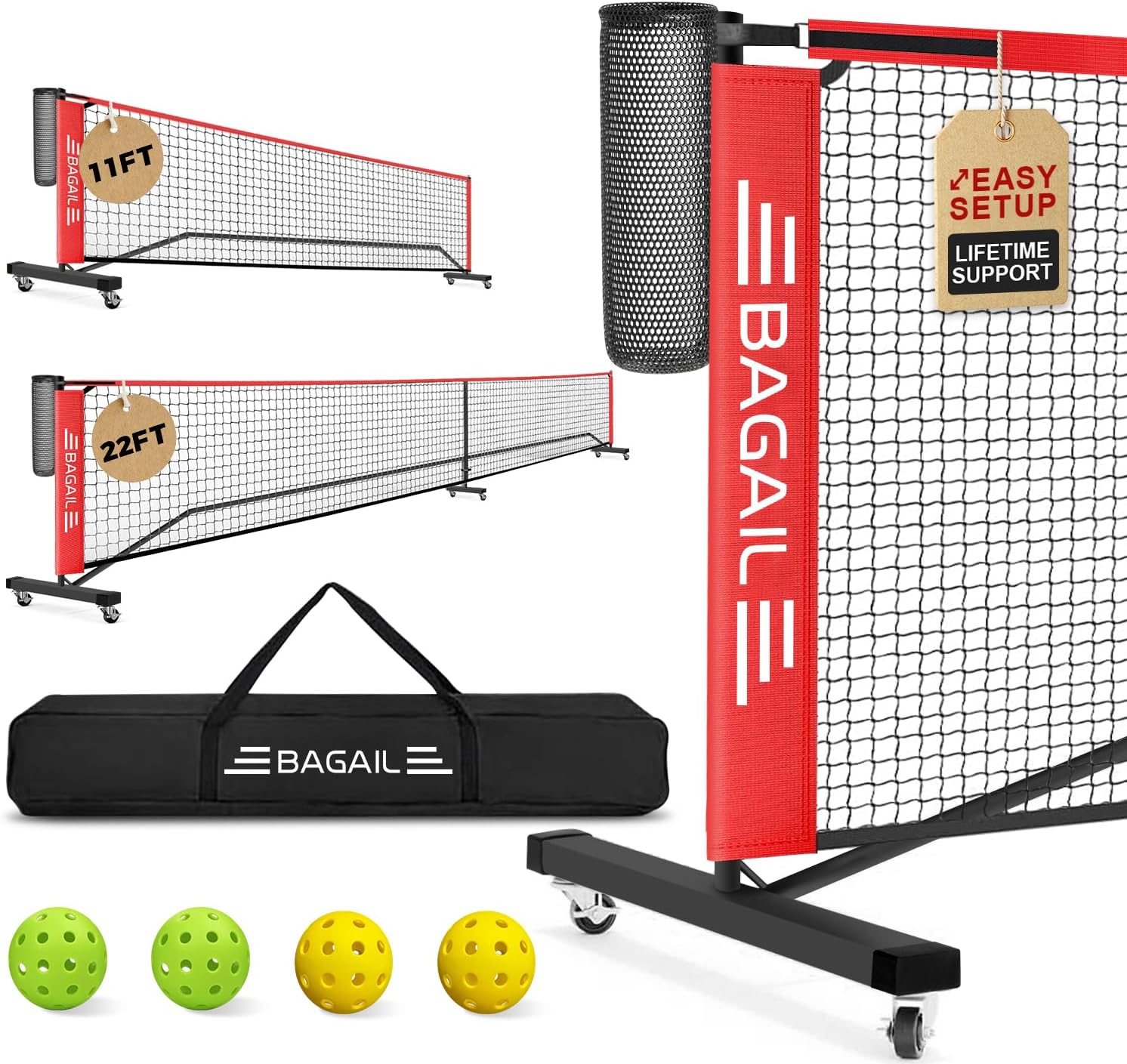
Most portable nets force a choice between full regulation size and something more compact. The BAGAIL set does not: the same frame reconfigures between a full 22-foot regulation net and an 11-foot half-court practice net, so it works for a real doubles game one day and solo drilling the next. Built-in wheels make it easy to roll in and out of the garage, and the included ball collector cuts down on chasing stray shots across the driveway.
Pros
- Converts between 22-foot regulation and 11-foot half-court sizes
- Built-in wheels for easy setup and storage
- Ball collector reduces chasing stray balls
- Includes carry bag for transport
Cons
- Heavier than the compact half-court-only set here
- Does not include paddles or balls
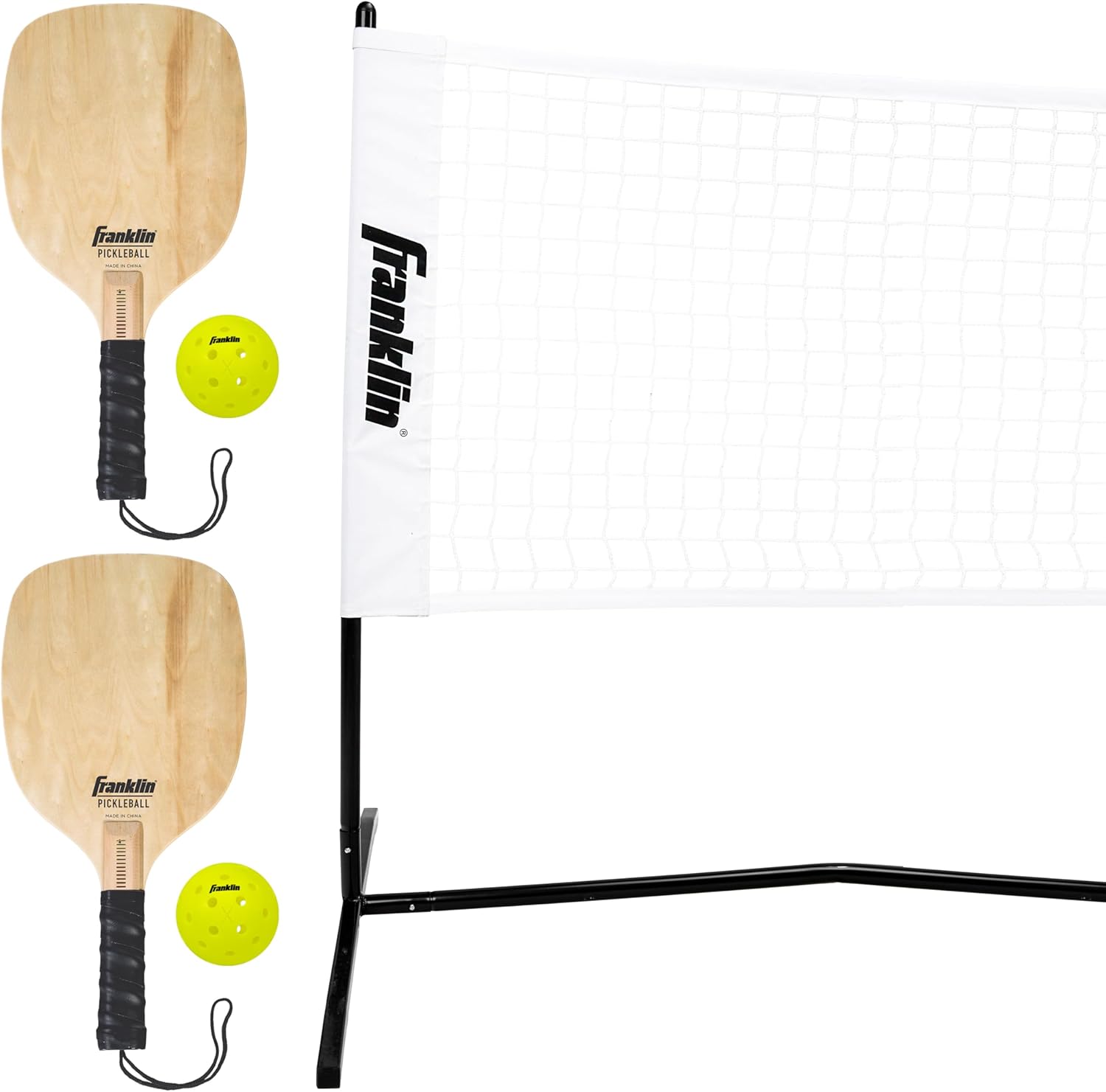
Not every backyard has room for a full 22-foot net, and this is the set built for that: a 10-foot half-court net with sturdy steel posts, plus two wooden paddles and two X-40 balls in the box so it is ready to play the moment it is assembled. It is the easiest recommendation on this list for a first-time buyer or as a gift, since nobody needs to already own gear to start using it.
Pros
- Comes complete with 2 paddles and 2 balls, ready to play
- Compact 10-foot size fits small yards and patios
- Sturdy steel posts despite the lower price
- Quick to assemble and easy to transport
Cons
- Not full regulation width, so it will not replicate real doubles play
- Included paddles are entry-level, expect to upgrade eventually
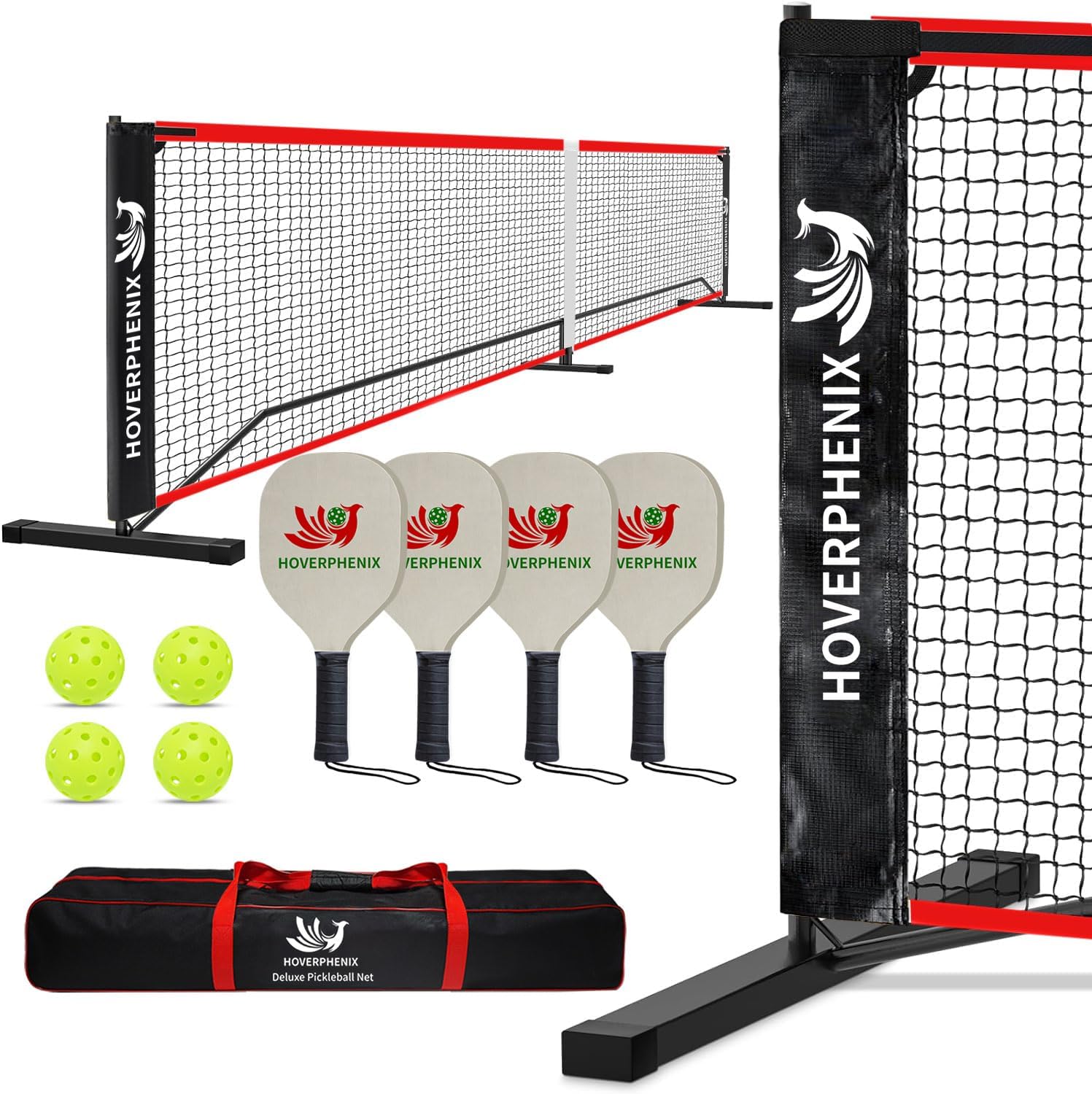
A full 22-foot regulation net only helps if enough people can actually play on it, and this set is built around that: four paddles and a set of balls alongside the weather-resistant steel-frame net, so a full family or two couples can start a real doubles game straight out of the box. It is the set to buy when the goal is getting multiple people playing at once, not just one person practicing solo.
Pros
- Includes 4 paddles, enough for a full doubles game immediately
- Full 22-foot regulation width net
- Weather-resistant steel frame for repeated outdoor use
- Strong sales volume and review count back up its durability
Cons
- No half-court conversion option like the BAGAIL set
- Included paddles are entry-level, fine for casual family play only
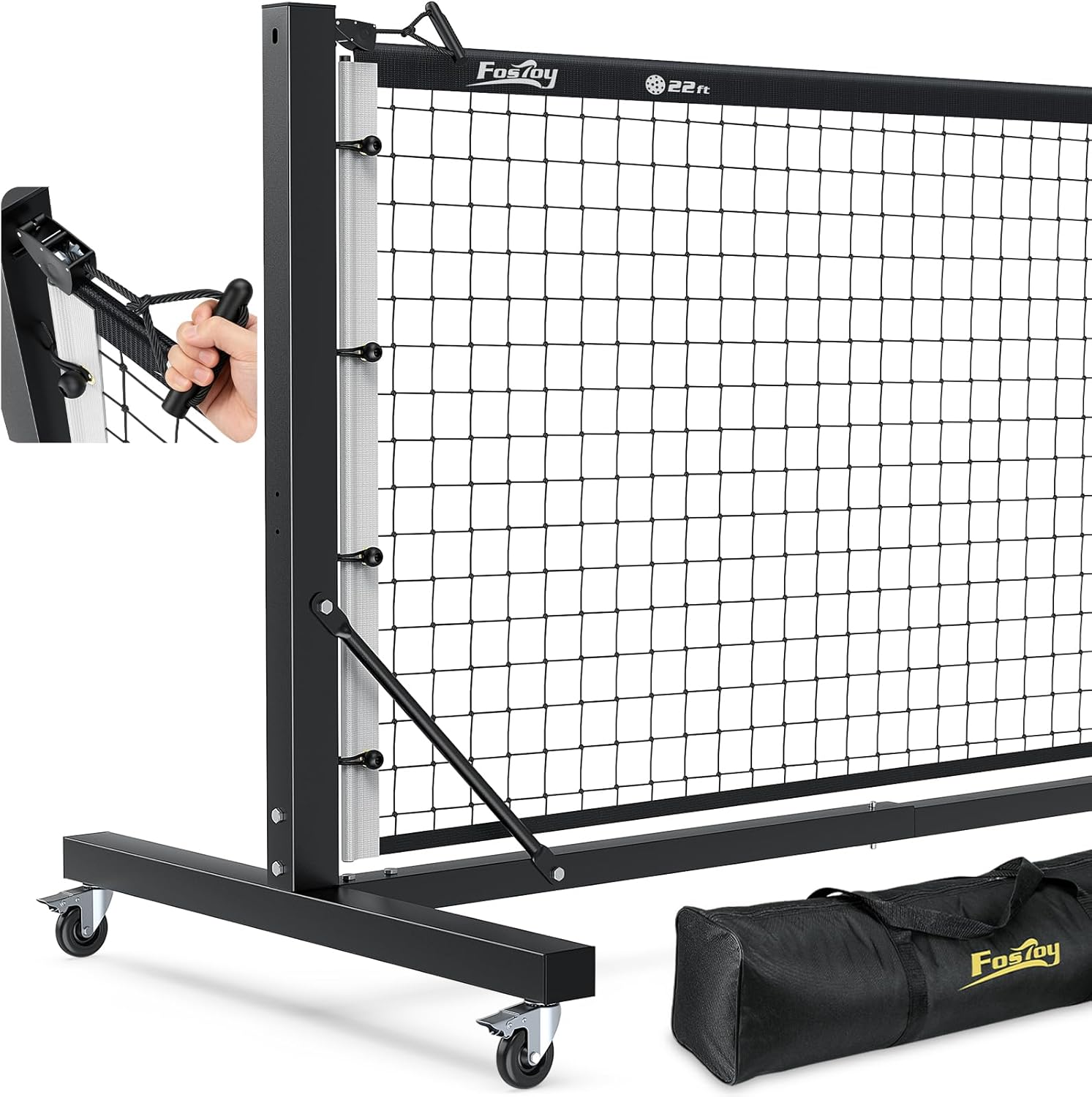
The other three sets here bundle paddles and balls for a first setup. This one does not, and that is the point: Fostoy builds a true regulation-only net for players who already have their own gear and want the truest possible replication of real court tension. A rust-proof aluminum frame stays lighter than the steel-frame nets on this list while holding the official 34-inch center height, and dual-side pull-cord tension locks let you cinch out sag in seconds instead of living with the "hump" cheaper nets develop at center court. Locking caster wheels also make it the easiest net here to roll into position or off the court between sessions.
Pros
- True regulation 22-foot width and 34-inch center height for serious practice and matches
- Rust-proof aluminum frame stays lighter than the steel-frame nets on this list
- Dual-side pull-cord tension locks prevent center-net sagging
- Locking caster wheels make repositioning and storage easy
- Tool-free clip-together setup with a carry bag for transport
Cons
- No included paddles or balls, players need their own gear
- Pricier than the bundled backyard sets on this list
- Wheels roll best on a flat, hard surface rather than grass
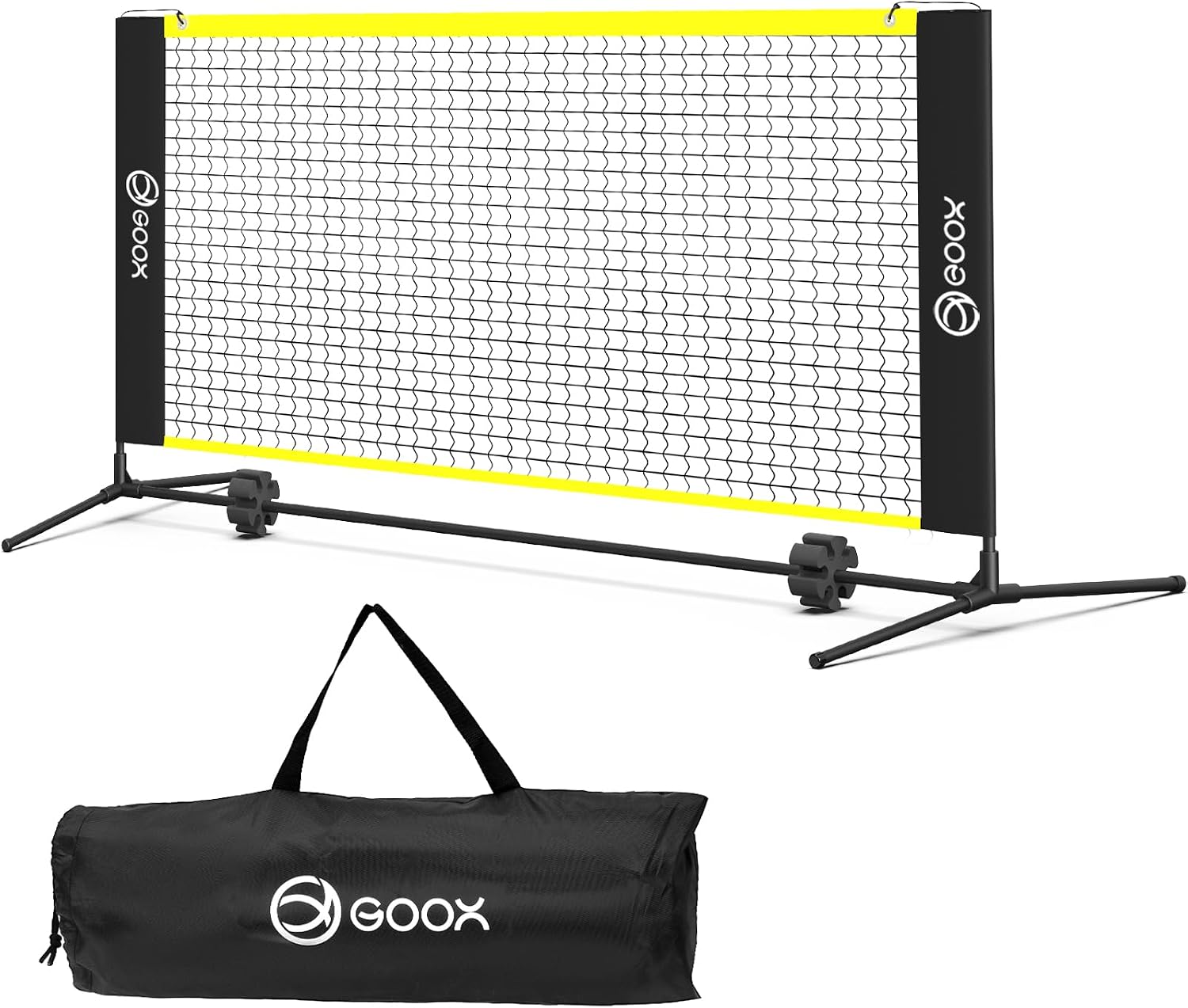
None of the sets above fit in a backpack, and that is the gap this one fills. At 6 feet wide and about 4 pounds, the GOOX mini net is built for dink and kitchen-line drilling anywhere there is a flat patch of ground, a driveway, a basement, a garage, or a park bench court on the road. The tool-free interlock frame with tensioned bungee poles snaps together in well under a minute, and nothing is loose enough to lose between setups.
Pros
- Packs into a backpack-sized carry bag at about 4 pounds
- Tool-free interlock frame sets up in under a minute
- Works indoors or outdoors, including basements and garages
- Includes a ball holder for solo dink and kitchen-line drilling
Cons
- Not a substitute for a full-size net when practicing real doubles positioning
- Steel frame elements can rust if left outside in the rain
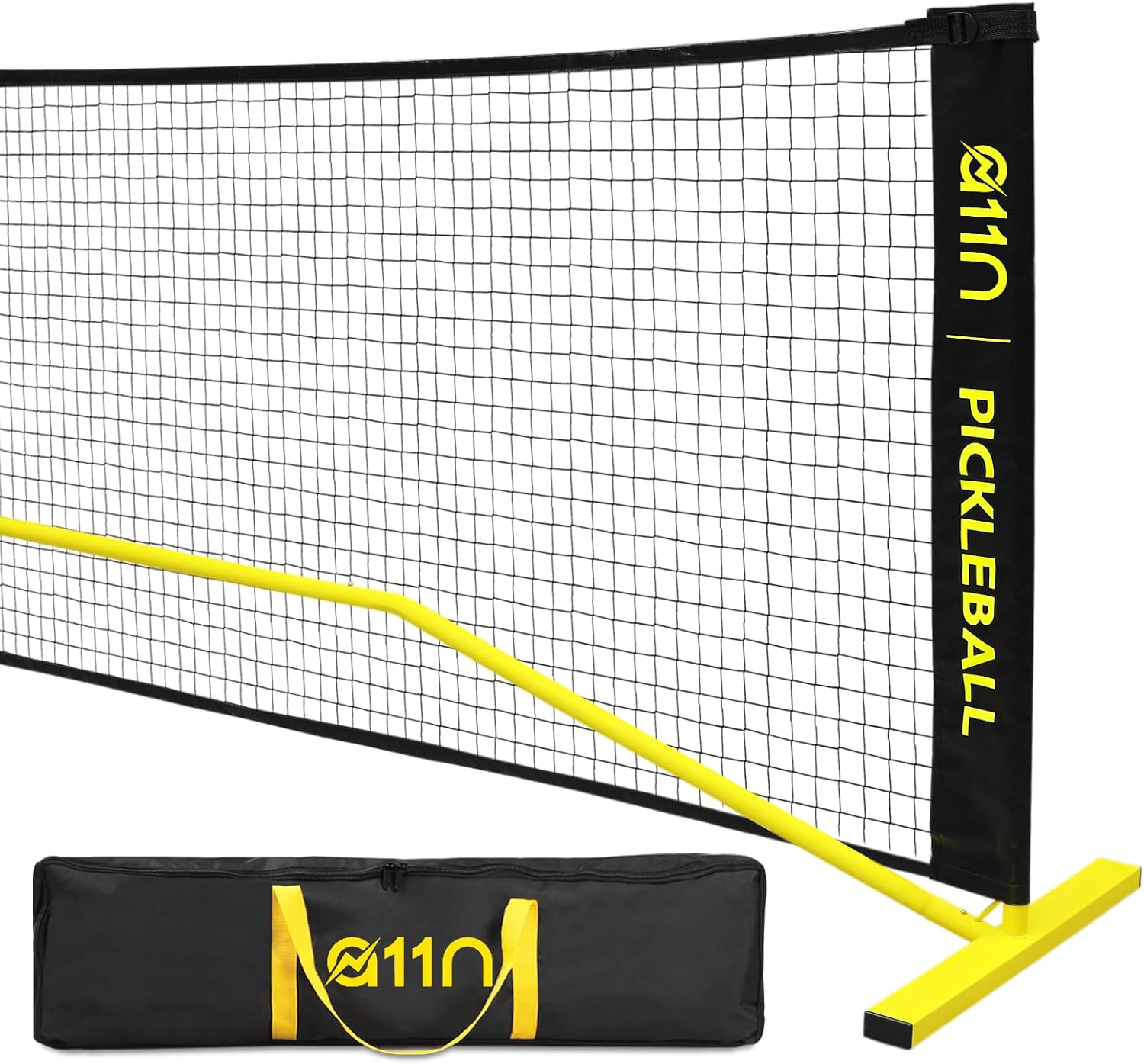
None of the sets above are built as a pure, no-frills regulation net at this price, and that is exactly the gap the A11N Classic fills. It is a full 22-foot, 34-inch-center net on an interlocking metal frame with a 36.8-inch curved base for stability, wrapped in an all-weather PE knotless net and dual PVC-coated tarp instead of the thinner polyester found on cheaper nets. It skips paddles and balls entirely, so the price stays low while the frame and net quality stay solid.
Pros
- Full 22-foot regulation width at one of the lowest prices in this category
- Sturdy interlocking metal frame with a wide curved base for stability
- All-weather PE knotless net and PVC-coated tarp resist wear better than typical polyester
- Tool-free assembly with numbered frame pieces
Cons
- Carrying case zippers are a recurring weak point under heavy rotation, per owner reviews
- No paddles or balls included, unlike the Franklin and Hoverphenix sets
- Net needs a full stretch on first setup before it seats snugly on the frame
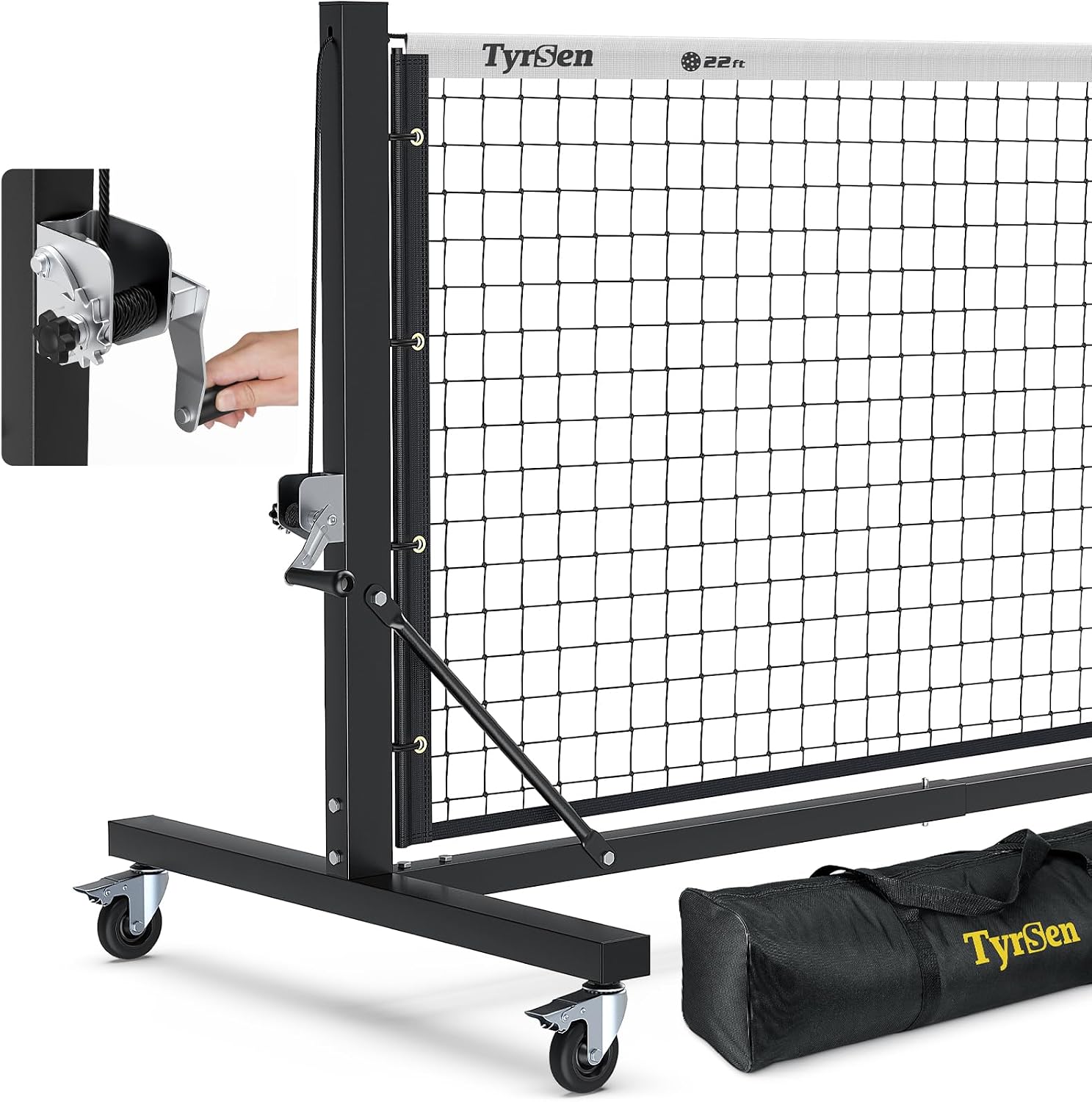
Every other net here tensions with straps, bungees, or velcro, and all of those loosen up over a season of play. The TYRSEN Pro swaps that for a built-in hand-crank winch and reinforced cable, so dialing out center sag takes a few turns of a handle instead of re-tying a strap. A heavy-duty square-tube steel frame keeps the whole thing rigid under real ball strikes, and locking caster wheels make it easy to roll into position or off the court without breaking anything down.
Pros
- Hand-crank tension system dials out center sag more precisely than bungee or strap designs
- Heavy-duty square-tube steel frame is noticeably more rigid than lighter budget nets
- Locking caster wheels make repositioning and storage fast
- True 22-foot regulation width with correct 34-inch center and 36-inch side heights
- Pre-attached quick-tie points and buckle clips speed up base assembly
Cons
- First-time assembly takes longer than the simpler sets here, instructions are text-heavy
- Heavier and bulkier to fully break down than the compact options on this list
- Stringing the second side of the net under tension is easier with two people
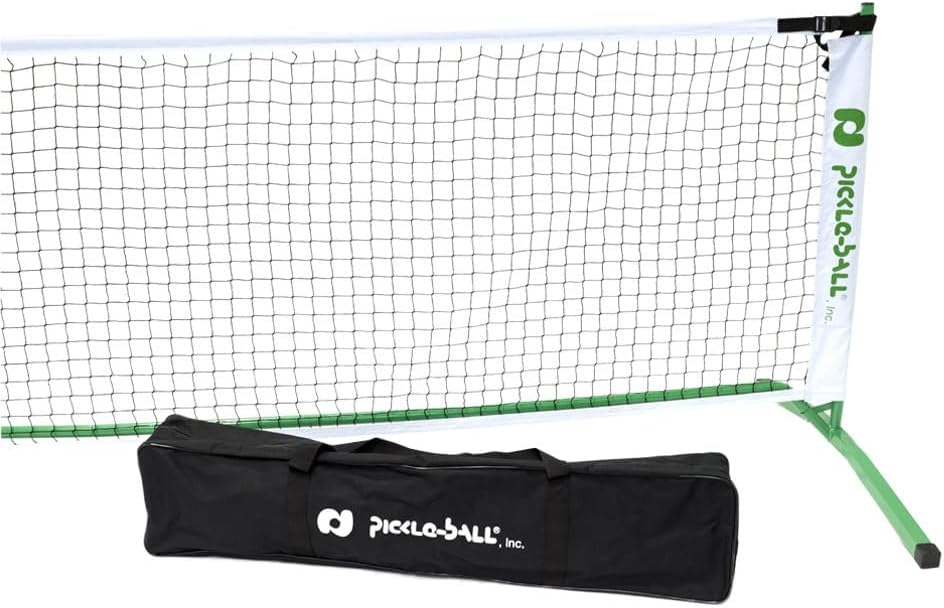
Pickle-Ball, Inc. is the actual company founded by the families who invented the sport back in 1965, and this net is the one widely set up at YMCAs, clubs, and tournaments around the country. Instead of the velcro straps most budget nets use to tighten the net top, it uses a buckle tension system you incrementally cinch down, so it stays tournament-taut instead of sagging as strap tension wears out over a season. A fiberglass center rod locks in the exact 34-inch center height against the true 22-foot regulation width, and the whole frame breaks down to about 5 minutes with just two snap-together joints.
Pros
- Made by the actual company the sport's founders started in 1972, with 50+ years of net-building experience
- No-velcro buckle tension system stays taut instead of sagging like strap-tightened budget nets
- True 22-foot regulation width with a fiberglass center rod holding the exact 34-inch center height
- Only two snap-together joints, sets up or breaks down in about 5 minutes
Cons
- Net fabric itself is not as heavy-gauge as the tournament-grade frame, per some owners
- No paddles or balls included, players need their own gear
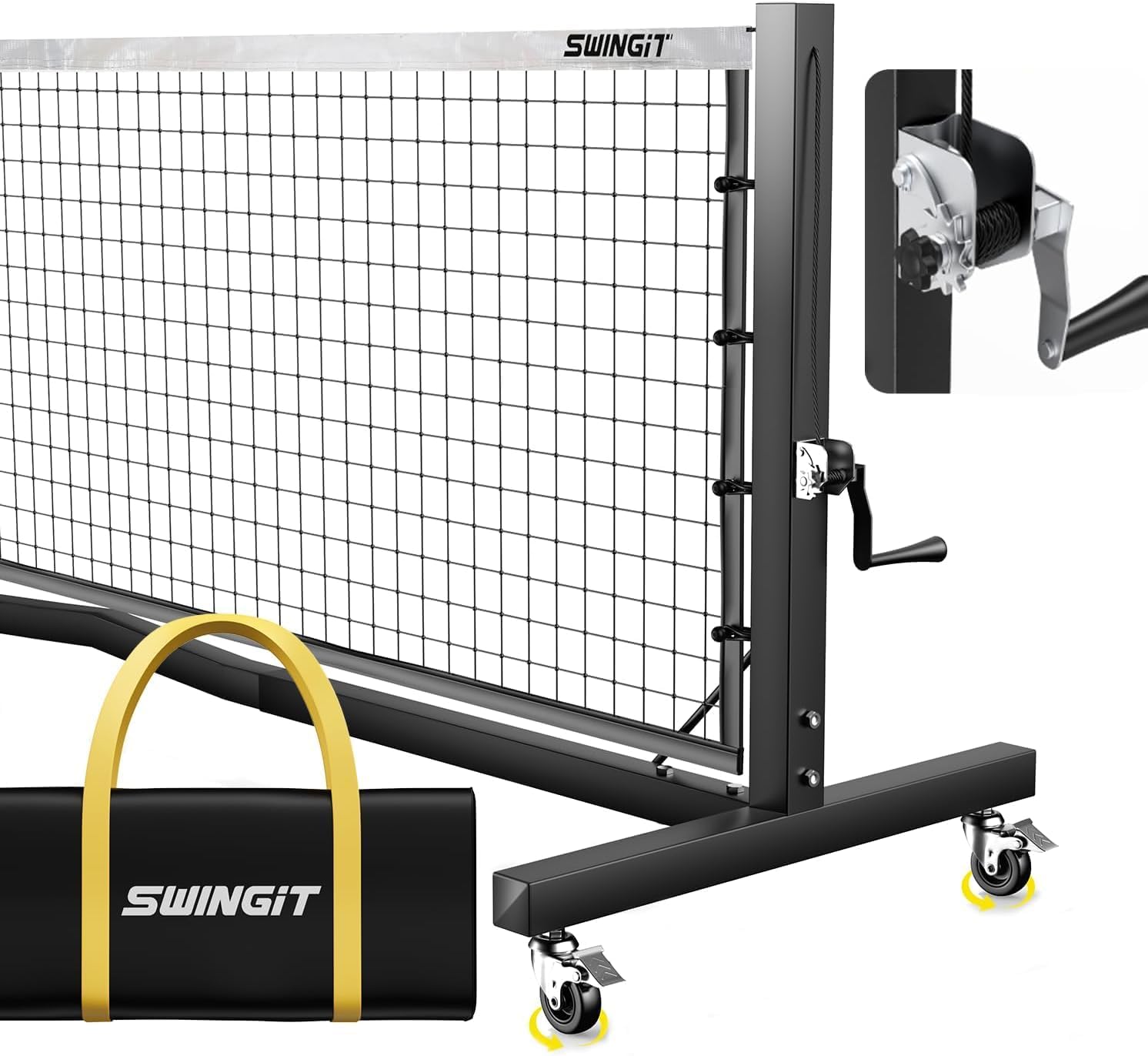
Every other net on this list is built to break down and travel. This one is built for the opposite job: bolt the square-tube steel frame together once, and it is sturdy enough to leave assembled in the driveway or garage corner all season instead of packing it away after every game. A hand-crank tensioner keeps the top cord taut without re-threading a strap, and locking casters hold it steady whether it is parked on concrete at home or rolled out on a gym floor.
Pros
- Bolt-together square-tube steel frame is noticeably more rigid than the fold-and-go nets on this list
- Hand-crank tensioner keeps the top cord taut without re-threading a strap
- Locking casters hold it steady on driveways, patios, and indoor gym floors alike
- Amazon's Choice with a strong recent sales track record
Cons
- Assembly involves real nuts and bolts, so the first setup takes longer than the tool-free nets here
- Built for staying in one spot rather than the frequent pack-up-and-go use case other nets on this page are made for
- A few owners noted the wheel-locking clamps have sharp edges, so handle them carefully during setup
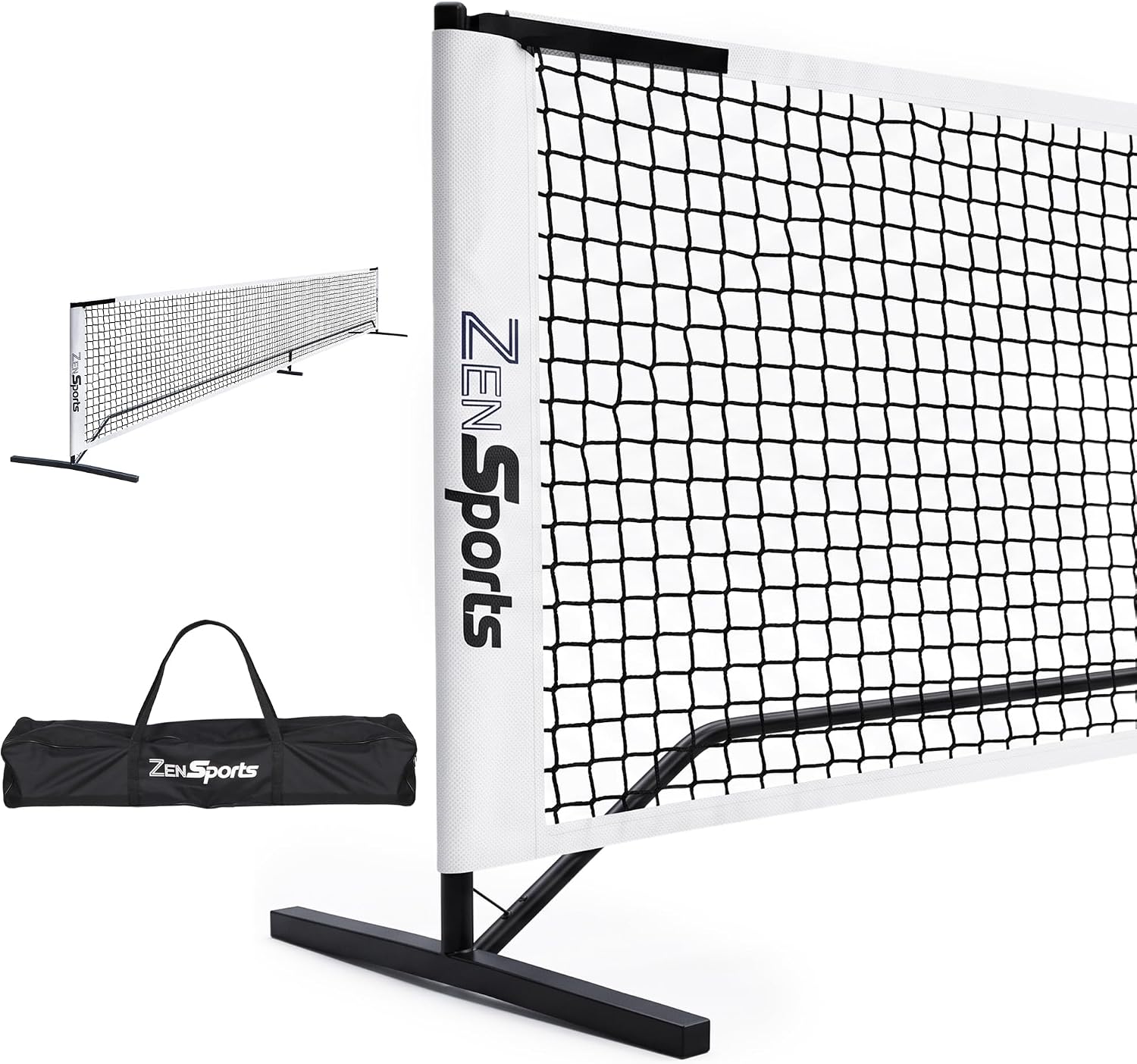
A lightweight net that gets pushed around by a stiff breeze is not much of a net at all, and this is where ZENY's set stands out. The steel frame runs on a noticeably wider 32-inch base than most nets in this price range, which keeps the whole system planted on driveways and patios that catch wind instead of tipping between points. True regulation dimensions, 36.8 inches on the sides dipping to 34 inches at center, mean the net still plays like a real court despite the budget price, and it is backed by the largest owner review base of any net on this list.
Pros
- 32-inch wide base resists tipping in wind better than narrower budget nets
- True regulation height, 36.8 inches on the sides and 34 inches at center
- By far the most-reviewed net on this list, with a strong track record
- Included carry bag for storage and transport
Cons
- No paddles or balls included, players need their own gear
- A few owners noted connector pins need occasional attention over time
- Frame is lighter-gauge than the crank-tension nets on this list
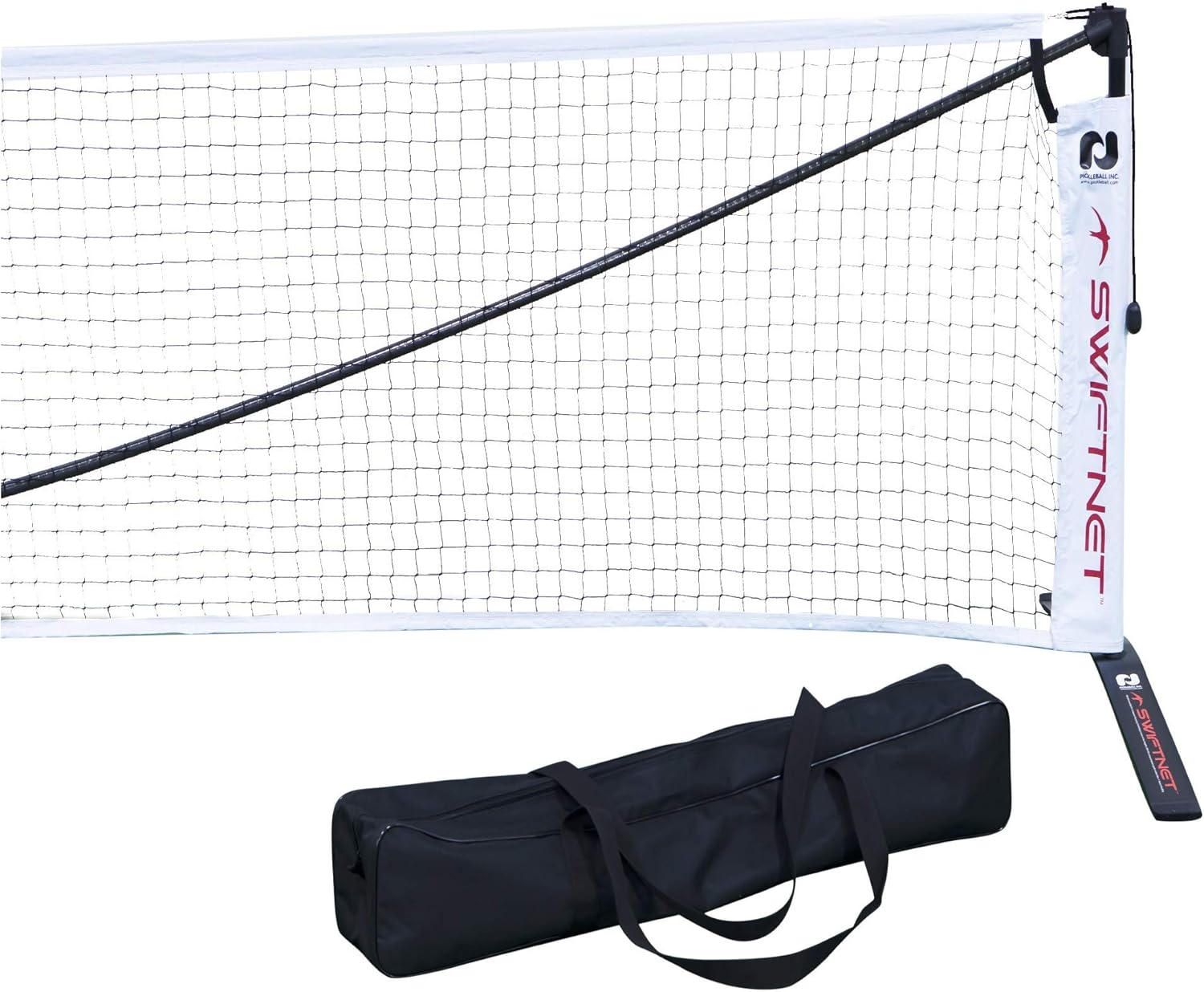
Every steel-frame net on this list weighs 25 pounds or more once the base and posts are accounted for. The SwiftNet 2.1 does not: a carbon-fiber and aluminum frame gets the whole system down to about 17 pounds, the lightest true 22-foot regulation net here, without giving up the correct 34-inch center height. It comes from Pickle-Ball, Inc., the same company the sport's founders started, and ships in a compact carry case built to fit in a trunk or check the SUV cargo area for a weekend tournament.
Pros
- Carbon-fiber and aluminum frame is the lightest full-size net on this list at about 17 pounds
- True 22-foot regulation width with the correct 34-inch center height
- Only 5 parts, assembles or breaks down in a few minutes
- Compact carry case built for travel between courts or tournaments
Cons
- The priciest net on this list
- No paddles or balls included, players need their own gear
- Lighter frame means less resistance to a hard direct hit than the heavier steel nets here
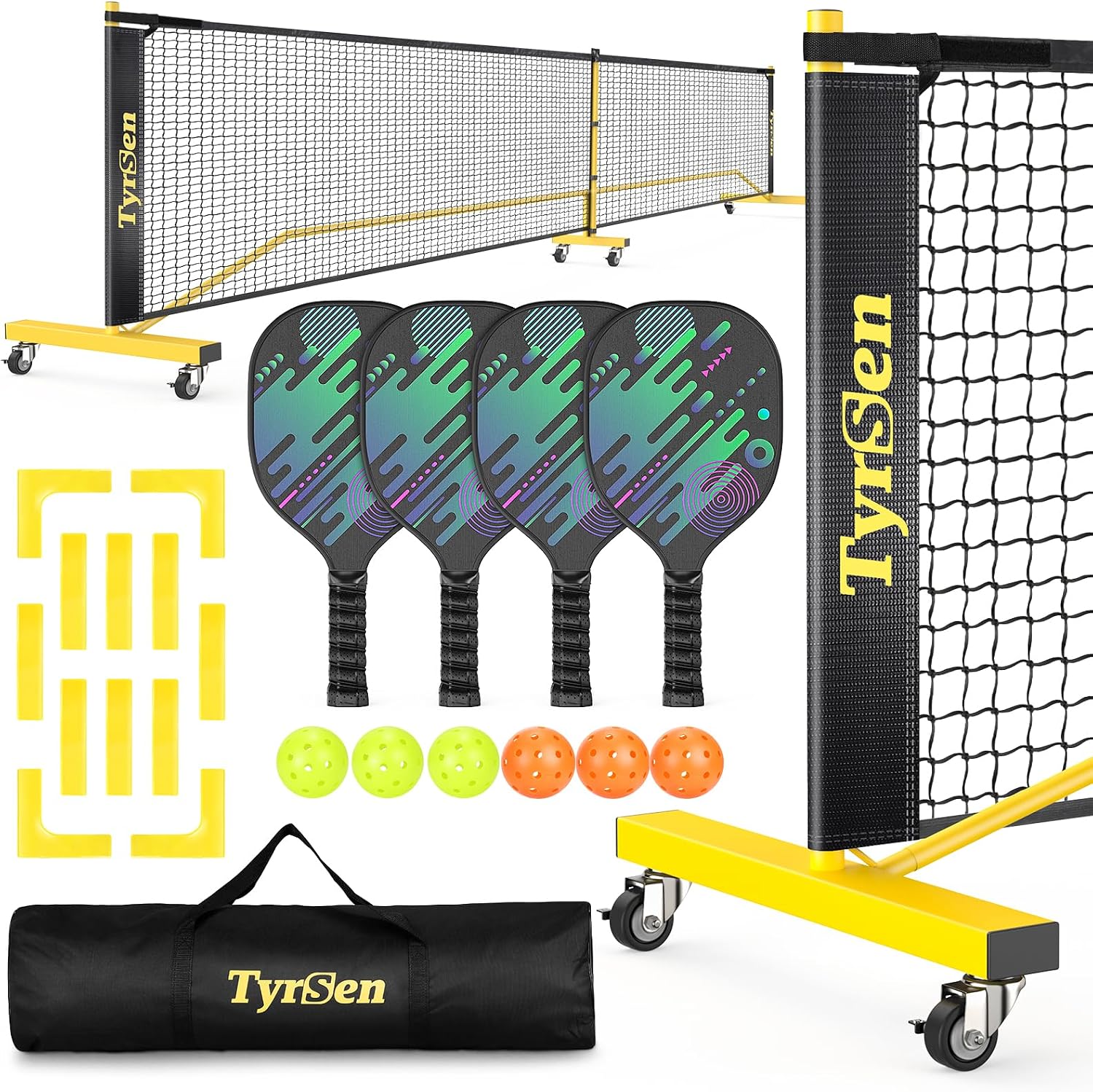
Buying a net is only half the equation if nobody in the house owns a paddle yet, and this is the set built to solve the whole problem at once: a wheeled 22-foot regulation net alongside four paddles, six balls, twelve court markers, and a carry bag to haul it all. The rolling base means the net itself moves in and out of the garage without lifting the frame, and the court markers turn a driveway or cul-de-sac into an actual marked court instead of guesswork. It is the pick for a household starting from zero, not one that already owns gear.
Pros
- Only kit on this list combining wheels, court markers, paddles, and balls in one box
- Rolling base makes moving the assembled net in and out of storage easy
- 12 court markers lay out real court boundaries on any flat surface
- Included paddles and balls mean no extra purchases needed to start playing
Cons
- Included paddles and balls are entry-level, expect to upgrade as players improve
- Assembly takes about 10 minutes, longer than the fastest tool-free nets here
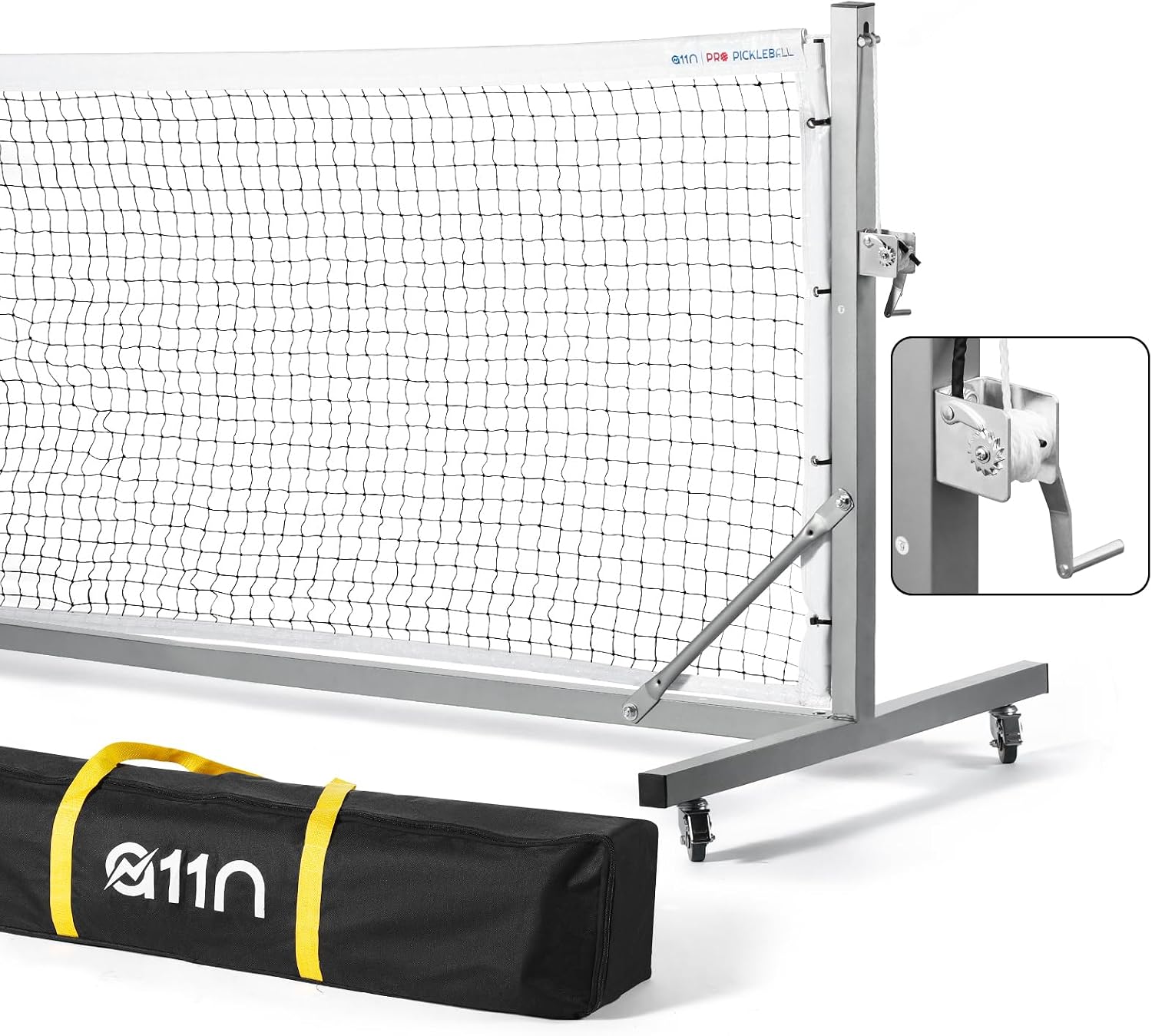
Every other net on this list is built for one home court. This one is built to move between several: six caster wheels lock in place for play and release for rolling across a wooden gym floor or between courts at a community center, which is exactly the use case most home-driveway nets are not designed for. A built-in hand-winch tensioner dials out center sag in a few turns instead of re-tying a strap, and two empty base bags can be loaded with sand for extra stability when the net is left set up between sessions.
Pros
- Six locking caster wheels built for rolling across gym floors and between courts
- Hand-winch tensioner dials out center sag more precisely than strap systems
- Heavy-duty powder-coated frame with sand-fillable base bags for extra stability
- True 22-foot regulation width with the correct 34-inch center height
Cons
- Pricier than the fold-and-go nets on this list, since it targets repeated multi-court use
- Heavier and bulkier to store than the compact travel nets here
- Overkill for a single home driveway that never needs to move
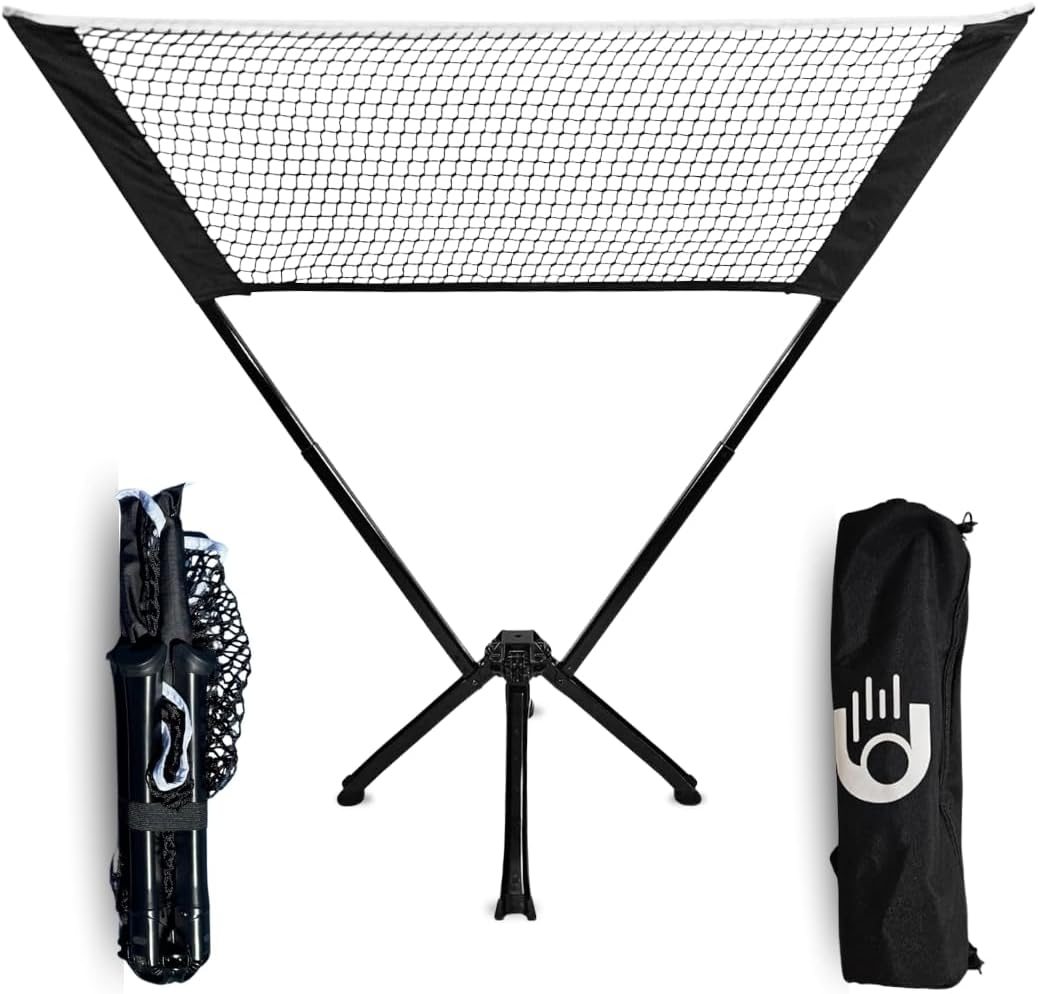
Every other compact net on this list still asks you to interlock poles or thread a frame together. The Dinkaroo skips that step entirely: its collapsible aluminum stand pops open in seconds the way a camp chair does, with no tool-free assembly steps to remember at all. At about 3 pounds and folding down to 18 inches, it is the easiest net here to toss in a pickleball bag or backpack for a quick dink session whenever a real court is not available.
Pros
- Pops open in seconds with no interlocking poles or tools required
- About 3 pounds and folds down to 18 inches for backpack-sized storage
- Collapsible aluminum frame stays stable during repeated dink and volley drills
- Includes a carry bag with strap for easy transport
Cons
- Small footprint is built for solo dink drills, not full-court doubles play
- A few owners noted the collapsing arms can catch slightly when folding back down
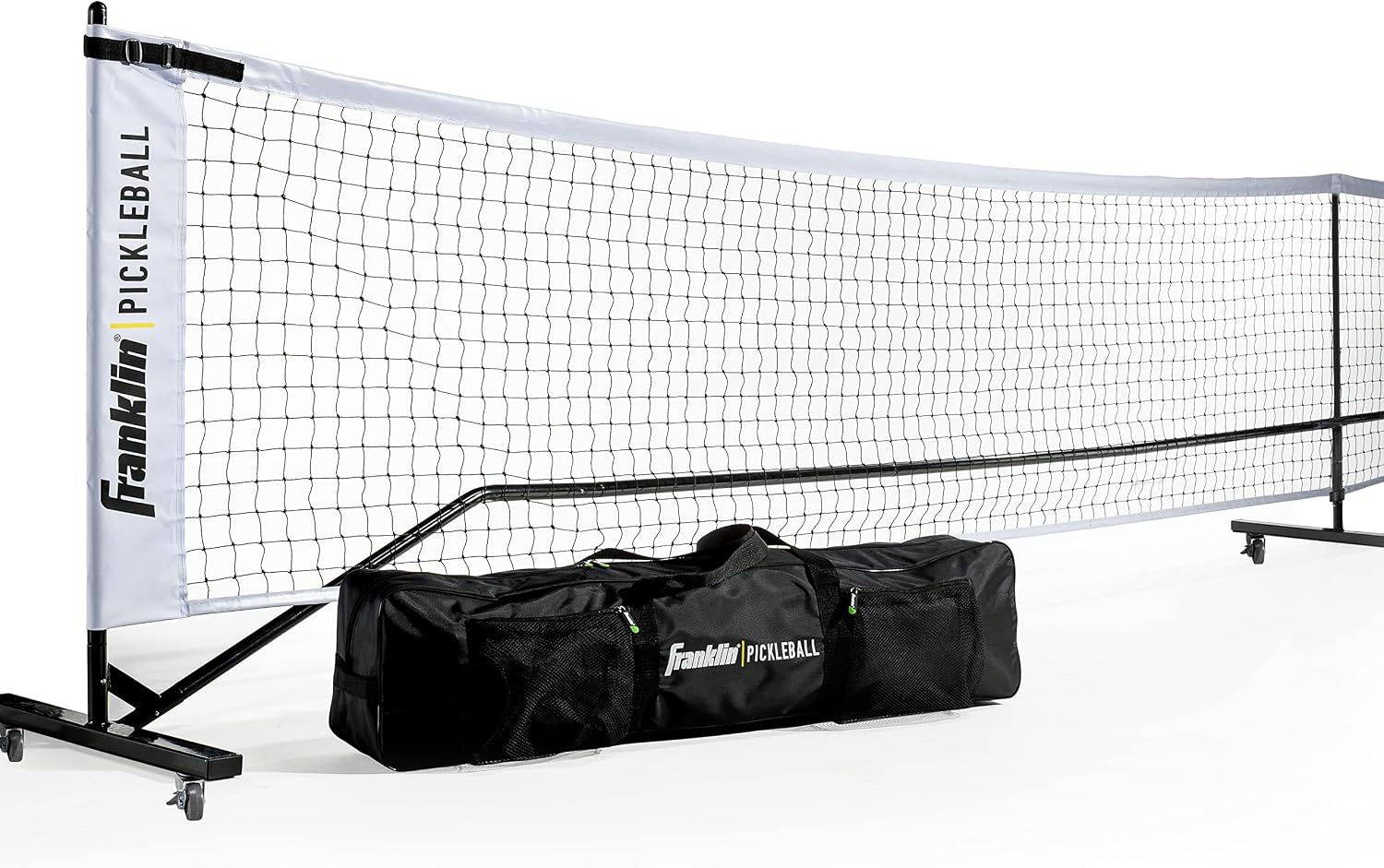
Most of the nets on this list come from names that only exist in the pickleball aisle. Franklin Sports does not, it is one of the most recognized backyard sporting-goods brands in the country, the same company behind the X-40 balls and half-court set already on this list, and this is its full 22-foot regulation net. A wheeled steel frame rolls in and out of the garage, tool-free setup gets it standing in minutes, and a matching travel bag keeps the whole thing together between sessions.
Pros
- From Franklin Sports, one of the most recognized names in backyard sporting goods
- Full 22-foot regulation width, sold and shipped directly by Amazon
- Wheeled steel frame for easy rolling in and out of storage
- Tool-free setup with a matching travel bag included
Cons
- No hand-crank or pull-cord tension system like the TYRSEN or Fostoy nets here
- Costs more than the no-frills A11N Classic for a similar feature set
- Does not include paddles or balls, unlike Franklin's own Half Court Set
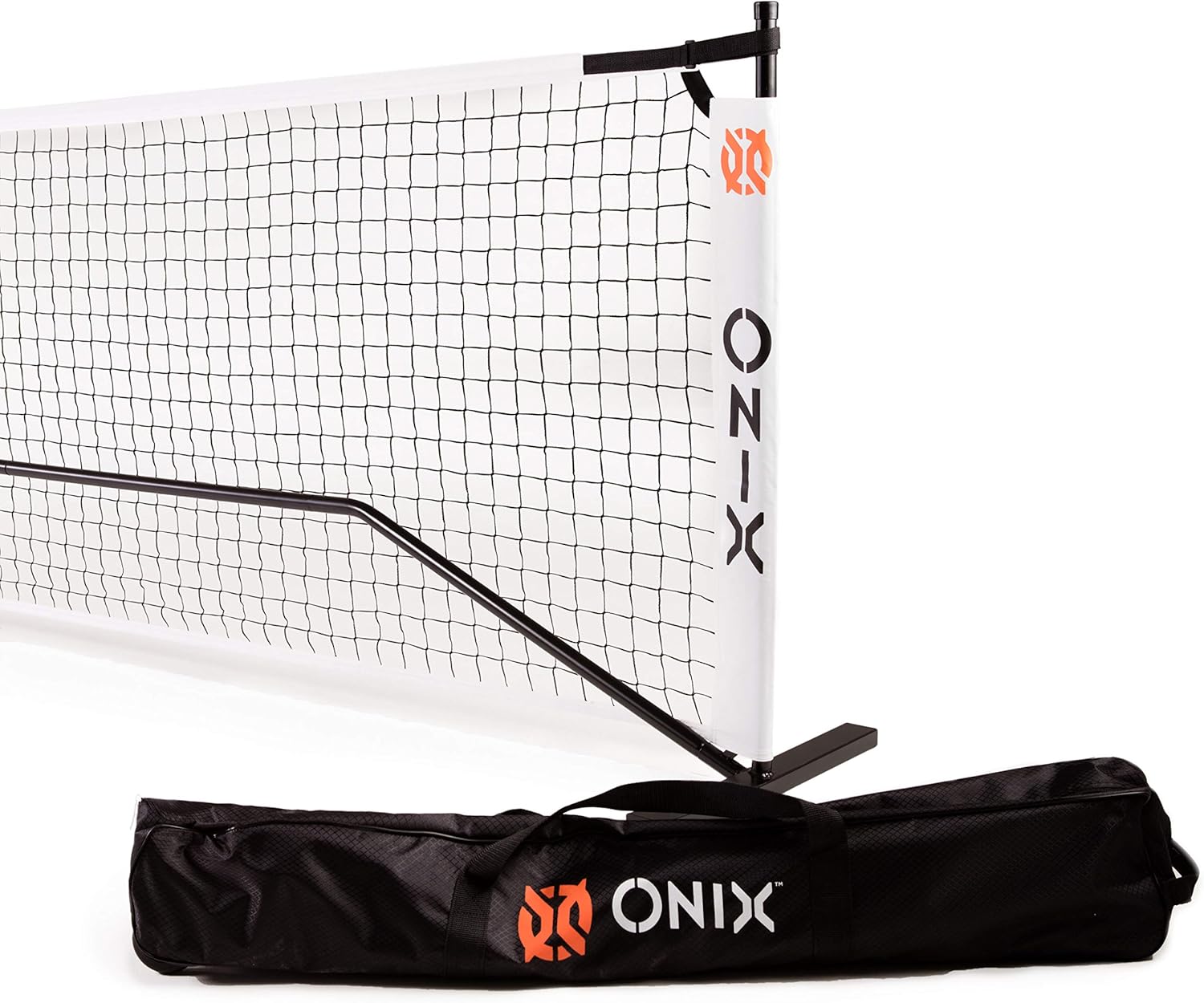
Onix built its name on paddles and balls, and that same attention to build quality shows up in its net. The interlocking steel frame converts between a full 22-foot regulation net and a 10-foot practice net, and a dedicated center post holds the middle of the net at the correct regulation dip instead of sagging the way cheaper convertible sets do after a season of use. It breaks down into a purpose-built wheeled carrying case rather than a generic duffel, which is where the higher price over a budget 2-in-1 set comes from.
Pros
- Converts between a full 22-foot regulation net and a 10-foot practice net
- Center post keeps net height true at the regulation dip instead of sagging
- Interlocking steel-tube frame assembles without extra tools
- Purpose-built wheeled carrying case, not a generic duffel bag
Cons
- Costs noticeably more than budget 2-in-1 sets like the BAGAIL set here
- Carry bag fits tight, and a few owners reported the zipper wearing out with heavy use
- Small base wheels can tip on rough ground and still need lifting over gravel or grass edges
How to Choose a Portable Pickleball Net
A portable net lives or dies on one detail most buyers overlook until it is too late: how well it holds regulation height at the center of the net during real play.
Regulation Height Matters More Than It Looks
A regulation net is 36 inches high at the sidelines and dips to 34 inches at the center. Cheap nets without a proper center strap or weighted base develop a "hump" in the middle that never quite reaches the correct dip, which changes how shots clear the net compared to a real court. Look for a net with an adjustable center strap, not just a frame that holds the net up.
Full Size vs. Half Court
A full 22-foot net supports real doubles play but takes up more space and is heavier to move. A half-court net (around 10-11 feet) is easier to store and set up in a smaller yard but will not replicate genuine doubles positioning. Convertible 2-in-1 systems split the difference at a higher price point.
Frequently Asked Questions
Will a portable net hold up to regular outdoor use?
A steel-frame net designed for outdoor play will hold up through a season of regular use if it is broken down and stored when not in use. Leaving any portable net set up outdoors year-round in harsh weather will shorten its lifespan regardless of build quality.
Do I need a full 22-foot net, or is half court enough?
If you regularly play real doubles games with a full group, a full 22-foot net is worth the extra size and cost. If it is mostly solo practice, casual family play, or a smaller yard, a half-court net like the Franklin set here is plenty.
Can these portable nets be used on any surface?
Most portable net systems work on driveways, patios, and hard court surfaces, and many are fine on flat grass with a stable enough base. Check the specific product for surface recommendations if your setup spot is uneven or soft.